Platform on concrete and steel in construction
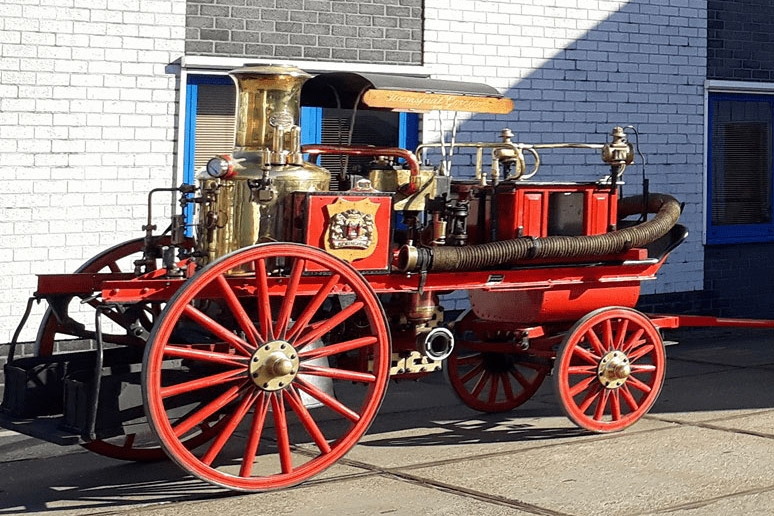
From restoration work on historic landmarks to steel structures for new construction: Smederij Meerkerk holds a unique position in the Dutch market. To future-proof its own business processes, the company chose Liemar. Not with an abrupt transition overnight, but step by step. ‘Now, whenever I walk past a computer, I see Liemar open more and more often.’
Smederij Meerkerk is run by Arjan Kon and Randy Oostrom. With a team of about fifteen people, the company works on a wide variety of projects. The blacksmith shop holds a special place, particularly in the field of historical blacksmithing and restoration work.
‘There are quite a few blacksmiths in the Netherlands,’ Arjan explains. ‘But only a small fraction of them are members of the Dutch Guild of Art, Ornamental, and Restoration Blacksmiths. Within that group, the number of blacksmiths who hold all the necessary certifications and credentials to work on historic heritage sites is even smaller. And on top of that, there are very few who have the capacity and space to carry out truly large-scale projects.’
According to Arjan, as a result, there are very few companies in the Netherlands that can handle restoration projects of a comparable scale. This results in exceptional work, but at the same time places high demands on the organization. ‘These are often very complex projects.’
Examples of Smederij Meerkerk’s projects include the restoration of the Rijksmuseum’s fencing and work on the Oranje Loper in Amsterdam, which involves renovating bridges and streets in and around Amsterdam’s city center. In addition, the company manufactures steel structures for new construction projects and components for machines and vehicles. For example, components are also manufactured in Meerkerk for the street-cleaning vehicles used in major cities to keep streets and squares clean.
Smederij Meerkerk had been using a different software system for years. It worked well enough on its own, but was no longer supported. For Arjan, that was reason enough to look elsewhere. ‘If there’s no longer any support, you have nothing to fall back on. If something really goes wrong, what happens to your data? For example, what outstanding transactions were there? That didn’t sit well with me.’
His wish, therefore, was for a future-proof ERP solution and a vendor the company could rely on for the long term. ‘We were simply looking for a reliable, stable software partner that would allow us to monitor and manage our processes and keep us moving forward for years to come.’
In his search for a new ERP system, Arjan looked at other companies in the industry. What systems do they use? What do they look like? And what would be a good fit for Smederij Meerkerk? That’s how Liemar came into the picture. Arjan invited Niels Oudenaarden to demonstrate the system. That first introduction was quite extensive. ‘You’re hit with a lot of information all at once. You see so many tabs, screens, and options that your first thought is: Is this really what we’re looking for?’
When we then looked at what Smederij Meerkerk actually needs, that picture changed. ‘What you see during a demonstration like that is everything that’s possible. But of course, we only need a fraction of that. When you narrow it down, it becomes much less overwhelming.’
Arjan also spoke with acquaintances who were already working with Liemar and looked into other software packages. Ultimately, it wasn’t just functionality that played a role in the decision. Trust in the organization behind the software was also a major factor. ‘With Liemar, the rapport felt better than with other providers.’ He’s noticed this during the implementation as well. If there are any questions, the lines of communication are short. ‘A quick call to Hein or Niels is always just a phone call away. If something comes up, it just gets taken care of. That’s a really great way to work together.’
Liemar is now already in full use at Smederij Meerkerk. Among other things, work planning, project management, and the creation of invoices are handled through the new system. However, the company is not yet fully live from a formal standpoint. ‘We’re taking the time to ensure a seamless transition of the financial administration, since this also affects the bookkeeping and the annual financial statements. We’ve deliberately opted for a phased implementation, with January 1 as the likely date for the full go-live.’ Until then, the old and new systems will run partially in parallel.
For Arjan, implementation isn’t the end goal. ‘I’m always keeping an eye on the future. Is there anywhere we can still innovate? Can we optimize the business process and save time somewhere that we can then spend elsewhere? As an entrepreneur, I think you should always have that desire.’ But first, we need to get the basics right. ‘Let’s make sure everyone is familiar with it, that it works well, and that it’s a pleasure to use. Then we can look further into what else is possible.’
Neem dan rechtstreeks contact op met Liemar Software BV.
 Contact opnemen
Since its founding in 1985, Liemar has offered business and ERP solutions for project-based companies in steel and metal construction. Our mission is to optimize your company and processes as a partner and to create more insight together. This leads to more peace and efficiency, both for the entrepreneur and employees. With the 'New Return [...]
Bekijk Bedrijfsprofiel