Reducing concrete’s CO2 emissions
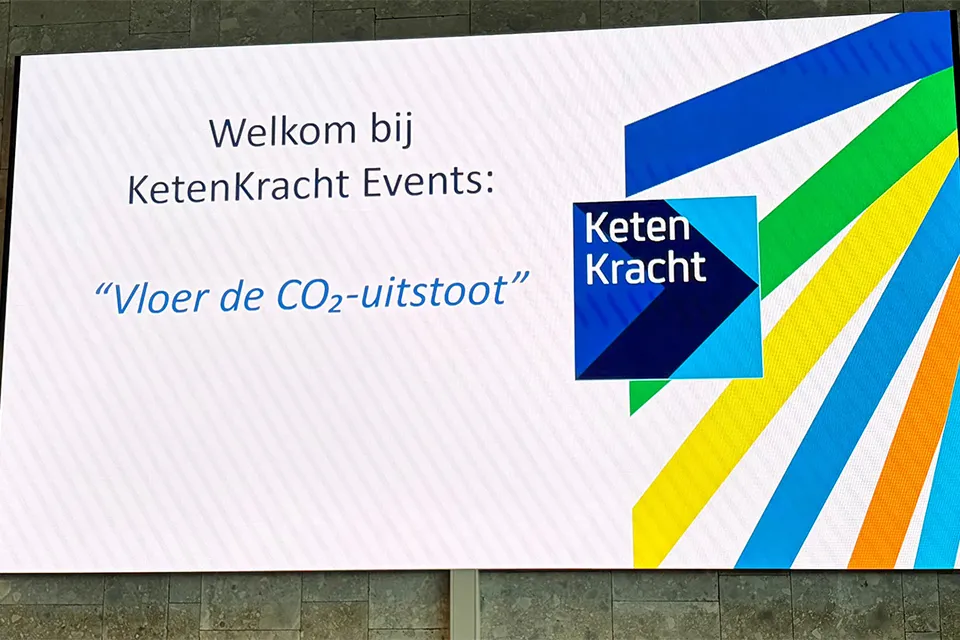
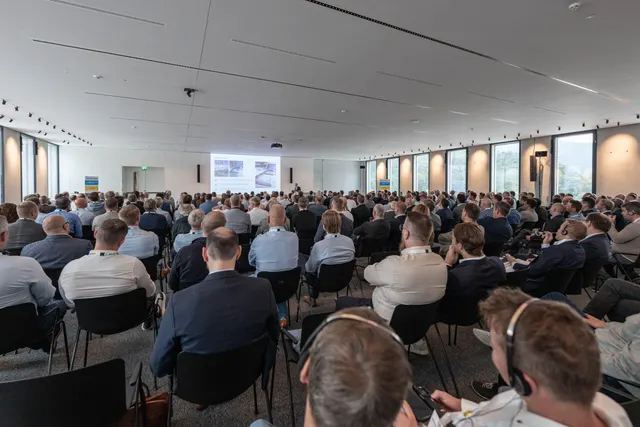
One question was at the heart of the 13th VBI Ketenkrachtevent: how can the concrete sector accelerate CO₂ reductions without compromising quality, availability or scalability? Producers of cement, binders and precast concrete showed that the answer lies not in a single technology, but in a combination of innovations that reinforce one another.
Cement remains the biggest challenge
Although cement accounts for only around 15% of concrete by volume, it is responsible for around 85% of the CO₂ emissions from conventional concrete. Clinker production is the main source of these emissions. Around two-thirds of the CO₂ is generated during the chemical conversion of limestone, and one-third by the energy required. This makes cement the key area to address.
CO₂ capture is an essential step
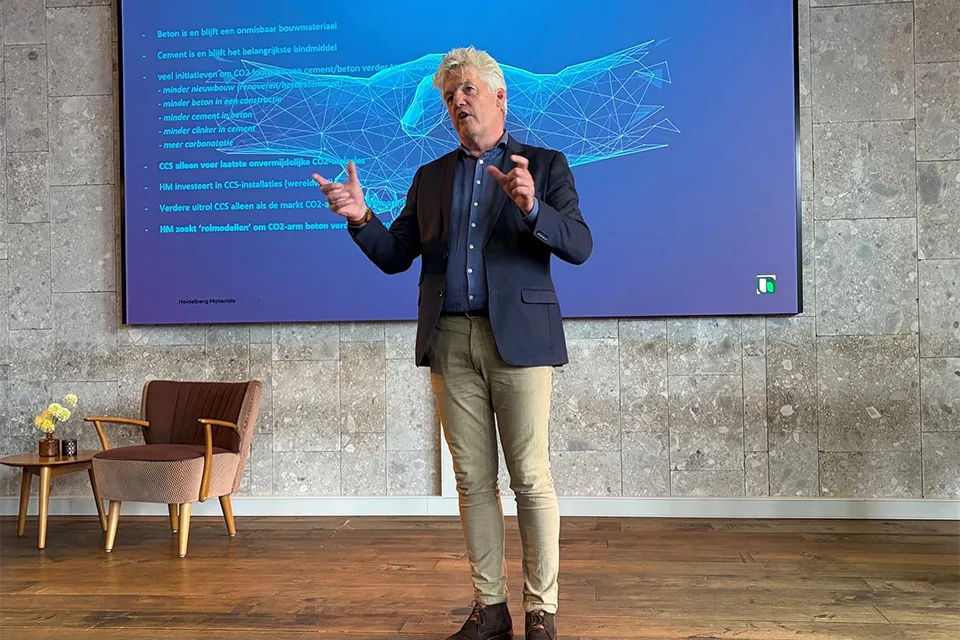
Jan Veenstra (Heidelberg Materials) presented the strategy for achieving near-carbon-neutral cement. According to Heidelberg, several measures are needed:
- less clinker in cement;
- alternative fuels;
- more efficient production processes;
- new types of cement;
- smarter design to reduce the amount of concrete required;
- and, ultimately, CO₂ capture (CCUS).
Veenstra sees CO₂ capture not as an option, but as a necessary step to eliminate the remaining process emissions from cement production. evoZero, the first cement produced at scale using captured CO₂, is being brought to market from the Brevik plant in Norway. The captured CO₂ is transported by ship and permanently stored beneath the North Sea as part of the Longship/Northern Lights project. Heidelberg aims to set a new global standard for cement production.
Reducing clinker is the fastest route
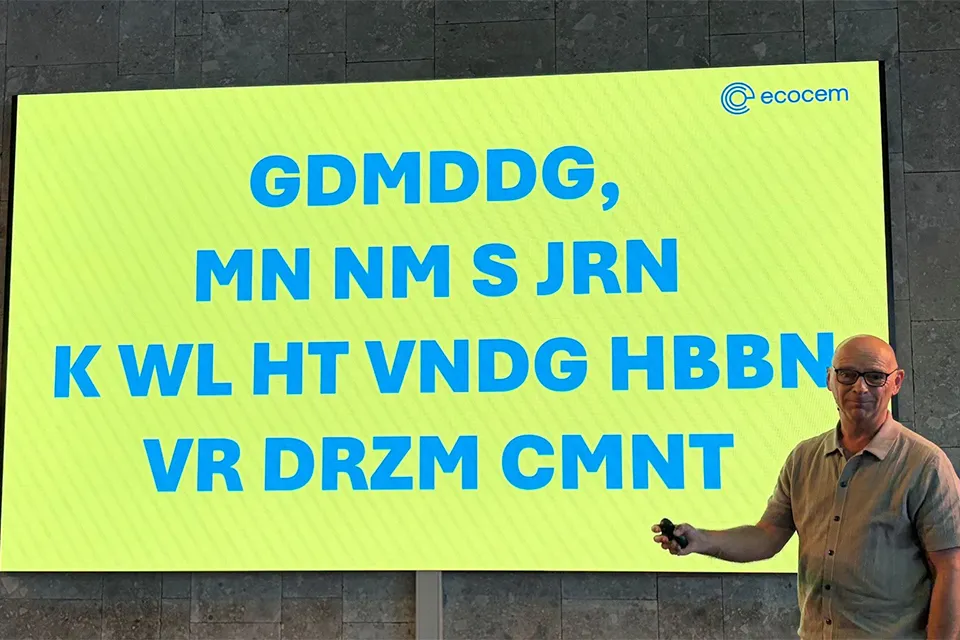
Jeroen Langenberg (Ecocem) questioned the emphasis on CCUS as the main solution. According to the company, the widespread use of CO₂ capture could significantly increase the cost of cement production. Langenberg therefore sees reducing clinker content as the most efficient route for the coming decades.
Langenberg also highlighted a new challenge: traditional substitutes such as blast-furnace slag are becoming scarcer as the steel industry changes. This calls for new binder technologies. Ecocem is therefore developing ACT (Advanced Cement Technology), which uses optimised composition and particle packing to deliver high-performance concrete with a significantly lower carbon footprint. The technology is already being used in large-scale housing projects.
Alternative binders from residual materials
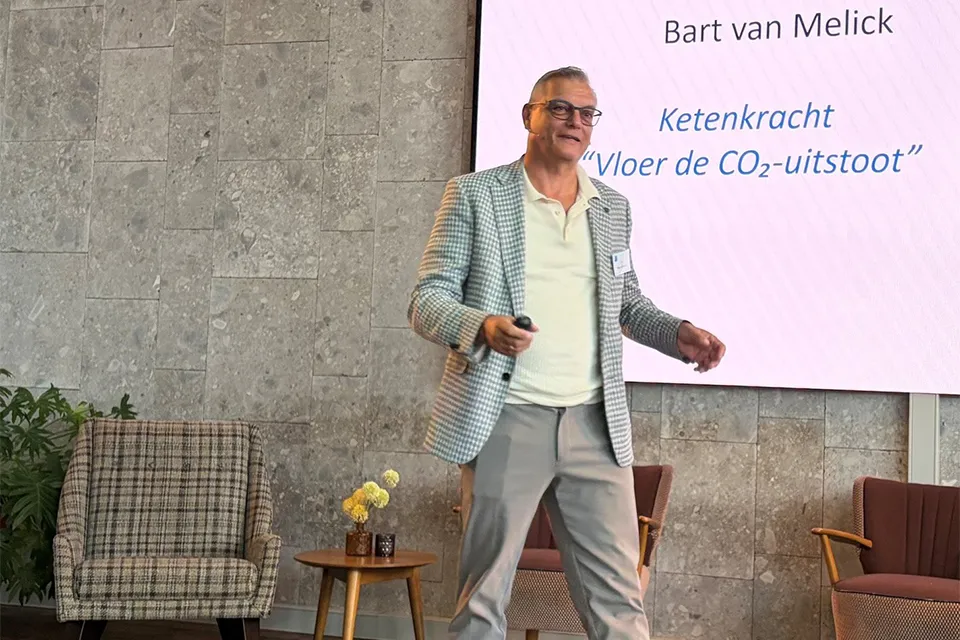
Bart van Melick (ASCEM) presented INVIE, an alternative binder made from industrial residual materials. According to the company, it can reduce CO₂ emissions by up to around 80% compared with conventional cement.
The presentation highlighted three main routes available to the sector:
- reducing clinker content by using alternative raw materials;
- capturing and storing CO₂;
- using entirely alternative binders.
Van Melick sees the greatest long-term potential in the third route, as blast-furnace slag is becoming less available and CCS remains costly, in their view. At the same time, the company acknowledges that market uptake is still being held back by regulations, certification and a lack of familiarity with new binders. Demonstration projects and collaboration across the supply chain are needed to scale up these innovations, according to Van Melick.
Decarbonisation starts in the factory
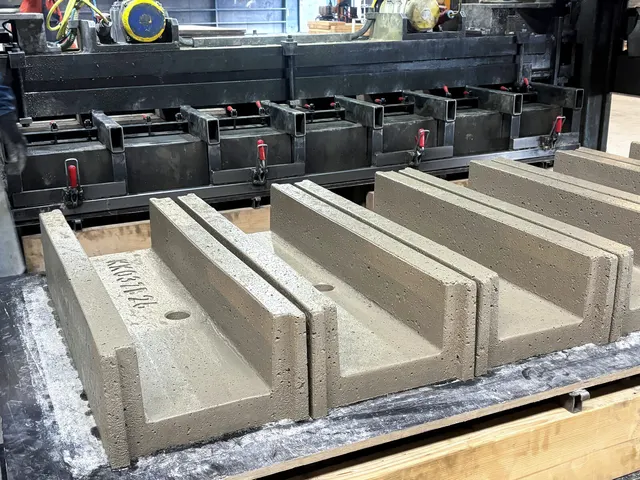
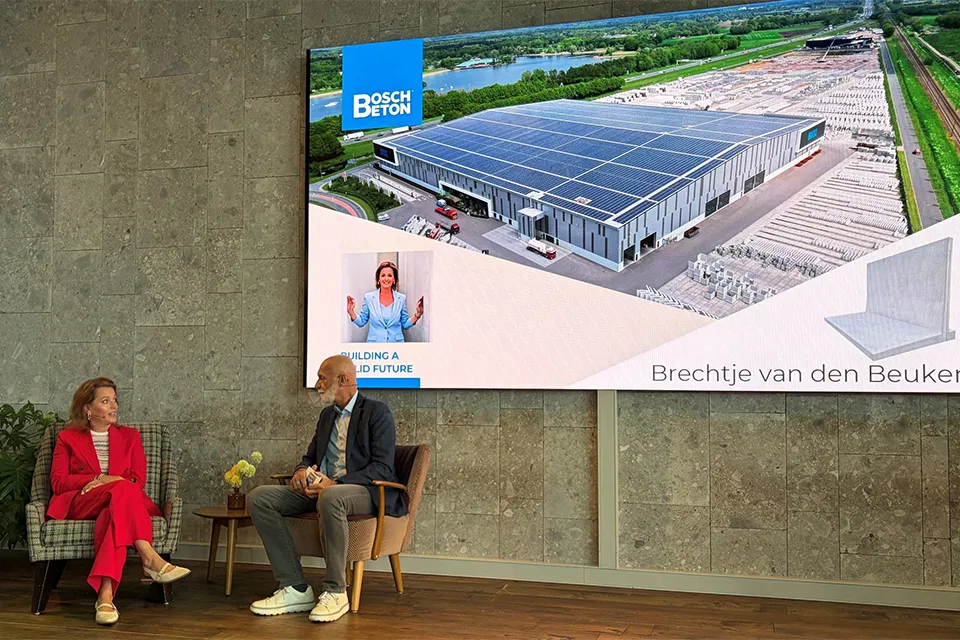
Brechtje van den Beuken (Bosch Beton) showed how precast producers are also playing their part. The company is working towards a cement-free generation of retaining walls by gradually reducing their cement content.
Sonocrete was also presented, a technology that achieves the same compressive strength with around 30% lower CO₂ emissions by reducing the amount of cement required. Van den Beuken emphasised that decarbonisation is not just a technical challenge: it also requires investment in materials research, process development and production.
A shared conclusion
Despite their differing views, the speakers at the Ketenkrachtevent were strikingly united on one point: there is no single solution that can make the concrete sector climate-neutral in one step.
The speakers identified several building blocks that are needed in parallel:
- reducing clinker content;
- new cement and binder technologies;
- using industrial residual materials;
- optimising concrete mixes;
- designing more efficiently to use less material;
- capturing and storing CO₂ to address the remaining emissions.
Almost all the presentations also stressed that technological innovation alone is not enough. Scaling up requires changes to regulations, certification and investment, as well as collaboration between cement producers, concrete manufacturers, clients and research institutions. This supply-chain collaboration was at the heart of the 13th VBI Ketenkrachtevent.
A striking tension
Perhaps the event’s most interesting conclusion was that the speakers agreed on the goal, but not on the route. Heidelberg Materials positions CO₂ capture as an essential end solution, while Ecocem and ASCEM place greater emphasis on further reducing or even replacing clinker. This difference in strategy shows that decarbonising concrete is not about one winning technology, but is likely to require a combination of complementary solutions.
Een zakelijke vraag aan Ecocem? Neem contact op
Bedrijven in dit verhaal
Blijf dit volgen
Bij een nieuw verhaal krijg je een e-mail. Geen account nodig.
- ThemaMinder CO2 in beton en staal
- OnderwerpConcrete
- BedrijfEcocem