#10: Cathodic protection extends the service life of concrete structures
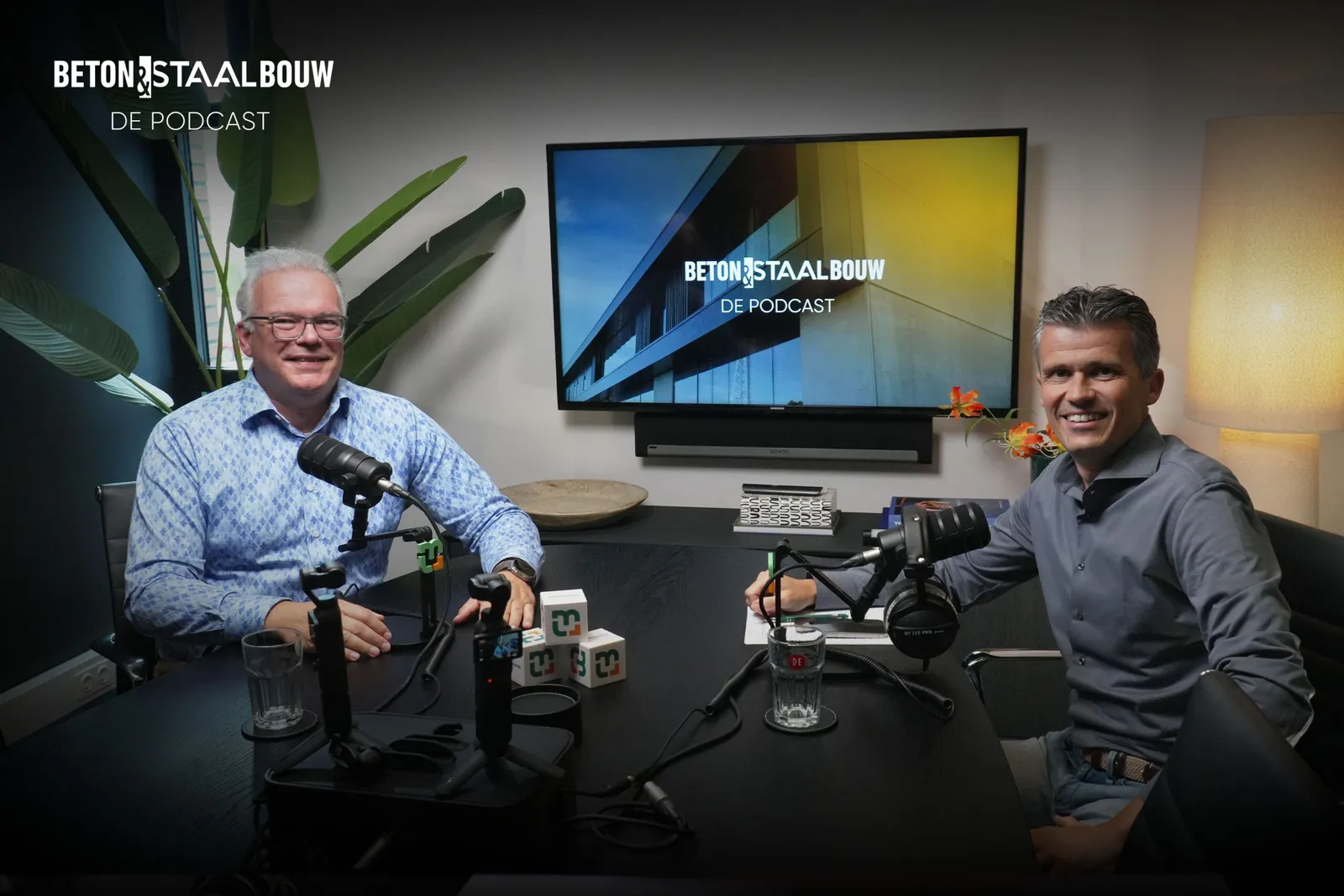
Bridges, viaducts, balconies and car parks may look robust, but concrete structures also age. Corrosion of the reinforcing steel can lead to cracking, concrete damage and ultimately safety risks. Anthony van den Hondel, director of Cathodic Protection Supplies (CPS), explains how cathodic protection can stop the corrosion process, why condition-based maintenance is becoming increasingly important and how AI can help asset managers plan and prioritise maintenance more effectively.
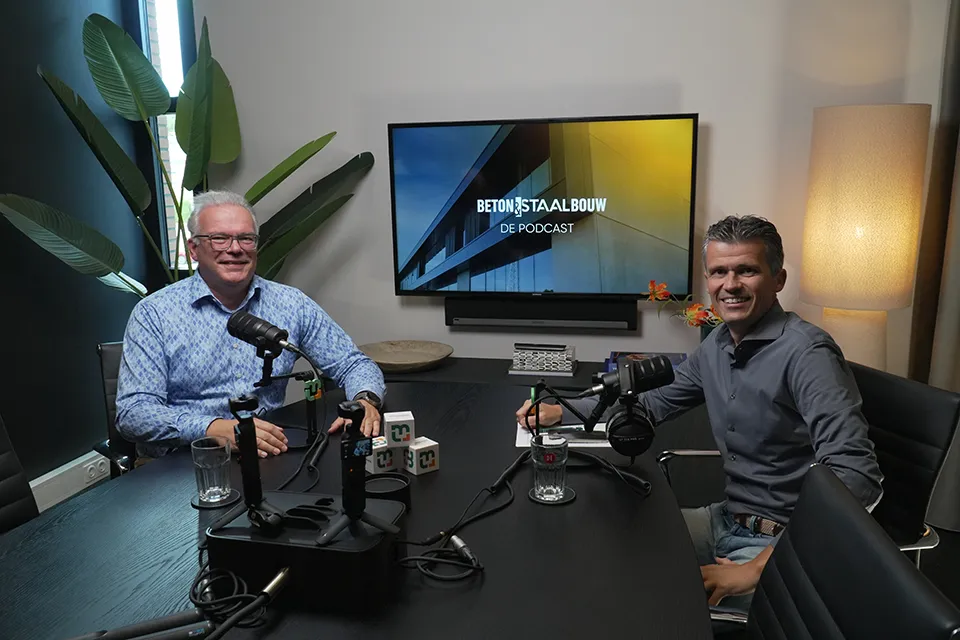
In conversation with: Anthony van den Hondel, director of Cathodic Protection Supplies (CPS)
Host: Roel van Gils
Volledig transcript
Alle hoofdstukken (16)
- Safety of concrete structures
- What is cathodic protection?
- When a structure cannot be demonstrated to be safe
- Ageing infrastructure
- How much longer can maintenance be postponed?
- Asset management and responsibility
- Sharing knowledge
- From prescriptive requirements to performance requirements
- Condition-based maintenance
- The social impact of maintenance
- When cathodic protection makes sense
- An ageing workforce and loss of expertise
- Specialist expertise and quality assurance
- AI as a support tool
- Using AI to prioritise maintenance
- Maintenance as an opportunity, not a burden
Safety of concrete structures
Roel van Gils Welcome to another Beton & Staalbouw podcast. Every day, we drive over them on the road. We walk underneath them. We live in buildings with balconies, cantilevers and structures designed decades ago. And we usually give it no thought at all, because concrete, steel and bridges seem obviously safe. But what happens when a structural engineer tells you: this structure cannot be demonstrated to be safe? Who takes action? And perhaps more importantly, what happens when an asset manager then says: but there are many more structures that are unsafe? Which one takes priority? That creates a difficult situation. The problem is there, the risk has been identified, but sometimes nothing happens anyway. That is what we are discussing today. Joining me today is Anthony van den Hondel from CPS. Welcome, Anthony.
Anthony van den Hondel Yes, thank you. Glad to be here.
Roel van Gils Tell us a little about yourself.
Anthony van den Hondel Yes, my name is Anthony van den Hondel. I’m very much an engineer. I like solving problems and changing things. It’s just part of who I am. I enjoy puzzles, the more technical subjects, the technical side of things. When I left university, there was actually nothing available in my field. I’m a materials engineer, really on the corrosion side of things. It wasn’t a very good year for the economy. I followed my brother into concrete maintenance. So my world is concrete maintenance. You could call it a niche within a niche within a niche. It’s not even construction, just a small part of it. And then there’s cathodic protection, which is very close to my area of expertise. When I first left university in the early 1990s, it was a new technology, and my boss said: “Wim Brink, I’ve got something for you. You’re going to work on cathodic protection, it’s going to be a good thing.” Well, here we are, nearly 40 years later, or let’s say 30 years later, and all I do is cathodic protection for concrete. And I have to explain it everywhere, because nobody understands it.
Lees het volledige transcriptTranscript inklappennog 15 hoofdstukken
What is cathodic protection?
Roel van Gils That’s actually my next question. Perhaps you could explain the method. What exactly does it involve when it comes to concrete?
Anthony van den Hondel As you said in your introduction, it’s everywhere. We see concrete all around us. 75 per cent of the built environment is made of concrete, often hidden behind other layers. But the core beneath our feet is often this man-made stone. And it lasts forever, it’s perfect. You don’t have to do anything to it, it needs no maintenance at all. Well, we’ve started to wake up to the fact that this isn’t true. That began in the 1970s and 1980s. In the 1980s, the first efforts were made to improve concrete repair and maintenance. A little later, we realised: well, this is a problem, because we’ve repaired the concrete and it’s breaking down again. That’s where cathodic protection comes in. What was happening was that the steel in the concrete was rusting, putting pressure on the concrete from the inside and breaking it apart. It cracks, rust stains appear and then pieces fall off. It’s commonly called concrete cancer, but there’s actually nothing wrong with the concrete. It may not be particularly good quality, but it doesn’t rot by itself. It’s the steel that rusts. Cathodic protection is a technique from other industries, such as underground gas pipelines, ships and sheet piling. What we do is use cathodic protection to pass a small electric current through the structure and stop the corrosion process. Then someone asked: “Hey, couldn’t we use that on concrete too?” The rest, as they say, is history. We now have cathodic protection systems for concrete structures where they’re needed, when the steel is badly corroded and we can’t really solve the problem in any other way.
Anthony van den Hondel But do you only use it once a defect has developed? Yes, you might think so. That is very much the Dutch mentality. Interestingly, cathodic prevention projects are currently being built in the Netherlands. That means a CP system is installed in the concrete while it is being poured, to extend its service life. So, if you say that the trouble starts after 30 or 40 years, an Italian professor said about 30 years ago: “You need to start earlier, because then a relatively simple and inexpensive system can push back the point at which problems arise by a long time, perhaps even prevent them altogether.” So yes, cathodic prevention is now also being used in the Netherlands, but it’s still exotic. It’s in its infancy. I always say: if it isn’t broken, don’t fix it. So there really has to be a trigger, a reason. Then you implement a measure and you want to see some kind of return on investment. If I spend money on this, what will it deliver in the future? The balance has to be positive. We’re Dutch enough to say: if it doesn’t deliver anything, I’m not going to do it.
When a structure cannot be demonstrated to be safe
Roel van Gils Perhaps we can make this more concrete. For example, a structural engineer finds that a beam in a viaduct is not in good condition. What happens next in practice?
Anthony van den Hondel It depends a little on the asset manager and the situation. But broadly speaking, we have a challenge. Because this doesn’t happen very often, organisations often don’t know exactly what to do. And then we run into the question: is this really urgent? Is it going to collapse tomorrow or not? Do I take it out of service? But if someone asks about a cantilever, a balcony: how often do those collapse in the Netherlands? An adviser sitting at the table says: “Well, it hardly ever happens.” Great, then we won’t do anything about it, because we still want new bathrooms. That’s a conversation I was literally part of. You think: guys, I don’t know what this is about. But because we have a false sense of security, because things go right so often and almost never go wrong, we say: yes, the structural engineer says that beam isn’t sound, but it’s been there for 40 years.
Anthony van den Hondel A man who works at TNO had a good comment about that. He does a lot of forensic investigations, his name is Huibert Borsje. He said: “What struck me in my forensic investigations of all those collapsed structures...”
Roel van Gils But in every case, the problem had been identified beforehand?
Anthony van den Hondel Yes, he says: “The day before, it was still standing.” And of course that’s true. The problem is, you can’t see anything happening. But we designed concrete so that, first of all, it is very good, very durable and very strong. It can take a lot. But we also designed it so that when something goes wrong, it gives warning. We don’t want it to suddenly end up on the ground. What does a warning look like? A warning is: I can see cracks. It doesn’t look right. This is strange. It never normally does that. Those are the warning signs. At that point, you have to do something. The structural engineer runs the calculations and says: “Yes, it doesn’t work on paper. I don’t understand why it hasn’t collapsed.” But it’s still standing. We still have to do something about it, though. The asset manager has a number of options: sometimes they’ll say, we’ll strengthen it. Or we’ll demolish it and build a new one. Or we’ll repair it. We’ll do something about it. There are, of course, also asset managers who have problems. It doesn’t fit the budget, or it really can’t be done within the schedule. And then the question is: what do we do now? How much longer can we put this off? How long can we stretch this out?
Roel van Gils Yes, an interesting discussion.
Anthony van den Hondel Yes, I understand.
Ageing infrastructure
Roel van Gils You’ve given an example involving buildings, but the infrastructure is also in a pretty bad state, isn’t it?
Anthony van den Hondel Yes, it’s a hot topic at the moment. Take the Merwedebrug, for example, which is a steel bridge. I’m more on the concrete side, of course. But what we’re going to see, and will see more often, is that increased loads combined with the deterioration of structures mean they can no longer meet the demands placed on them. They can no longer cope with what we want them to do now. And there are two things you can do. You can invest a lot of money in maintenance, replacement and new construction, for example. But that takes about ten years. It’s a long lead time. The second thing you can do is put up a sign by the roadside saying: heavy goods vehicles must take a detour. That does help, because lorries impose the heaviest loads on infrastructure.
Anthony van den Hondel You can take the Merwedebrug out of service, but if you look at the north-south routes, there are others that are more critical. What if you take them all out of service? You’d have to detour through Germany. That would be a problem. It’s not an option. So we need to think together about the minimum level of availability we need. When it comes to infrastructure, that means road use, for example by freight traffic. And that’s what we need to focus on. This requires asset managers to think differently. When I first left university, it was very simple. Anything that was broken was repaired. So you went out, looked at what was broken and wrote a good report. All ten spots you found were repaired. Then we moved to a functional approach: it’s broken, but is that really a problem? You can leave it as it is. If you take that too far, you end up with a situation like in Belgium, where everything looks very bad, or what we have in Germany, where you drive past thirty roadworks because they’re catching up on overdue maintenance. That [inaudible] of: “Is it really necessary?” We’ve reached the limits of that approach. And now we’re at a difficult point where a great deal needs to be done at the same time.
Roel van Gils Are we heading for a situation like Germany’s, then?
Anthony van den Hondel We started the construction boom slightly earlier in the Netherlands. That had something to do with the Second World War. But that construction boom also means problems arise earlier. And the country is enormous, so you can see straight away that a construction site like that is ten kilometres long. And every little bridge and viaduct you come across is being worked on at the same time. That is a model we will probably move towards in the Netherlands too, for safety reasons. So if you close a section of road, close the A12 for a month. A lot of disruption, a lot of impact. But at the end of that month, we will be finished. And people can do their work safely. Perhaps that is something we will see more often in the Netherlands too. But we do have a maintenance backlog. And if you read the newspapers, billions are being thrown around. Perhaps we will come back to that later. But we need to make choices, and we need to take action too. Because we have lived in a world where the concrete was still young and needed relatively little attention and care, but now has a considerable maintenance backlog. It cannot all be done at once, but we do need to get to work.
How much longer can maintenance be postponed?
Roel van Gils How much longer can we afford this? Just putting things off, putting them off, putting them off.
Anthony van den Hondel Yes, I don't have a crystal ball either. That's the difficulty. But I have a very good understanding of the condition of concrete in the Netherlands, because I've been doing this for a long time and have personally been to almost every site. We don't have much time left. So what we will really start to notice, and this is of course also a political debate now, is where do we make our choices? But what we will really notice is that we will increasingly reach the limit of what is still acceptable. We wait until something goes wrong before doing anything about it. And that always gives you the feeling that the calf has to drown before you fill in the well. We need to turn that around and get ahead of the problem. We're smart enough, we know enough, and we can steer what we do in the Netherlands.
Roel van Gils Yes, because in our preliminary conversation you made quite a stark comparison with Genoa and the collapse of the Morandi Bridge there. It shows what can happen when structural problems come together. Are we waiting for something like that to happen here too?
Anthony van den Hondel People don't realise that this happens quite often. If you look at Europe, a bridge or viaduct collapses somewhere in Europe every year. Every year. But strangely enough, things almost always turn out all right. So that's a bit odd. What happened in Germany, was it last year or the year before? It happens at night. The tram runs over it during the day.
Roel van Gils In Dresden.
Anthony van den Hondel Yes. It collapses, fortunately with no deaths or injuries. Italy was of course very sad, because people did lose their lives. But we have a problem: we see things coming, but we can't act straight away. And in Spain, for example, a [unintelligible] also fell from a span like that. It had been closed for maintenance the week before. So by the time we start, it may already be too late, or we may just get there in time. It could easily happen, because there are plenty of structures that make us doubt and wonder: what's going on here? What about that? In the past, we designed and built in a particular way, and now we say: with what we know today, we wouldn't do it that way, because it's very vulnerable or critical. So the question is: what do you do about it? We can't close everything, that's not possible. But what are we going to do, in what order and when?
Asset management and responsibility
Roel van Gils From a purely factual point of view, does the way we manage things now need to change?
Anthony van den Hondel Yes. The problem is that it's very easy to talk from a distance and tell people what they should do. We always say, the best helmsmen are on shore. That's certainly true in this case too. It's very easy to sit at this table and say that other people aren't doing things properly. Everyone has good intentions, but the challenge is considerable. We simply have to be honest about that. The same applies on the asset managers' side. Imagine working for a local authority and being told that your portfolio also includes 400 structures, bridges and so on. From a little wooden bridge somewhere in a park to a major concrete structure on an important transport route. Can you just take care of those as well? You think: I used to deal with public spaces and green spaces, and now this has suddenly landed on my desk too. So you have to realise that a lot of asset managers are faced with doing more and more with fewer and fewer people. That increases the workload. You lose sight of the overall picture, and then you ask: what should I do about this? Well, let's think. What did we do twenty years ago? We'll do the same now. But twenty years ago that concrete was still relatively young, and not much was wrong with it. Now it needs more maintenance. So you end up having to work out what to do yourself, while you're already busy. I'm not pessimistic about it. I just think that the Netherlands has the necessary expertise. We just don't connect with each other enough.
Sharing knowledge
Roel van Gils So what's the solution?
Anthony van den Hondel We need to meet each other more and exchange more knowledge. I strongly believe in exchanging and sharing knowledge. If an asset manager has to do everything on their own... Imagine being the person who suddenly has a completely new subject land on their desk. And someone says to them: “You know what you need to do?” That's me. “You need to use cathodic protection.” I don't even know what you're talking about. That's understandable, because you have a hundred other subjects to manage. But if we can share that kind of knowledge, you might hear from a colleague in another city or at another housing association: “I did it this way. Then I asked that consultancy to carry out an assessment. I was very happy with the result.” Oh, that's interesting. I'll do that too. So I really believe in sharing knowledge. And that's where the media, and things like this podcast, come in. We need to find each other and share the knowledge and experience we have.
From prescriptive requirements to performance requirements
Roel van Gils ‘This is what I want, this is the performance I want, over to you.’ Do you think that's a good development?
Anthony van den Hondel I understand where it comes from. There was a time, and you have to go a long way back, when things were clearly specified. In the old world I started out in, if you looked at a tender and someone wanted work done, they would say: I want A, I want B, I want C, I want three Ds, and then you have to finish with E. So exactly what you had to do was clearly specified. And at the end of the day, you had either done it or you hadn't. Later, it became: we just want it to be neat and tidy again. Well, define neat and tidy, and work out for yourself what you need to do. In itself, that's a logical step, moving from a very prescriptive approach to a desired end result. But there are also some complications. We've now reached the point where hardly anyone in the supply chain has much experience of what actually needs to be done on site.
Anthony van den Hondel [Unintelligible] business administration, but now you're responsible for technical asset management. And you approach it from a business perspective. That makes sense, because that's your background. And then you wonder: why is this process so difficult? Why am I suddenly being told, after we've started, that we've just discovered this? Couldn't we have seen it coming? The answer, of course, is yes. But someone coming in from outside thinks: how can it be that we didn't know this? [Unintelligible] has been removed, and it turns out that what's underneath isn't in such good condition. That kind of surprise is nothing new to us in the concrete world, because we're familiar with it. But if you're from outside the concrete world, you think: if I ask for new façade cladding, surely I'll get new façade cladding? It's not that difficult, is it? You know how big the building is, don't you? Yes, it's different with concrete. From a distance, everything looked fine. Now we've removed the paint, and it turns out to be different. It's not quite as good.
Condition-based maintenance
Roel van Gils But anyway, you can't prevent that.
Anthony van den Hondel That's always going to happen. What you can do, and this is something I try to emphasise when I talk to people around me, is that maintenance is often seen as something that just happens to you. I always compare it with the different maintenance strategies. One is corrective maintenance: you get a puncture, so you have to get the tyre repaired. But you can also say: usage-based maintenance. I'll base it on usage. Once I've driven 20,000 kilometres, I'll replace my tyres. Or I can say I'll do it based on condition. I'll just use a tread depth gauge, and when the tread is below two millimetres, it's time for new tyres. So these are very different approaches. And the same applies to concrete. Strangely enough, we often do this: when it breaks, we do something about it. It just happens to us. We didn't see it coming. But concrete is very well suited to condition-based maintenance. So keep a close eye on your concrete.
Roel van Gils Keep monitoring it.
Anthony van den Hondel But also take measurements. Monitoring is even better. Look, if you ask someone now what it looks like, you'll get a photograph. You can also ask what it looks like right now and say: I'd like a video. I want to see how a structure develops over time, whether it is degrading or deteriorating. Then you can say: I want to be warned in time, so I have another five years to plan. So we can do something about it then. That's possible. We can do it technically. We don't think about concrete maintenance in those terms, because relatively little concrete fails. We're talking as if it's a huge problem. But of course, there's nothing that needs doing to 80, 90 per cent of concrete, and it never fails. So we have no problems at all with most concrete. But the small amount that does cause problems is a serious issue.
The social impact of maintenance
Roel van Gils We really need to do something about that, and it's of course essential for society. Especially when it comes to infrastructure.
Anthony van den Hondel Absolutely. It could be the very bridge that provides access to your business. If it's closed, you have a real problem with your logistics. We're talking about infrastructure now because it's easy to see. But the same applies if you own an apartment block. You're part of a residents' association. You've just moved in, let's say, somewhere on the coast, Zandvoort or Noordwijk, enjoying the seaside. That lovely sea air is also very bad for concrete. The salt in seawater eventually gets into your concrete too. Fast-forward 30, 40 years. All those concrete complexes that have been standing for a long time, all those apartment blocks, face the same challenge, the same problem, without additional protection.
Anthony van den Hondel You’re part of the owners’ association. You bought the flat and thought it looked lovely. Then, two years later, at a meeting someone says: “Everyone, we need to put more money into the fund. We don’t have enough to carry out our maintenance, and an expensive round of repairs is coming up.” That’s very tangible, it feels very close to home. But everyone has their own challenges. Take someone who manages car parks. They charge eight euros an hour, and then someone says: “We’re going to close it for six weeks. We’re going to do some proper maintenance.” They think: are you out of your mind? Just look at how much revenue that will cost us.
Roel van Gils So what you’re really saying is that you need to set aside a fund for future maintenance.
Anthony van den Hondel Maintenance too, you need to set money aside. And you need to plan. Setting that money aside is a good idea. Let’s say we have €100 billion in concrete assets. If you spend 1 per cent on maintenance each year, that’s a billion. Would you need it in the first year? No, not at all. It only comes in year [unintelligible].
Roel van Gils But by then you’ll have built it up.
Anthony van den Hondel By then, you’ll be €45 billion behind if you only start saving at that point. And €100 billion sounds like a lot. But the value of the concrete buildings and structures we have in the Netherlands runs to hundreds of billions, many times over. It’s our national wealth. Our prosperity, built in stone.
When cathodic protection makes sense
Roel van Gils And to link that to cathodic protection, with the examples you just mentioned, on the coast and in infrastructure.
Anthony van den Hondel Without going into too much detail, because I realise not everyone finds it as interesting as I do, there are concrete defects that aren’t too serious. The steel was near the surface. It’s local, just one spot. Other concrete defects are more serious because they’re actually everywhere. Chloride is one possible cause. There are really only two main causes. Either the steel is near the surface, so carbonation from the air reaches it and it starts to rust, or there’s chloride. The problem with chloride is that you see damage and repair it, but there’s chloride next to it too.
Anthony van den Hondel What happens then is called patching, polarity reversal or the ring-anode effect. There are various technical terms for it. What happens is that, however carefully you carry out the repair, three to five years later you’re back there because the concrete has failed right next to it. And then it takes the old repair with it.
Roel van Gils Okay, so the problem just keeps getting bigger.
Anthony van den Hondel Yes. If you go back to an owners’ association. You’re in Zandvoort, you’re part of that association. You’ll notice two things. The first time you repair it, the second time… So there were eight years between repairs. Then it was only seven years. Then only five. And now, after three years, it already looks bad again. The second thing you notice is that it used to cost this much.
Roel van Gils It keeps getting…
Anthony van den Hondel But it’s not just inflation. The damage really is getting worse.
Roel van Gils The problem is bigger.
Anthony van den Hondel The problem has got bigger. So it keeps getting more expensive, more quickly. That’s usually when people ask: “Is what we’re doing actually effective?” The answer is no. You’re just patching it up. You really need to stop the corrosion process. You could say: replace everything and cut the balconies off. We want new balconies. That’s an option too, and there’s certainly a case for it. Lovely new balconies. But you can also refurbish them. In that case, you need to make sure the corrosion stops. Otherwise, you’ll be back there in five years. That’s where cathodic protection has found its place.
Anthony van den Hondel Cathodic protection really only makes sense if a structure is on the coast, if vehicles drive over it spreading de-icing salts, if it’s a swimming pool, or if it’s an industrial facility. Funny enough, that describes almost all of the Netherlands. Not entirely by coincidence. The Netherlands is very much a leader in cathodic protection, along with countries such as those in Scandinavia. The UK is doing very well too. The first idea came from America in the 1970s. Some countries really embraced it because it solved a problem they faced very directly. They were simply coastal countries.
Roel van Gils Yes.
Anthony van den Hondel Unfortunately, we also get quite a bit of winter weather, so we have to spread a lot of salt. It can happen that we spread 100 million [unintelligible] of de-icing salt on the roads. That salt gets everywhere, including onto our concrete, with all the consequences that entails.
An ageing workforce and loss of expertise
Roel van Gils Those are good examples. You also mentioned the knowledge gap earlier. So the biggest problem isn’t just money, but also knowledge, an ageing workforce and so on. What are you seeing on the maintenance side of the market?
Anthony van den Hondel Companies naturally struggle to recruit new people and maintain their level of expertise. What you see is that in the 1980s we built up a huge lead internationally. The Netherlands was at the forefront of concrete maintenance and how we thought about it. We’re still benefiting from that.
Roel van Gils Was that also because of our geographical location?
Anthony van den Hondel I have no idea. But my feeling is that at the time, universities and other educational institutions also invested heavily in theoretical research into the mechanisms of deterioration. What goes wrong in concrete? And how do we solve it? We made huge strides in that area. We were true world leaders. Many international standards published ten or twenty years later drew heavily on the knowledge we had developed. But we’ve been standing still a little. The principles you might have learnt in the 1980s and 1990s are still the same today. That’s not necessarily a problem, because the knowledge itself hasn’t changed. But the people who developed that knowledge, embraced it and brought it to market have all since gone grey, reached retirement age and are leaving the industry.
Anthony van den Hondel I sometimes look around and think: in ten years, all those old hands will be gone. Then I look the other way and think: who’s joining the industry now? And the answer is, not many. It simply comes down to the fact that maintenance isn’t glamorous. New construction is already a problem, but at least you can cut a ribbon at the opening. We have a new swimming pool, a new town hall. People can see that it’s new. If people come to your house and you say, “Look at my new kitchen,” it looks great. But if you say, “I’ve got a Kwaaitaal floor with extensive concrete damage underneath, but we’ve repaired it properly,” that’s all well and good, but nobody can see it.
Roel van Gils No, it’s not tangible.
Anthony van den Hondel You’ve spent the money, but you’ve got nothing to show for it. You’d rather have gone on holiday. Maintenance has the same problem. It isn’t very attractive in itself. Then you tell the younger generation: sometimes it’s hard work. You have to be on site by 7.30 am. And if it’s raining or cold, you still have to be there. People think: I could do that, but they’re also looking for people in a completely different field. Then I’m sitting behind a desk. I can start at 8.30 am, and I can work half days too. That’s part of the problem. There’s a labour shortage at the moment. That’s simply the reality. Jobs seen as more demanding, and they can indeed be physically demanding, as well as more complex technical subjects, are sometimes less appealing to people. Those employers find it difficult to recruit new people.
Anthony van den Hondel So you inevitably get a bit of a brain drain. People leave, and they aren’t replaced like for like. Someone with 40 years’ experience leaves, and someone with no experience may join. They still have to learn, naturally. We’re making a real effort together to make the industry more attractive, but right now it feels like swimming against the tide. Everyone is struggling.
Specialist expertise and quality assurance
Roel van Gils And when that expertise disappears, who keeps an eye on the overall picture?
Anthony van den Hondel That’s another issue, of course. The problem is that we need a certain level of quality assurance and a certain level of scrutiny. Are we still doing this properly? Is this the right thing to do? That responsibility is falling to an ever smaller group of people. That isn’t necessarily a problem, because we still have each other, and we’re still here. There’s still a market. There are probably a few hundred companies in the Netherlands working almost exclusively in concrete maintenance. So there are plenty of companies that still have expertise. But demand is increasing, while the number of people who know what needs to be done is falling.
Roel van Gils Do you need specialist expertise for each type of structure?
Anthony van den Hondel There are different types of specialist. You mentioned the structural engineer. Some people are very good at calculating the capacity of a structure. Others specialise in the mechanisms of deterioration. That’s my own background. They’re good at assessing damage. You also need experts who know a great deal about the materials you use. Repair mortars have become so highly developed, and materials are so good nowadays, that between us we can still manage reasonably well. But you need that kind of specialist too.
Anthony van den Hondel There are specialists now whose jobs I never thought existed. For example, when you’re carrying out work that affects users, you bring in a stakeholder manager. They have to manage the surrounding area. Good grief. But it’s becoming increasingly important, because the Netherlands has become so crowded. If you close a car park, it affects the entire city centre. How do we deal with that? How do we communicate it? There are safety issues too. It’s only right that they exist and that we pay attention to them. But nowadays we also look at the impact of our work on CO2, nitrogen and surface water. “That’s how we’ve always done it.” We don’t want that any more. Things have to change.
Anthony van den Hondel A simple but rather odd example: in the past, it was easier to get enough space to do your work. Take infrastructure, for example, and a railway possession. That means you have to do your work between one and three at night. What kind of working day is that? We have a site where there’s an hour’s work. Just one hour. But it’s a difficult location, where traffic management is tricky. At the weekend, at night. But that stretch of track isn’t lit, so we need to put up extra lighting to keep things safe. You’re talking about €10,000 worth of measures to let one person do one hour’s work. It’s a striking example. You start to wonder how something like this can become a little unmanageable. Unmanageable in terms of the costs of the work we still have to do, too. And I agree that safety is non-negotiable. But we do run into situations where we say: perhaps we should just concentrate everything into one closure. Close a stretch of railway line, or a section of the Rijksweg, for three weeks. And get everything done during those three weeks. Otherwise, it’s simply no longer feasible.
Anthony van den Hondel Those are all things that change. And that also means we can’t make optimal use of the limited capacity we have. It makes you less efficient. If you work for two hours at night, that costs you two days, so to speak. Because the next day you’re in bed catching up on sleep. You could be using that capacity, but instead it effectively costs you two days. Things like that really work against each other.
AI as a support tool
Roel van Gils So far, we’ve mainly talked about the execution side and, of course, the clients’ preparations. Do you see AI as an opportunity in this area?
Anthony van den Hondel Yes, absolutely.
Roel van Gils Okay, can you explain?
Anthony van den Hondel I think AI is going to help us enormously as a society, across the board. I’m not afraid of AI at all. “AI is going to take our jobs.” That’s not going to happen at all. It will help us do the things we need to do. I work mainly on the knowledge side. I’m going to notice AI a lot, because I do a lot of things at my desk involving text, figures and drawings on a computer. AI can be a great help with that.
Anthony van den Hondel What’s going to be a bit of a problem is that the people who do the work, who are actually the most important, won’t get much help from AI. I think it will be quite a while before we have a robot that can help with a particular task, such as concrete repairs or laying asphalt. Robots can help with the surrounding process, though. That includes recording and documenting things, which, of course, isn’t a favourite activity for many people. But these days it’s almost become a bureaucratic nightmare. If you have to do something outside, even if it’s just putting in one screw, you also have to fill in six forms. AI will certainly be a huge help with that. It’ll be a piece of cake, because the process will be clearly defined and technology will be able to support you.
Anthony van den Hondel But also on the engineering side, with consultancies and knowledge-intensive work, when drawing up plans, assessing plans, making schedules and checking that things don’t have knock-on effects we hadn’t anticipated. So I expect a lot from AI. But there’s one thing it won’t solve: we need people out there to actually carry out the maintenance. And I do see a problem there, of course. It’s not my problem, because I’m not a contractor.
Roel van Gils Indirectly, it is.
Anthony van den Hondel But it’s a real issue. We have a huge need for people. So where is this army of men and women who go out there and say: “I take pride in my work. I’m going to make sure this section of Rijksweg is in good condition and safe again, and will last another 30 years.”
Roel van Gils Put out a call.
Anthony van den Hondel Here’s my call: just make the sector attractive.
Roel van Gils But what would that take?
Anthony van den Hondel Part of it comes down to employment conditions and working conditions. For example, offering better terms to the people doing the work. That will undoubtedly lead to a slight increase in costs. So asset managers will certainly notice that too. The same work will cost more, but otherwise we simply won’t be able to motivate people to do it.
Using AI to prioritise maintenance
Roel van Gils Back to AI for a moment. Can it also help prioritise assets? That’s a challenge at the moment too.
Anthony van den Hondel Yes. TNO is currently running a programme on infrastructure, but we’ll probably see it expand to housing as well, because it faces the same challenges and problems. You have a hundred apartment blocks. Which one do you start with? Which is the most important right now? You have a hundred civil engineering structures, and a piece of concrete falls off one of them onto the Rijksweg. What now? Panic. Maybe there’s another structure in even worse condition. How do you choose? TNO is currently running a programme to develop a tool. It also involves assessment, databases, and a bit of AI and data processing, to see whether, when you look at an asset portfolio, we can easily identify the pressure points to focus on. That makes things easier for the person doing the work. These are the five files you should look at first. So it’s not: I have a hundred. It’s: these are the five. That makes a factor of twenty difference, of course. And naturally, AI can make mistakes, but one thing we know for sure: [inaudible].
Anthony van den Hondel So I expect a lot from AI in that area. There are a few other things we’ll see AI used for. Why would I go up in a cherry picker to see what something looks like? I’ll send up a drone. It films the structure. Drones take really good footage. But that’s still just image material. Can’t AI process those images and then tell us: these are the problem areas, this is what you need to look at? I don’t believe this will make people redundant.
Anthony van den Hondel I always think back to when AI first started being used to analyse X-rays. Back then, AI wasn’t as good as radiologists. AI was just below 90 per cent, while radiologists were just above it. So, roughly speaking, and I might be wrong, 87 versus 93. But a radiologist guided by AI, or a radiologist using AI, went from 93 to 97 per cent. What are you missing? What do you see? What are the false positives? The radiologist was able to do a better job.
Anthony van den Hondel And I see the same thing with concrete. It’s not as if we’re going to say to AI: “Take a look at the building and tell me what you think.” But put AI in the hands of an inspector, an adviser who’s been asked: “What’s the condition of my building?” They can say: “I’ve inspected it and used a few tools. Not just a camera, but also a bit of AI. And this is what we think.” I strongly believe in that. I see it in my day-to-day work too. The tools are getting more and more useful and better. But that doesn’t mean we can just leave it all to AI and do nothing ourselves. When I produce something, I put my signature on it. My name is on it. I can’t say: “Yes, that was Claude or ChatGPT.” Nobody cares about that. I’m responsible. So I’m always the one who produces and checks the final product. But throughout the whole processing stage…
Roel van Gils Can it take a lot of the burden off?
Anthony van den Hondel Yes. In our previous conversation, I said how pleased I was with Word’s autocorrect. I was as happy as a child when red squiggly lines started appearing under words with typos. I’ve always struggled a bit with spelling. So you’re typing, and every now and then something looks odd, and you get a prompt: take another look at that word, something’s wrong. I really appreciated that. And I see the same thing happening with AI now. AI might say: “You’ve written a conclusion in your report, but it seems to come out of nowhere.” Yes, you’re right. I should say something about that in chapter three, otherwise the conclusion doesn’t make sense. AI doesn’t make things up yet. No, it doesn’t need to. Maybe it could just about do that, but it’s a remarkably good tool that I expect a lot from.
Anthony van den Hondel But there are limits. There’s only so much you can do in a day, and AI means you can do more and more and more. Then you hit the point where you have to stop. I can’t take on any more as an individual. So we come back to capacity again. And the [inaudible] capacity.
Maintenance as an opportunity, not a burden
Roel van Gils There we are again. We’ve covered a lot of different aspects. I think that, if we sum it all up, we’re faced with three problems. Our infrastructure and built environment are getting older and developing defects. We have fewer people with technical knowledge, or at least that knowledge is draining away. And we have organisations where responsibilities are becoming increasingly complex and fragmented. Again, there’s a loss of knowledge, and so on. At the same time, we have billions’ worth of future maintenance work ahead of us. If you could change one thing tomorrow about how the Netherlands approaches maintenance, what would it be?
Anthony van den Hondel That’s a very good question. It’s exactly the challenge we’re facing. In my ideal world, we wouldn’t see maintenance as a burden or a problem, but as an opportunity. I believe we’re extremely fortunate in the Netherlands, because we have a really beautiful country with excellent infrastructure and lovely buildings. We have homes to live in. We’d like to have more homes, okay. But what we have here in the Netherlands is something you don’t just find anywhere else on the planet. It’s under enormous pressure and, in principle, it’s unsustainable, but maintenance is what keeps it going.
Anthony van den Hondel I’d really like to change the way society feels about it. We can carry on living the way we do thanks to maintenance. Thanks to maintenance, the next generation will also enjoy that privileged position: simply walking around in a beautiful country where everything works well and we have everything we need. If we could change that perception, maintenance wouldn’t be seen as a necessary evil, but as an opportunity to preserve all this.
Roel van Gils To preserve it.
Anthony van den Hondel If we changed our view from seeing it as a problem to seeing it as the solution for our future, we’d have far fewer arguments and decisions would be easier to make. And more would get done.
Roel van Gils Because for now, the attitude is mainly: things have been fine for years, so they’ll probably be fine for the next few years too.
Anthony van den Hondel Yes. And it’s very much seen as a nuisance, as something that disrupts the process. “We haven’t budgeted for that, and now I have to go to the trouble of sorting it out.” In ten, twenty or thirty years, we’ll still be able to do everything we do now. If we hadn’t had maintenance, it would be very simple: we’d have to rebuild everything we’ve built over the past 50 years. Good luck with that. We don’t have the people, the materials or the money.
Roel van Gils Because in the end, perhaps maintenance is most successful when no one, or almost no one, notices it’s happening.
Anthony van den Hondel Yes. In an ideal world, we’d plan everything so that it happens. Maintenance is a nuisance because it affects me. So we should also think: if we do this now, we need to do it properly. That way, we won’t bother you again for another twenty years. And these days we can do that. We can carry out measures and then say: you’re set for another twenty years. That’s another thing that needs to change in people’s perception. But my biggest wish wouldn’t be for us to suddenly have an unlimited budget, because that’s impossible. We have to make choices. My biggest wish would be for our view of maintenance to change. From “it’s a nuisance” to “it’s an opportunity”. Because this is how we can make it work.
Roel van Gils Thank you, Anthony, for these insights.
Anthony van den Hondel Thank you too.
Roel van Gils And for the great examples. And thank you, listeners, for listening.
Blijf dit volgen
Bij een nieuw verhaal krijg je een e-mail. Geen account nodig.
- ThemaBruggen en kunstwerken langer mee
- OnderwerpConcrete