Platform on concrete and steel in construction
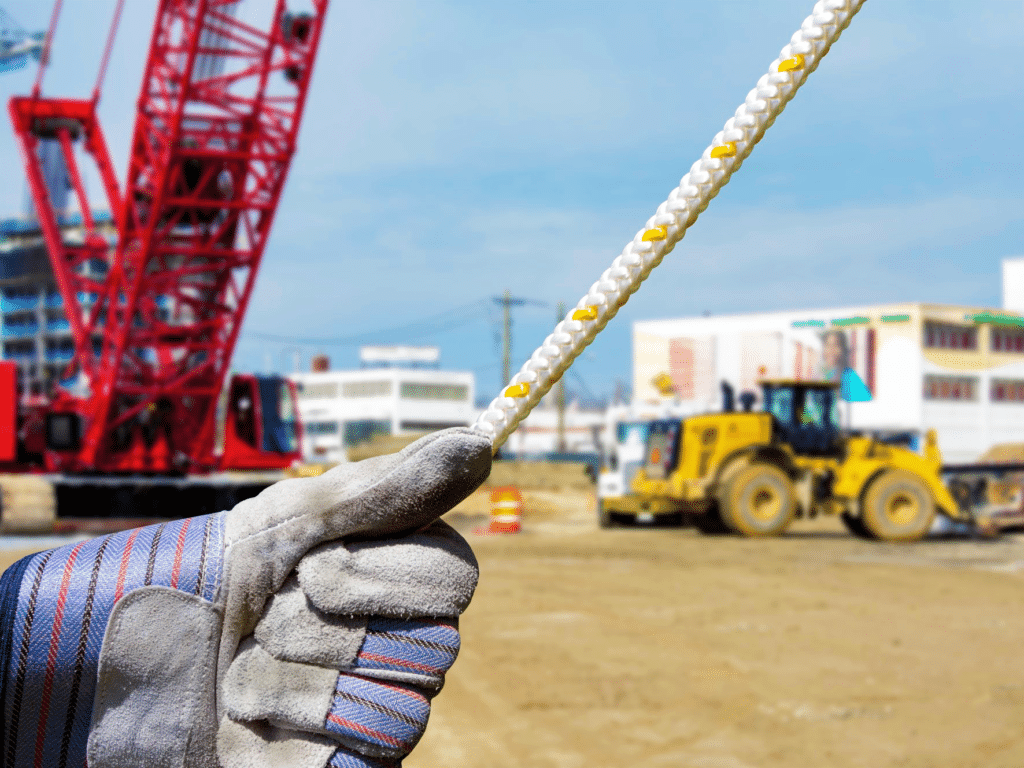
Hand and finger injuries are still among the most common and serious injuries in lifting operations. Despite improvements in equipment, training and work preparation, incidents involving trapped fingers, pinched hands and uncontrolled contact with loads continue to occur in sectors as diverse as industry, construction, infrastructure, maintenance and offshore.

In response, many organizations have introduced the concept of hands-free lifting. The intention behind this is understandable and correct: to reduce hand injuries by preventing physical contact with loads. In daily practice, however, it appears that lifting operations cannot always be performed completely without hand contact. This leads to an essential question for the industry: are we trying to eliminate the use of hands or rather prevent hand injury?
The term hands-free lifting suggests that loads can be lifted, guided, positioned and set down completely without hand contact. In theory, this would eliminate all risks to hands and fingers. In practice, however, lifting operations frequently require controlled actions, for example, during load hooking and unhooking, managing or retrieving taglines, accurately positioning a load, or controlled landing and unhooking. When hands-free lifting is presented as an absolute principle, it can actually lead to unsafe situations. Employees are then faced with a concept that does not do justice to reality, which encourages improvisation or postponement of necessary actions. Therefore, the problem is not the presence of hands, but the fact that hands end up in danger zones.
The majority of hand and finger injuries occur when hands are exposed to:
- bottlenecks between load and structure;
- entrapment zones while landing or setting a load;
- unexpected load movements;

- residual or released energy upon release.
These risks exist regardless of the terminology used. Whether an organization talks about hands-free lifting or not, what is decisive is how effectively hazard areas are recognized and controlled. From that understanding emerges a more realistic and robust approach, increasingly referred to as Safe Hands Lifting.
Safe Hands Lifting is a practice where employees touch a load only when it can be done safely and in a controlled manner, keeping hands out of pinch points, entrapment areas and other hand injury hazards at all times. Safe Hands Lifting recognizes that hands may be needed in certain phases of a lifting operation, but only when:
- the risks have been assessed in advance;
- conditions are under control;
- the method of operation is clearly defined.
The emphasis is not on slogans, but on risk management and discipline in execution.
Although the interpretation may vary by organization or industry, in practice Safe Hands Lifting rests on a number of established principles:
- Risk analysis determines hand contact. Hand contact with a load is not a given. Any hand contact must be substantiated with a risk analysis and is considered an exception, not standard.
- Clear height limit. Hands should never be placed on or against a load when the underside is above hip height. This simple rule prevents exposure to uncontrolled load movement during critical phases.
- Preparation rather than improvisation. When hand contact is necessary, it should be explicitly included in the lifting plan: when, how and by whom is it permitted?
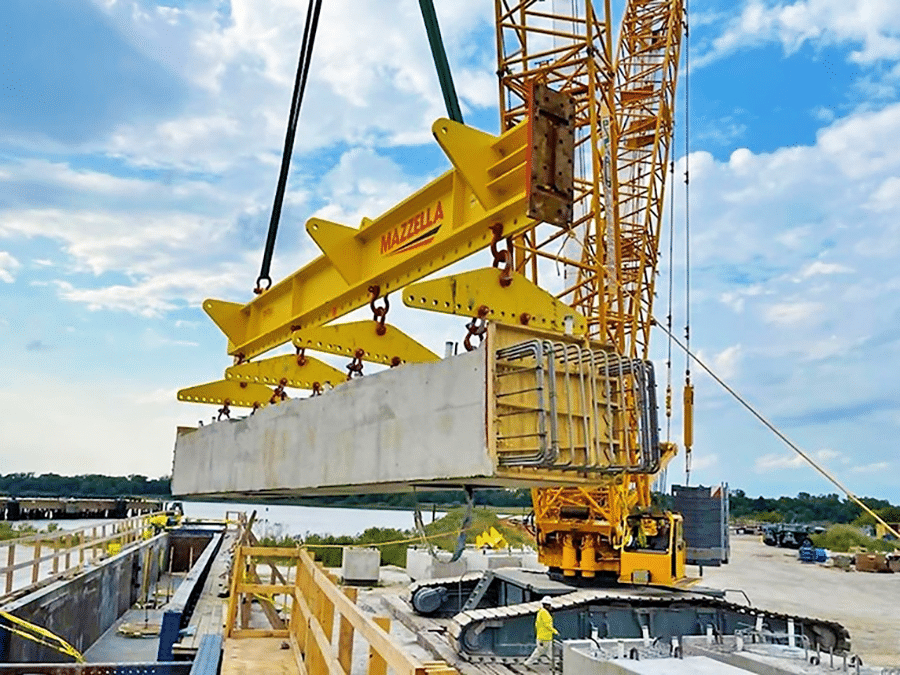
Safe Hands Lifting is not an isolated measure, but the result of a combination of practical choices:
- Mindset: the realization that loads can always move unexpectedly and that hands default to staying out of danger zones.
- Taglines: correctly applied to control direction and stability without proximity to the load.
- Tools instead of hands: consider push/pull tools and positioning aids to avoid direct hand contact where possible.
Together, these measures ensure that control is maintained without unnecessary exposure of hands and fingers.
The shift from hands-free lifting to Safe Hands Lifting shows that the industry is maturing in its safety thinking. It is an approach that recognizes practicality without compromising on injury prevention. Reducing hand and finger injuries is not achieved by completely eliminating hands from the process, but by eliminating uncontrolled hand exposure - with preparation, discipline and skill. Safe Hands Lifting is not a slogan. It is a practical method, rooted in daily practice in lifting operations.