Platform on concrete and steel in construction

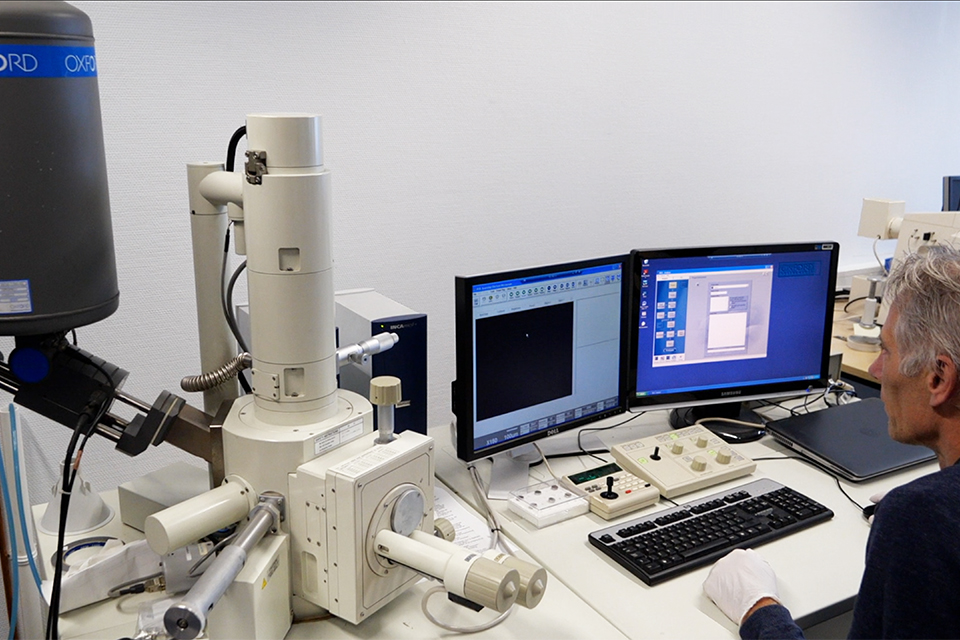
Concrete, metal, stone, coatings, bio-based materials, and even microorganisms: at Nebest Laboratorium B.V., everything revolves around reliable materials testing. The laboratory, located in Vianen, is an independent entity within the Nebest Advisory Group and has been working independently for nearly forty years to evaluate construction materials. Maurice Walrave and Rob Pooters give us a behind-the-scenes look and discuss current issues in the market. And there are some pretty surprising topics among them…
Nebest’s laboratory was founded in 1988 and builds on a rich history that includes well-known names such as Koning, Bienfait, and the BAM Concrete Lab. Over the years, it has grown into a comprehensive testing and research center with six areas of expertise: concrete, metal/steel, stone, coatings, biobased materials (particularly wood), and microbiological degradation of metals and wood. “In addition to our sister companies, we are also frequently engaged by engineering and consulting firms, contractors, and suppliers of building materials who outsource material testing to us,” says Walrave, manager of Nebest Laboratory.
One of Nebest Laboratory’s strengths is its practical approach. Lab technician Pooters agrees, saying: “Clients don’t always have to provide samples themselves. If desired, we can collect samples ourselves or retrieve drill cores, water samples, or other test specimens on-site. In urgent cases, it’s sometimes even possible to conduct the analysis and report the results on the same day.” According to Walrave, this approach and flexibility are particularly valuable when dealing with urgent issues in construction and infrastructure.
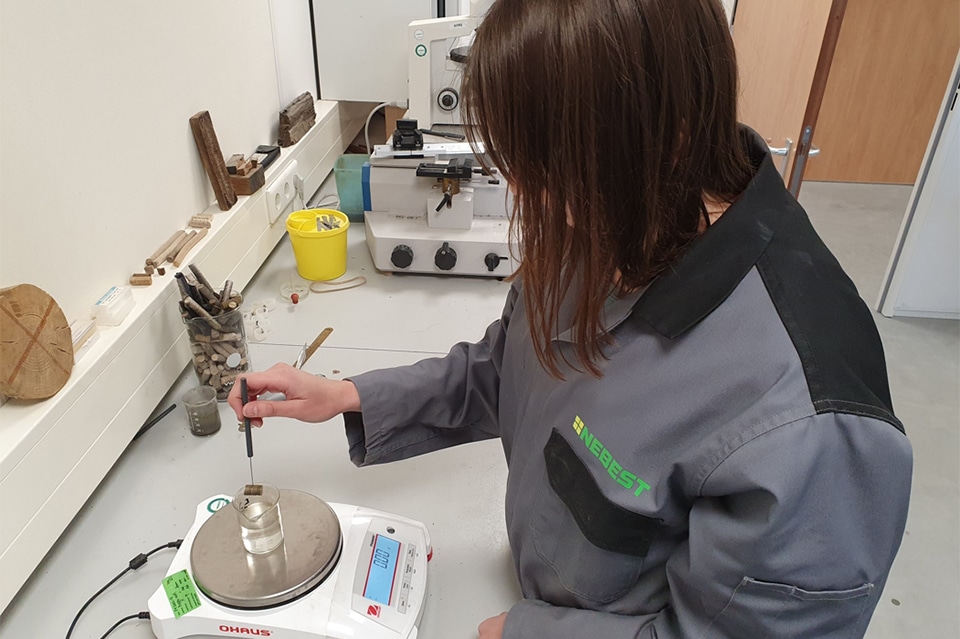
Current market demands demonstrate just how broad the field of work is. “There is high demand for chloride analyses in concrete,” Walrave notes. “Chlorides aren’t harmful to concrete on their own, but they can cause corrosion of the rebar, with all the consequences that entails.” Research into mixing water for concrete and grout is also on the rise, according to Pooters. “Because the supply of drinking water can be costly, contractors want to know whether water from a nearby ditch, river, or canal is suitable for use. We then test the samples in accordance with NEN-EN 1008.” In addition, the lab technicians are busy conducting research on the reuse of steel from existing civil engineering structures, including analyses of heavy metals and hexavalent chromium.
A relatively new specialty at the Nebest Laboratory is MIC (microbiologically influenced corrosion) research in the Microbio department. “What we’re seeing is that steel, in particular, can be affected not only by rust but also by microorganisms,” says Walrave. “We have established our own research area using standardized testing methods to determine which microorganisms are present and in what concentrations. The results help clients determine whether intervention is necessary to prevent further damage. In collaboration with the metallurgical specialists at our sister company Nebest, we can then also provide repair and maintenance recommendations.”
Since early 2026, Nebest Laboratory has had its own Innovation Lab. There, test results are translated into practical insights regarding the lifespan, maintenance, risks, and applicability of materials. “Above all, it’s a place where we provide smaller companies with a space to conduct research on new materials, with a special focus on biobased applications,” says Walrave. “It’s a win-win situation, because of course we learn from that as well.”
“We work at the intersection of technology and science,” he summarizes. “By listening closely to the market and developing new research methods, we help clients not only gain insight into problems, but also solve and prevent them.” With this approach, Nebest Laboratorium aims to continue growing in the coming years as a knowledge partner for the construction, infrastructure, hydraulic engineering, and industrial sectors, offering physical, chemical, and microscopic analyses.
Neem dan rechtstreeks contact op met Nebest BV.
 Contact opnemen
We are Nebest An independent engineering/ consulting firm, specializing in inspection, in-depth technical research and advice as well as project management in construction, infra, industrial and hydraulic engineering. Asset management is in our DNA and was embedded within the organization since its establishment in 1988 with Nebest's role in the creation of risk-based inspection and management. Anno [...]
Bekijk Bedrijfsprofiel