Platform on concrete and steel in construction
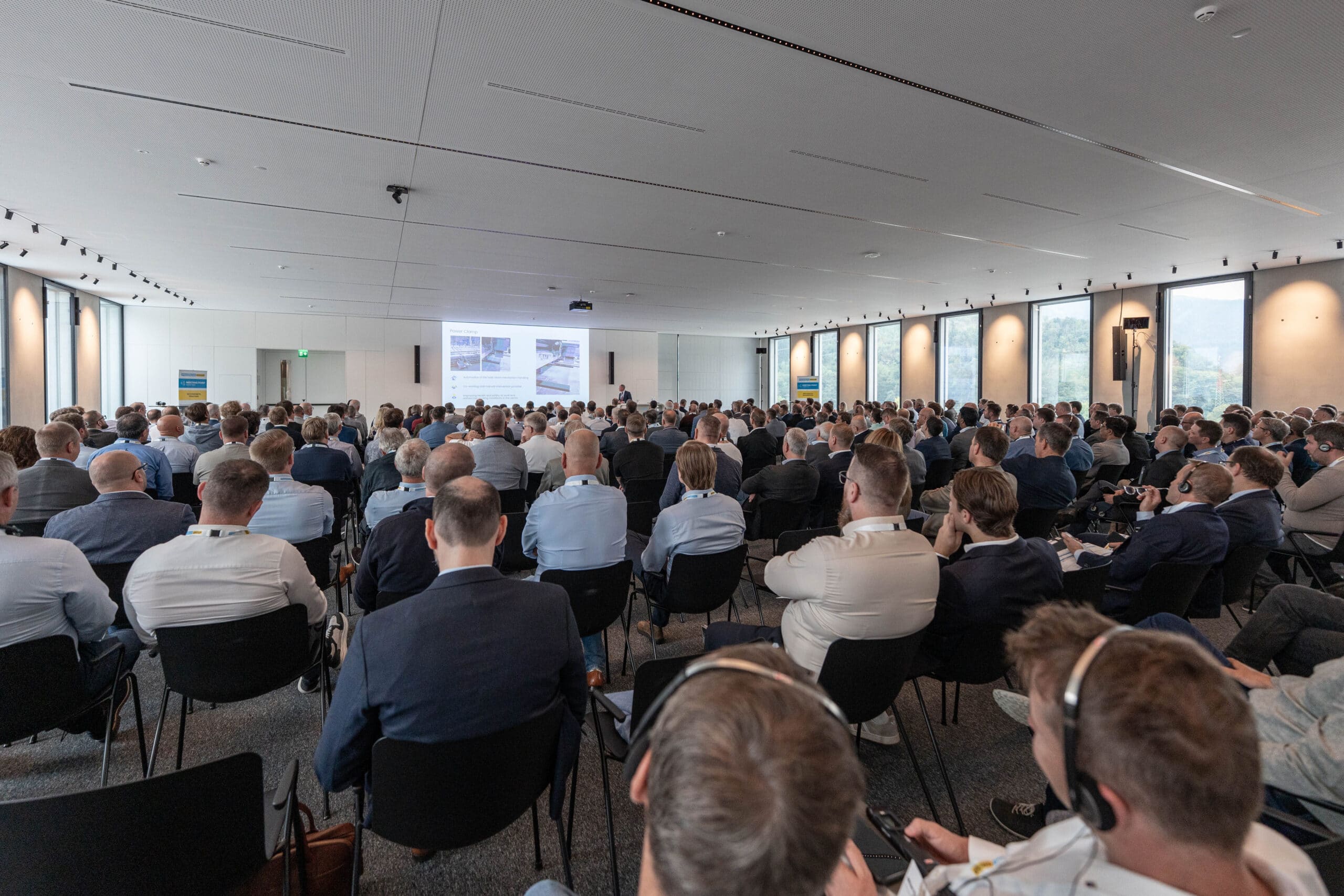
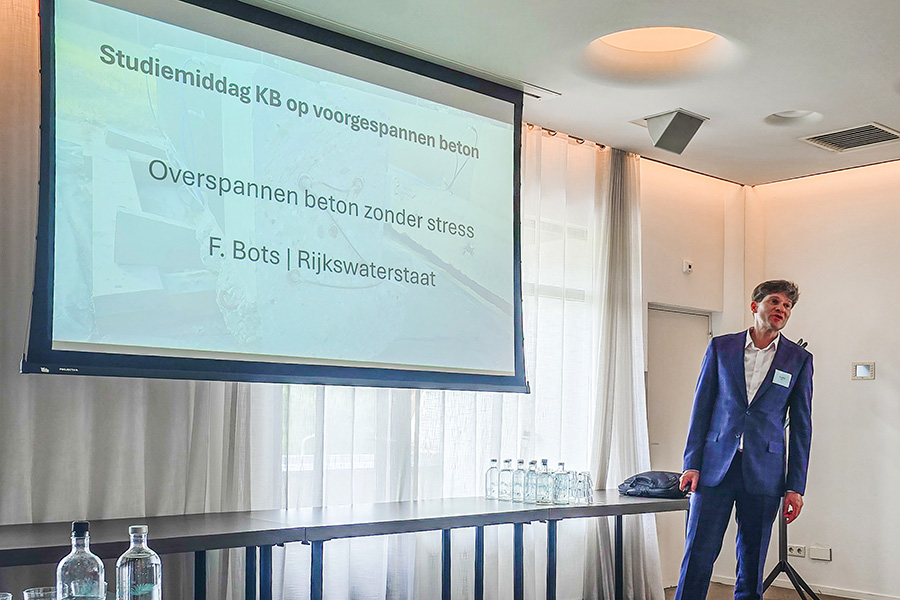
During a study session organized by the KB Knowledge Center in Wolfheze, everything revolved around one question: Can cathodic protection be safely applied to prestressed concrete, and can this application be scaled up? The answer that emerged on May 27 at Papendal and later at the test site was positive. This is not an unconditional green light, but it does confirm that KB is a serious and practical technique for extending the service life in this context as well.
The central theme of the afternoon could actually be summarized quite simply: ‘It’s possible, provided you know what you’re doing.’ That sounds obvious, but it is precisely in that addition that the true significance of the ongoing research lies. Ultimately, the focus wasn’t on whether KB is applicable, but rather on the conditions under which it can be used safely, in a controlled manner, and with sufficient understanding of the margins.
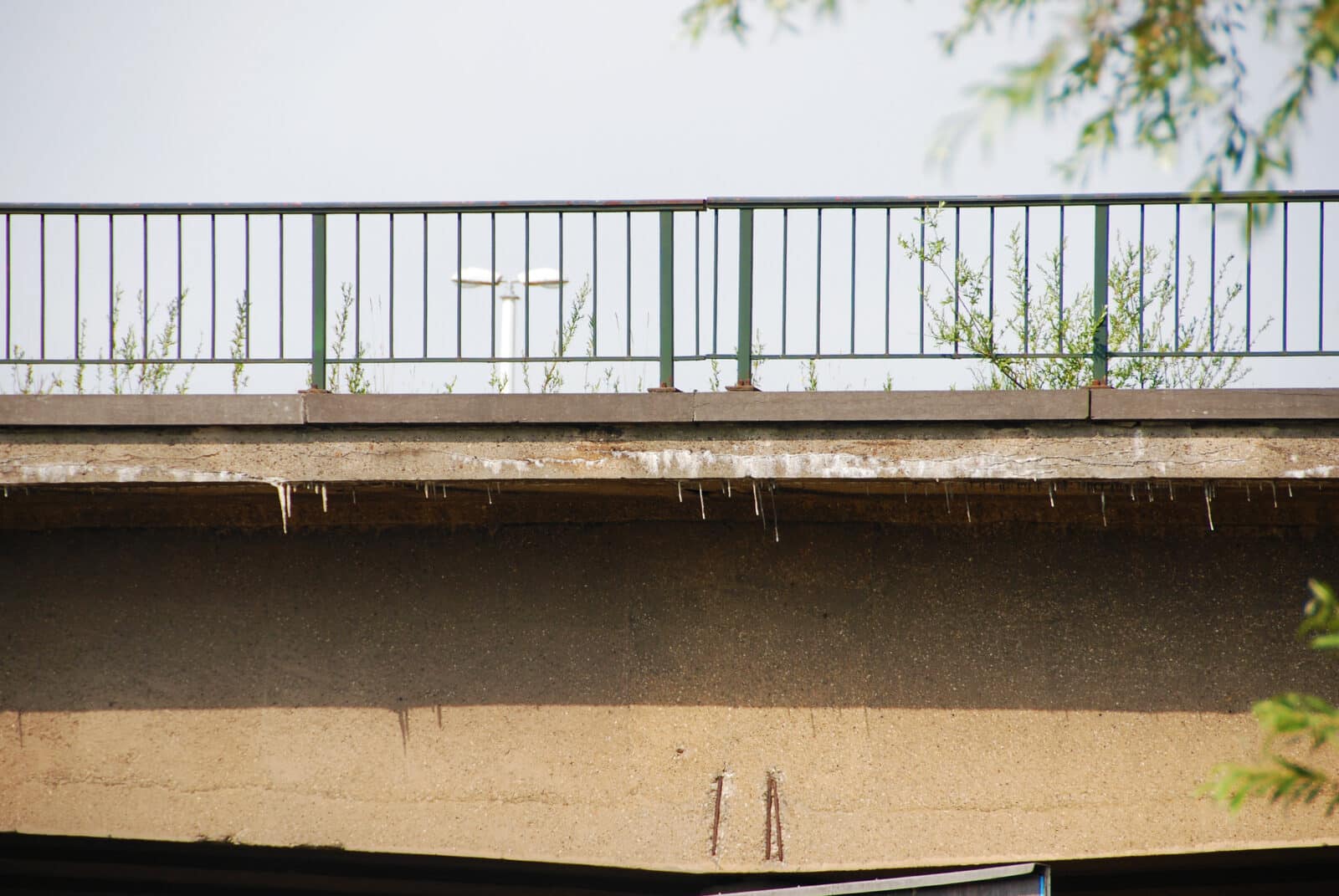
Fons Bots, senior contract manager at Rijkswaterstaat, immediately put the discussion into the proper perspective. The Dutch stock of bridges and viaducts from the 1960s and 1970s is reaching a stage where corrosion is no longer an occasional occurrence, but a structural management issue. In that light, cathodic protection has long since ceased to be a novelty and is now “a proven technique for slowing corrosion and extending the service life of engineering structures.” At the same time, one question lingered: what happens if the protection is taken too far?
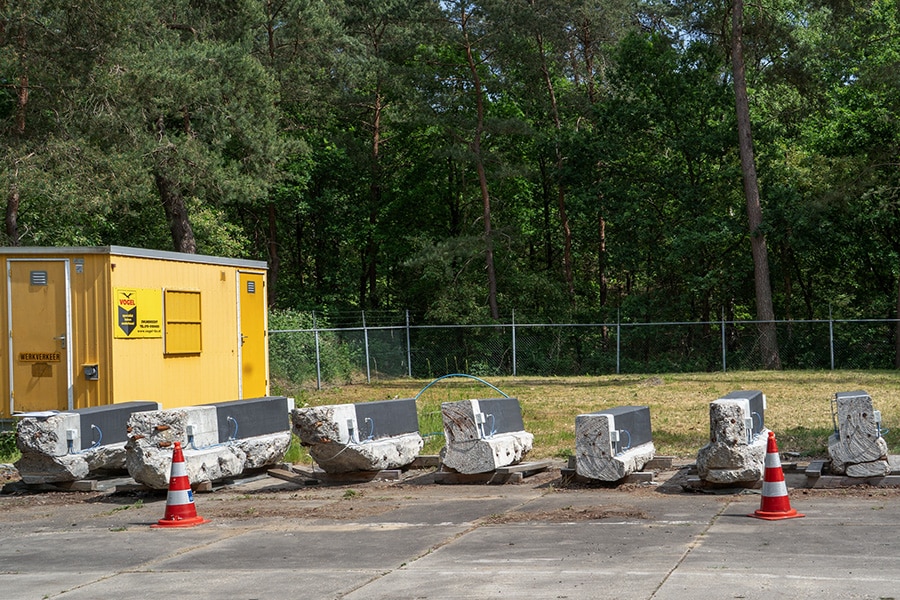
Precisely to address this uncertainty not theoretically but practically, eight girder ends from demolished viaducts were set up and equipped with KB. The research therefore focuses not only on normal operating conditions, but specifically on long spans and increased current densities. Bots explicitly placed this in the context of asset management: the better managers understand where the limits lie, the more confidently they can apply KB to prestressed concrete. As a result, this afternoon the technique was not portrayed as a risky exception, but rather as a method that is becoming increasingly professionalized precisely thanks to careful research.
Penny Pipilikaki, senior technical advisor in the GPO Bridges and Viaducts Department, placed the test site within the history of two related viaducts over the A1 near Apeldoorn: Sluinerweg and Ardeweg. Both were part of a broader portfolio approach by Rijkswaterstaat, which has been investigating since around 2011 how the service life of similar structures could be extended. Cathodic protection emerged as a key measure for controlling corrosion and slowing the progression of damage.
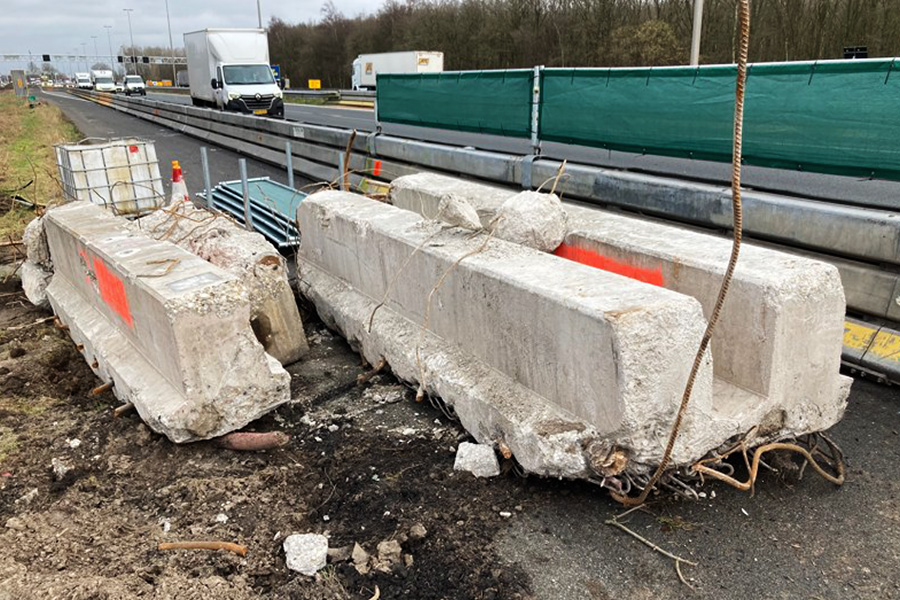
Although the two viaducts were built in a similar manner and were located only a few kilometers apart, they did not behave the same way. The progression of damage differed significantly, which made them particularly interesting for further investigation. Inspections examined the condition of the concrete, the performance of the KB systems used, and the question of why one viaduct required more protection than the other. The demolition then presented a unique opportunity. Since the structures were going to be demolished anyway, components could be examined in a way that would not be possible on a structure still in use. Four girder ends from both viaducts were salvaged and added to the ongoing experiment in Wolfheze.
In that context, Pipilikaki spoke about the ‘anatomy’ of a viaduct: learning from actual structural components rather than just from models or laboratory tests. Tests that can be performed on the test specimens include coating thickness measurements, potential measurements, rebound hammer tests, ultrasonic pulse velocity measurements, and handheld XRF measurements. Comparing these results with destructive tests—such as core analysis for carbonation, chloride penetration, and compressive strength—provides greater insight into the value and limitations of measurement methods in practice.
The demolition approach itself was also unique. Large sections of the viaducts were not completely demolished on site, but were moved intact and dismantled elsewhere, partly for practical and safety reasons, including the presence of asbestos-containing components. This had a significant advantage for the knowledge program: valuable structural components were preserved for further research. Thus, the demolition became not only an endpoint but also the starting point for a testing ground for knowledge development regarding cathodic protection, prestressed concrete, and inspection methods.
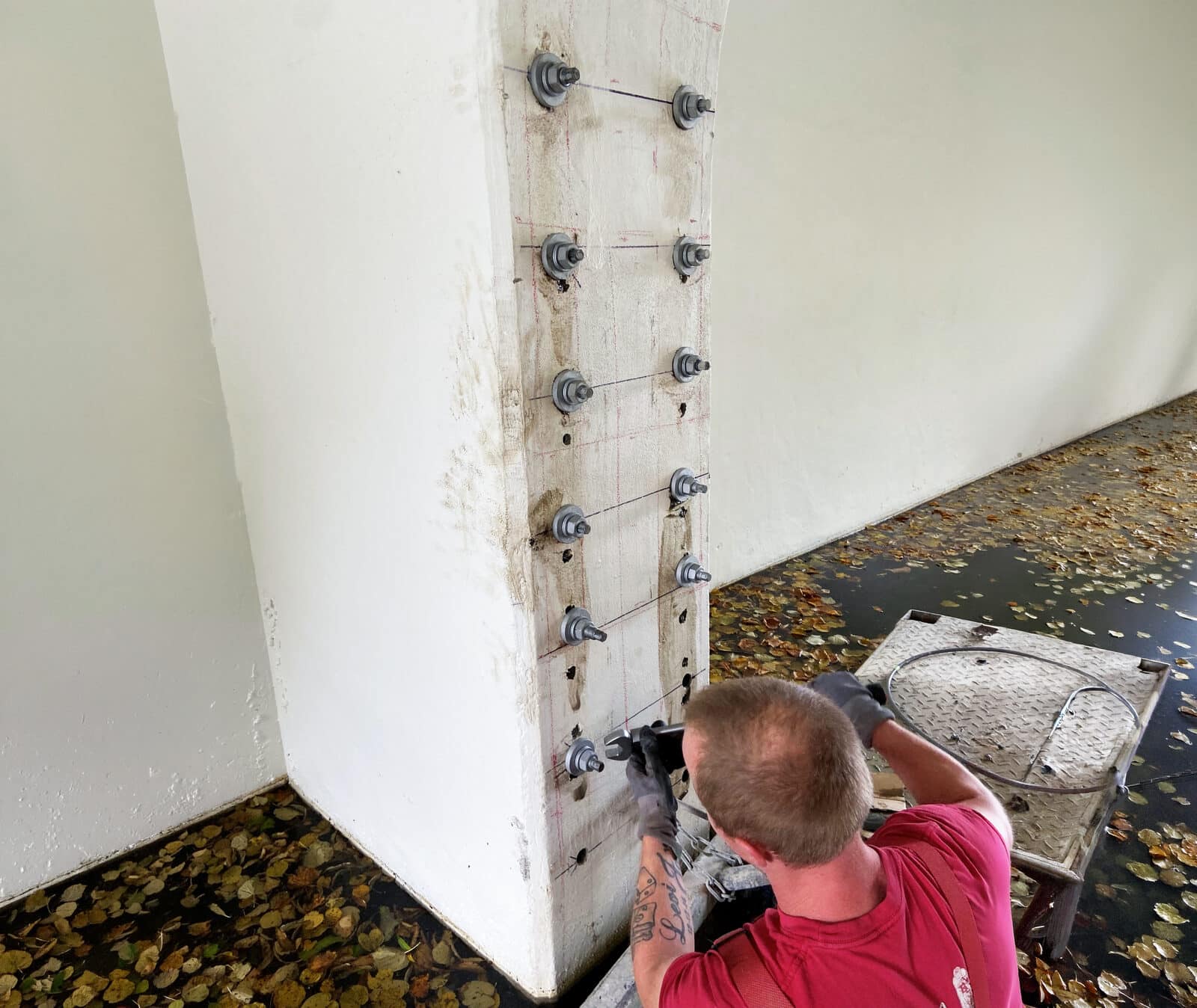
Rob Polder, a former professor of materials science at Delft University of Technology and a specialist in the field of KB, then provided a more in-depth technical explanation at the test site. “The setup was deliberately designed as a sort of worst-case scenario, with exposed girder ends positioned upside down, set up outdoors, and equipped with a conductive coating anode. Rain, drought, and fluctuating moisture conditions are allowed to affect them freely. That is precisely what makes the setup valuable.” As Polder made clear, the behavior of a KB system in practice depends not only on the set voltage but also on the moisture content of the concrete, the local chloride load, and the condition of details such as joints and damage. Some elements require a much higher current in wet weather compared to dry conditions; this is where both the complexity and the knowledge gained from this research lie.
The presentation by Remco van Osch of the Association of Consultants in the Field of Concrete Maintenance and Repair (VABOR) strayed slightly from the main theme of the afternoon, but it did make clear how essential a thorough understanding of the existing structure is. Insufficiently filled prestressing ducts and poorly grouted cable ducts can pose major risks that are not visible from the outside. His call for more systematic investigation—using radar, ultrasonic measurements, and, where necessary, on-site inspections—therefore did not serve to downplay KB’s point but rather to supplement it: anyone wishing to implement a technique to extend a structure’s service life must have a clear understanding of the structural condition they are dealing with.
A visit to the nearby Rijkswaterstaat test site brought the stories to life. Amid reference electrodes, sensors, and measurement cabinets, it became clear that this was not some remote laboratory setup, but actual structural components exposed to the elements—intended precisely to demonstrate how KB performs in real-world conditions. To wrap things up, Anthony van den Hondel from the KB Knowledge Center summarized the results achieved so far. At typical voltages of approximately 2 to 4 volts, cathodic protection appears to be well-suited for prestressed concrete, provided that the design and monitoring are in order. Within that range, sufficient depolarization is achieved without critical steel potentials becoming an issue. Only under extreme overvoltage—in the range of 10 to 14 volts—and especially in combination with heavy wetting of the concrete, did situations arise in which the critical threshold of approximately -900 mV was approached or exceeded. This is relevant information, precisely because it shows where the actual limit lies. Van den Hondel’s message was thus effectively twofold: “Under normal conditions, everything is fine, but you must continue to focus on the potential at the steel.” After all, it is not the applied voltage as such that is decisive, but what ultimately happens electrochemically within the structure.
The study session in Wolfheze was an informative afternoon for the attending managers, consultants, and contractors. Cathodic protection on prestressed concrete is a realistic and promising option for extending service life, as long as design, implementation, and monitoring are taken seriously. There is certainly a fine line between effective protection and overprotection, but the test results also suggest that, for properly designed systems, that margin is wide enough to allow for confident application. That is precisely what makes this research valuable. It does not eliminate the need for caution, but it does help dispel some of the initial hesitation. And perhaps that was ultimately the most telling outcome of the afternoon: not that all questions have been definitively answered, but rather that KB once again presented itself as a mature technology with promise, even in areas where it has long been considered a sensitive topic.