Platform on concrete and steel in construction
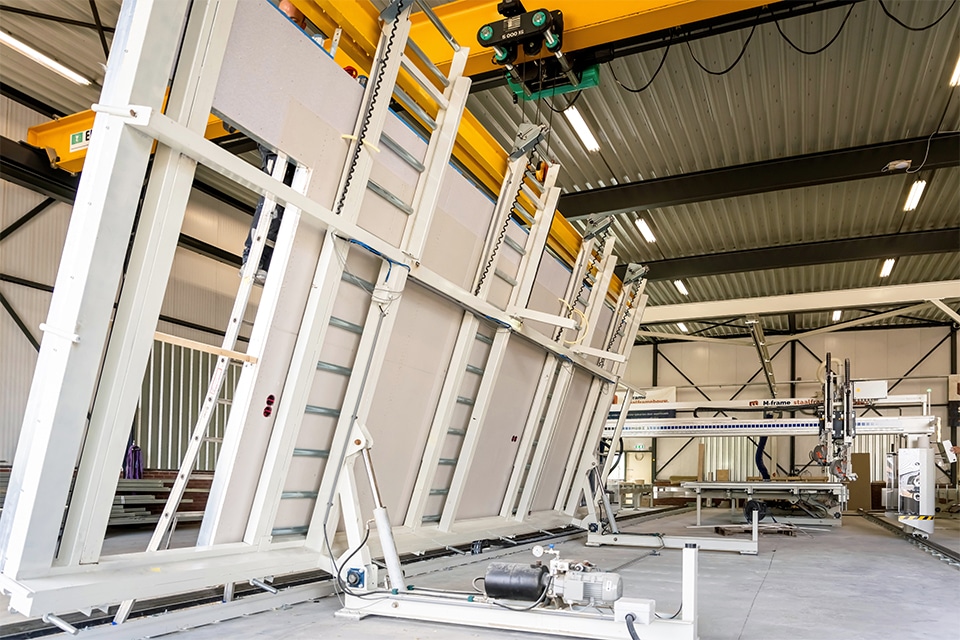
The construction industry tends to be quite conservative, but this is slowly changing. New ways of thinking are gaining a foothold, where building is no longer pure craft, but increasingly a cleverly organized process. Steel frame construction is one of the most promising developments in this. With innovative projects, pioneer M-Frame Staalframebouw shows that this construction method is ready for the future.
“Steel frame construction starts completely digitally,” explains Peter van Gent of M-Frame Steel Frame Construction. “The process starts with a full 3D design in BIM, after which the building is first built virtually, so to speak. Only then does physical production follow. This ensures a more efficient construction process, reduced failure costs and higher quality.” A good example of this is the large-scale project on Herenstraat in Groningen, where the company is currently constructing a four-story addition to an existing building. “With as many as 44 apartments and maisonettes and a total of 11,000 m2 of walls, roofs and floors in steel frame elements, this is one of the largest steel frame construction projects in the Netherlands.”
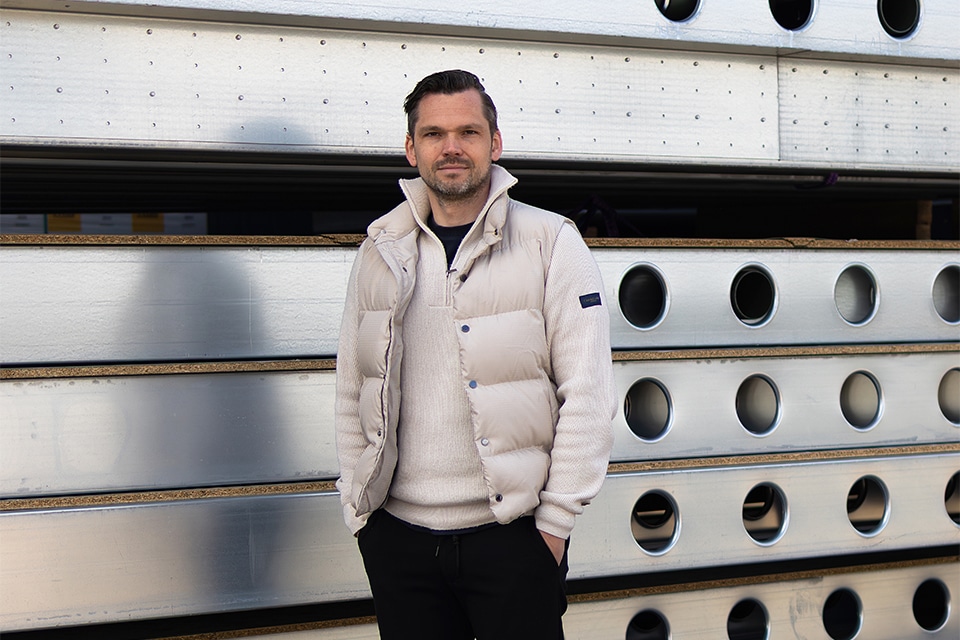
According to Van Gent, one of the biggest advantages of steel frame construction is its slim construction. “Compared to CLT (Cross Laminated Timber), for example, steel frame can be built thinner. This immediately provides additional net floor space, up to 150 m2 extra in the project in Groningen, where CLT was initially used. Especially in locations where the square footage price is high, this makes a huge difference. In addition, steel frame construction is considerably lighter. This offers great advantages in this type of addition. The lower weight keeps the load on the foundation and existing structure to a minimum, which is often decisive.”
Steel frame construction is often unfairly compared to modular construction, according to Van Gent. “With steel frame construction, you are not stuck with standard sizes and stackable units. Far from it,” he emphasizes. “We don't look at maximum transport dimensions, but what the end user needs. Steel frame construction offers flexibility, where we combine 2D elements (walls, floors, roofs) and 3D units into a hybrid system that we can flexibly scale up or down and thus adapt to changing needs. A good example is our latest development Pulse, a turnkey 3D unit with all the facilities a house or apartment needs, including bathroom, toilet, technical room, meter cupboard, etc.”
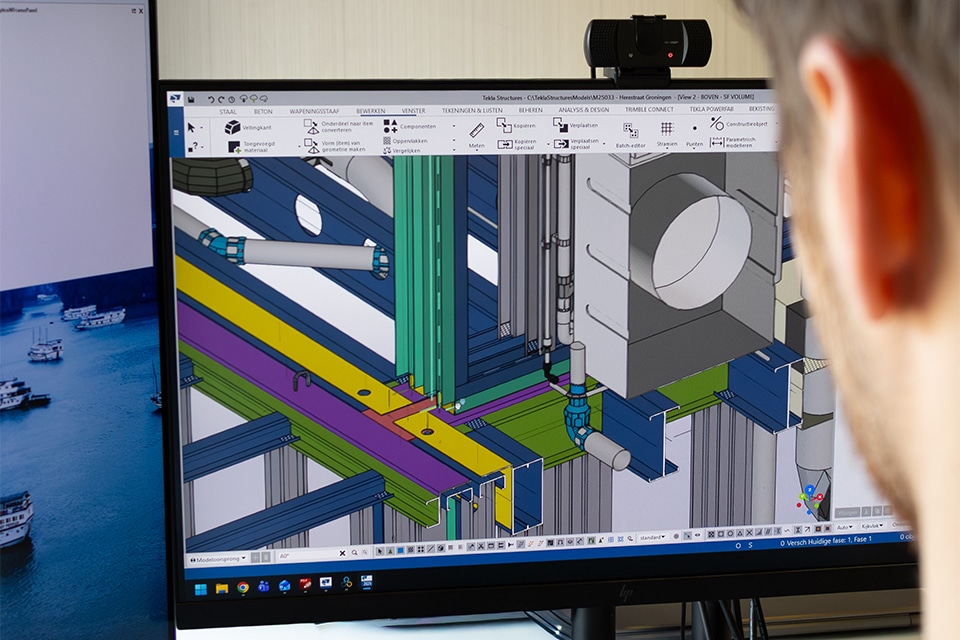
A key differentiator of M-Frame lies in its level of digitization. “We work with automated processes, macros, dashboards and data integration from suppliers. There is actually no more classical drawing work. Engineering is more composite, in which AI plays an increasing role in optimizing the design. The design is also thoroughly substantiated with tests for fire safety, acoustics, thermal performance and vibration. Extensive quality assurance checks are also built in, so we are already ready for the Building Quality Assurance Act (Wkb).”
Although steel frame construction offers many advantages, unfamiliarity in the market is still a challenge, according to Van Gent. “When we are approached for a project, it is always with the question ‘can it also be done in steel frame construction?’ rather than ‘we have come up with a project in steel frame construction, would you like to make a price for this?’ That doesn't happen. We still have to explain the concept first, even to large builders.” Nevertheless, steel frame construction is on the eve of a broad breakthrough, Van Gent expects. “With the project in Groningen, we show that in many cases steel frame construction is a better choice: faster, surprisingly flexible and, because of the leaner concept, economically more attractive. The technology is there, the advantages are convincing, now the market is.”
Neem dan rechtstreeks contact op met M-frame Steel Frame Construction.
 Contact opnemen
Welcome to M-frame Steelframe Construction. We believe in building faster, better and smarter with the power of steel frame. Our focus is on steel frame construction, a revolutionary technology that is rapidly gaining ground because of its versatility, efficiency and durability. With us, an entire structure is fabricated in advance at our factory in Zwartemeer. This is a 100% controlled process, [...]
Bekijk Bedrijfsprofiel