Alongside sustainable sourcing, steel supplier is committed to making its entire business sustainable
Tekst Tjerk van DuinenBeeld KS Groep
Steel is not the most sustainable material. The steel industry is responsible for around ten per cent of global CO2 emissions. But we cannot do without it. That makes it essential to make production and processing as sustainable as possible. KS Service Center is therefore making a major commitment to selling ‘sustainably produced steel’ that is certified as such. “But we are not stopping there,” says Gregory Rombaut, Sales and Marketing Manager. “We are taking a critical look at our entire business operation, from energy use and procurement to the smart packaging and transport of steel coils, and adopting the most sustainable solution wherever possible. We believe that, as a company in this sector, we have a duty to society to do so.”
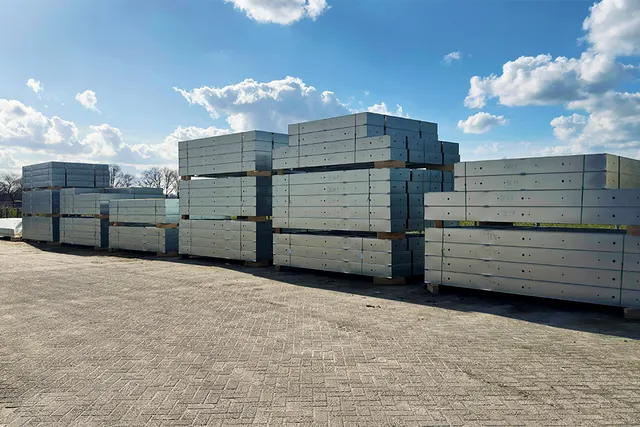
Based in Moerdijk, KS Service Center produces and supplies slit steel strip and sheets for high-quality applications. The previous issue of Beton & Staalbouw explained how the company is promoting the use of Green Steel through collaboration across the supply chain. This enables KS Service Center’s customers to significantly reduce their Scope 3 emissions. “But we also need to look at our own business operation,” Rombaut begins. “We are already making good progress in making our internal processes more sustainable, in order to limit our Scope 1 and 2 emissions as much as possible. In a world where this is becoming the norm and increasingly carries weight in tenders, this also helps our business partners meet their sustainability targets.”
Electrification
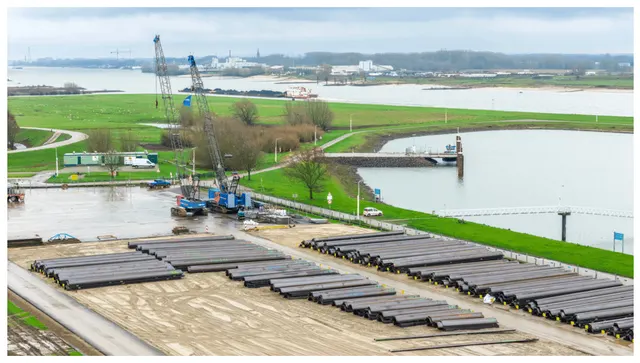
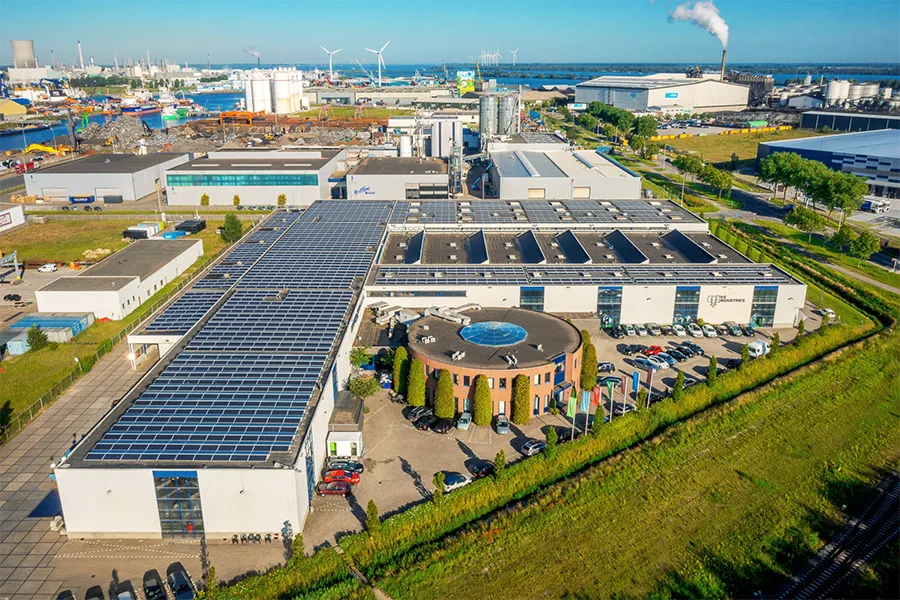
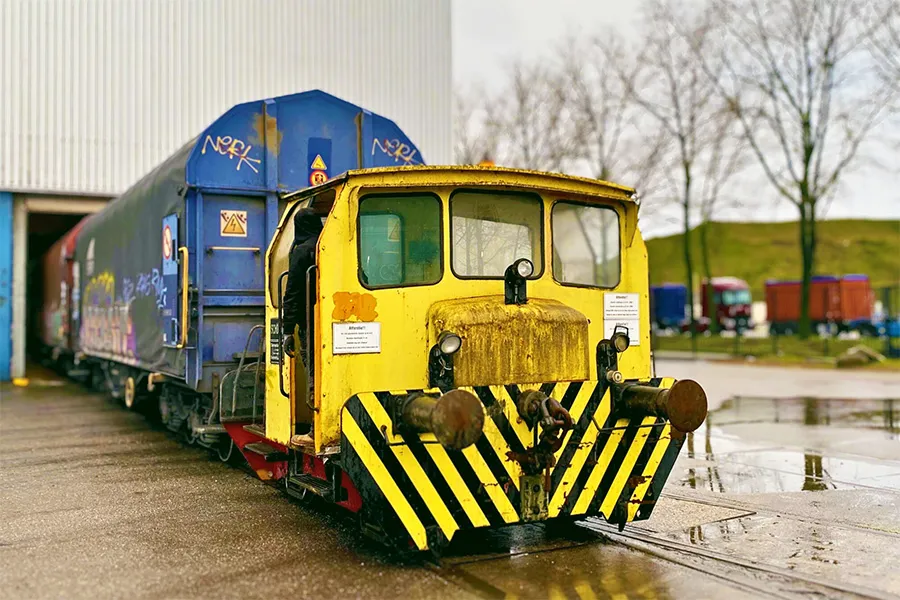
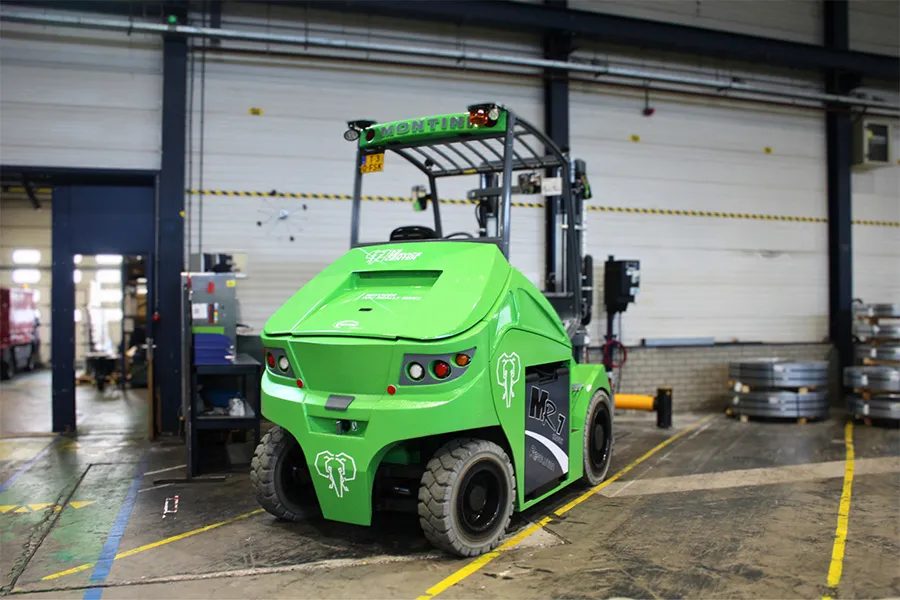
Electrification of the site on Apolloweg in Moerdijk is already well under way. More than 3,100 solar panels on the roofs of the various warehouses supply 30% of the electricity required. “We source the rest sustainably,” Rombaut adds. “The building has now been taken off gas thanks to electric cooling and heating. Our internal transport vehicles are electric or run on HVO100 (biodiesel). Restrictions on payload, availability, range and price mean we cannot electrify them at present, but we are working towards doing so as soon as possible. Employees are also encouraged to drive electric vehicles. They can use the charging points on our site. In addition, most of the steel we purchase is transported to Moerdijk by rail. That is two trains a week, replacing forty lorries. This saves around 2,000 tonnes of CO2 emissions. For comparison, that is equivalent to the annual emissions of about 170 households in the Netherlands.”
Recycling
KS Service Center also keeps a close eye on material use. “We scrutinise everything we purchase and process it sustainably,” Rombaut assures us. “All the wood used in our transport operations comes from PEFC-certified suppliers that process timber from sustainably managed forests. Wooden pallets are reused wherever possible. At the end of their service life, the remaining wood goes to a partner that shreds it and turns it into compressed pellets. We also reuse the Signode strapping that holds the coils together whenever possible. If we cannot reuse it, the strapping is sent for recycling along with the offcuts from slit steel. All our metal scrap goes directly back to the steel manufacturer, without any third parties involved. As with all our other waste streams, we use professional, certified service providers for this.”
Certifications
KS Service Center is seeking, on the one hand, to convince customers to pay a little more for sustainably produced steel and a sustainable business operation, and to show them how collaboration across the supply chain can help drive progress in the industry. “On the other hand, we all need to contribute to a healthier world, and the market will increasingly make sustainability a requirement by setting stricter standards,” says Rombaut. “This is the business culture we stand for. We recently became ISO 14001 certified, and the results of our CO2 Performance Ladder certification will be announced at the end of July. This will give us a clear picture of our total CO2 emissions at company level and allow us to investigate further how we can reduce them. We will keep going until our entire business operation is completely CO2-free.”
Vraag over dit verhaal? Stel je vraag
Blijf dit volgen
Bij een nieuw verhaal krijg je een e-mail. Geen account nodig.
- ThemaMinder CO2 in beton en staal
- OnderwerpSteel