Platform on concrete and steel in construction
Sustainable concrete repair can only be guaranteed if a number of essential steps in the process are followed: a thorough diagnosis or preliminary investigation, the use of the correct repair techniques with suitable products, and rigorous inspections during and after the work is completed. To extend the service life of the repaired concrete, additional protection is necessary.
A Life Cycle Cost model based on project information and product characteristics provides a cost comparison between concrete repair combined with protection and concrete repair without protection. This report states that every euro invested in protection yields savings of 3 to 5 euros in recurring repair costs and that appropriate protection eliminates an average of three repair cycles over the structure’s service life.
Therefore, once the concrete repair has been completed, a protective coating must be applied to prevent further damage over time. First and foremost, the protective coating must be compatible with the environmental conditions described in EN 206-1 (concrete standard). NBN EN 1504-2, in turn, specifies the various types of protective products.
In environments where there is a risk of CO2-induced carbonation, carbonation-inhibiting coatings should be applied. These are typically water-based acrylic emulsions. The most important properties of carbonation-inhibiting coatings are, of course, first and foremost their resistance to CO2 penetration. The material must be waterproof while remaining permeable to water vapor. In this way, these coatings will protect the concrete from CO₂ penetration and improve the concrete’s moisture control and electrical resistance.
Durable carbonation-inhibiting coatings typically also have high crack-bridging properties and are weather-resistant. Such coatings are available in a variety of colors, which also ensures an aesthetically pleasing finish.
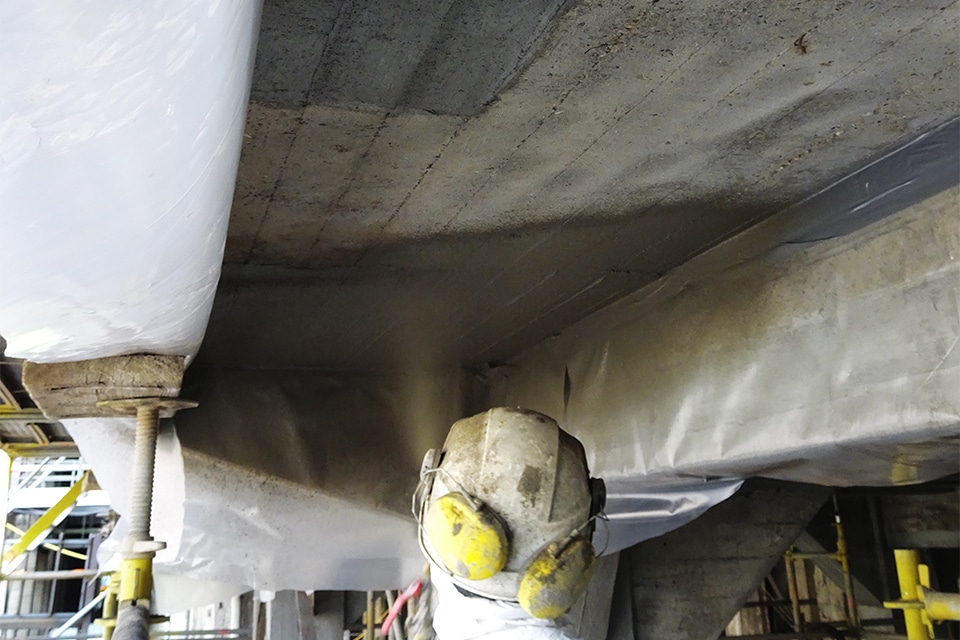
Corrosion inhibitors are molecules that prevent and slow down corrosion of the reinforcing steel. These systems are primarily used in coastal buildings, in ports—such as for quay walls, piers, and bridges—as well as for industrial structures in contact with seawater and chlorides, such as cooling towers, tanks, silos, etc. The inhibitors must be transported to the rebar to be effective. For this reason, the molecules are dissolved in a carrier that penetrates the concrete through impregnation. The carriers can be based on various technologies: water-based or alcohol-based systems. As with water-repellent treatments, the most effective systems are based on silanes. These ensure deep penetration. In this case, a water-repellent treatment is combined with corrosion protection.
According to NBN EN 1504, the key properties of these systems are the same as those for hydrophobic treatment. Manufacturers must demonstrate the electrochemical properties of the corrosion protection through on-site measurements and references, as well as based on independent test reports.
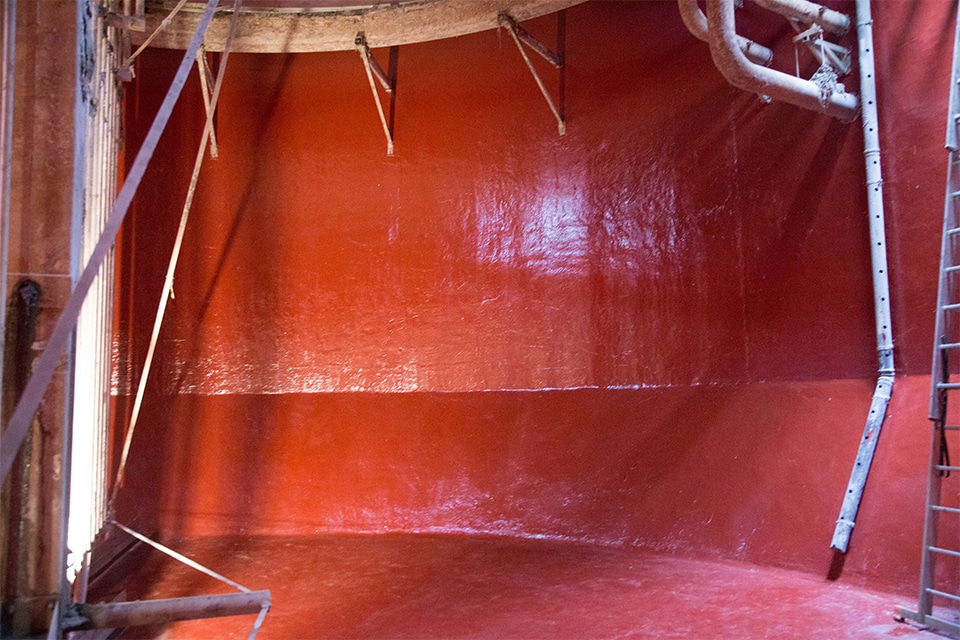
Protection against chemical corrosion is often required in industrial settings for containment structures, collection basins, and reservoirs, as well as for protection against biogenic sulfuric acids in wastewater treatment plants, sewer systems, and more. There are many technologies available on the market. The choice of product will depend on the application and environmental conditions, such as temperature, humidity, and whether the environment is open or closed. Temporary or permanent exposure to certain chemicals also plays an important role. Always consult with the supplier before making a selection.
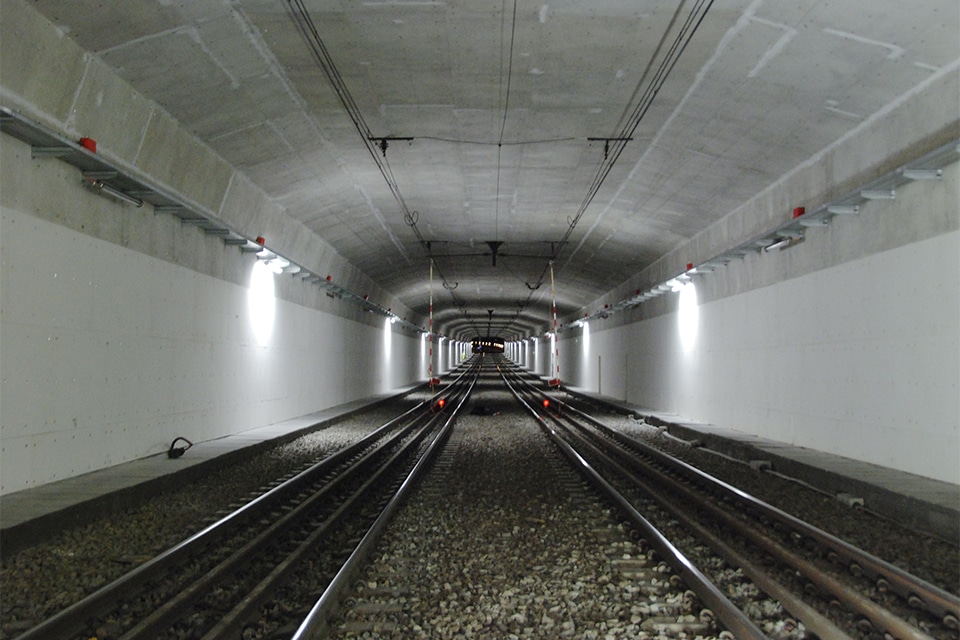
Under certain circumstances, concrete must be protected against fire. After all, high temperatures can cause ‘spalling’ or cause load-bearing concrete structures to fail. Depending on the circumstances, the desired finish, and the required fire resistance, various solutions can be chosen. In areas where aesthetics are of little importance, fire-resistant sprayed mortars can be used. In most cases, these mortars are applied mechanically. Fire-resistant paint can also be a solution in certain cases. Finally, concrete columns, walls, or floors can also be protected with fire-resistant sheet materials.
This article was produced in collaboration with Steven Van den Wyngaert, Sika Belgium