‘We sell load-bearing capacity’
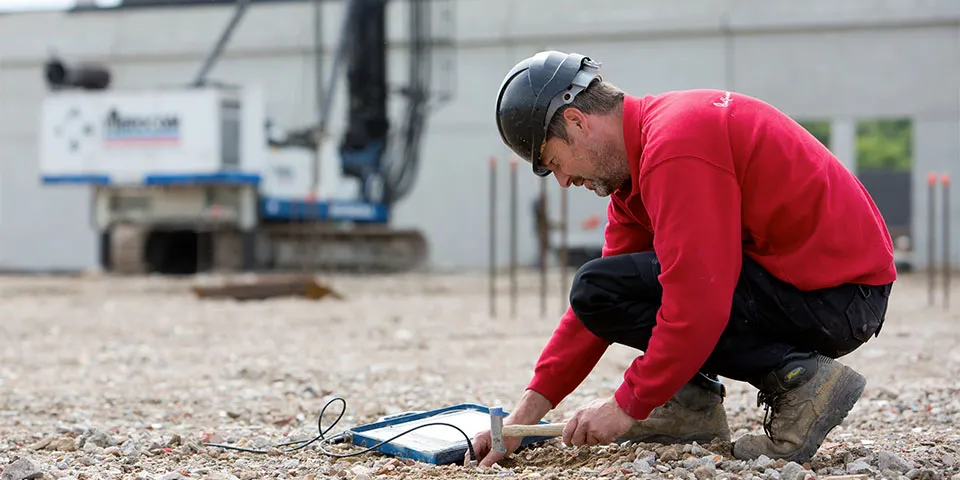
As an expert in industrial floors and foundations, Van Berlo is committed to creating sufficient load-bearing capacity for industrial and commercial floors. Differential settlement can eventually affect a floor’s flatness and performance requirements. That is why Mini Vibropiles, a product developed by Van Berlo Funderingstechnieken, are widely used on ‘poor’ ground in the Netherlands. The piling system is now also gaining ground in Belgium.
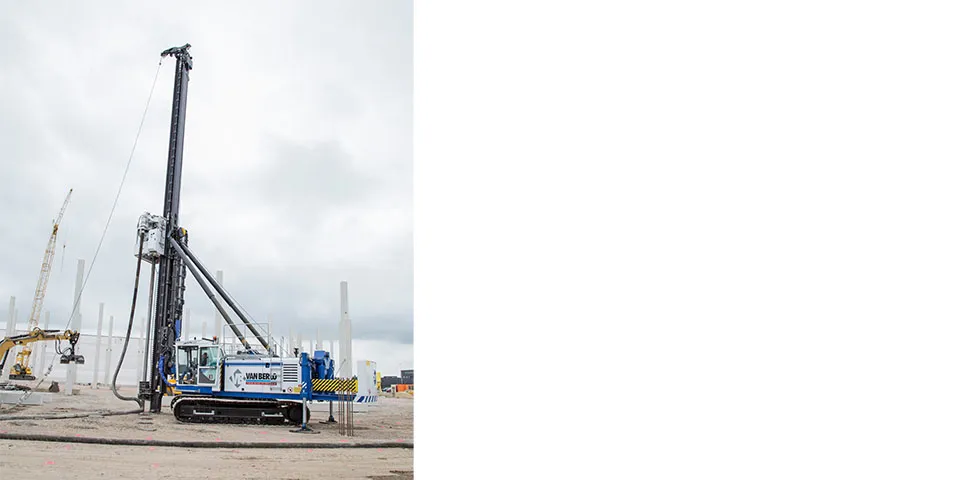
Leave the creation of load-bearing capacity to Van Berlo.
“Ground conditions are not always ideal,” says Frederik Crampe of Van Berlo. “On poor ground, an industrial or commercial floor can settle. That is not in itself a problem, provided the floor settles evenly and the settlement is limited to some extent. Unfortunately, that is almost never the case. Instead, we have to deal with differential settlement, in other words, settlement at different locations in the ground and, consequently, beneath the floor. This can have far-reaching consequences. To achieve a high-quality floor, load-bearing capacity must be created at many locations, both in the Netherlands and increasingly in Belgium, so that the floor loads are transferred to stable ground at greater depth.”
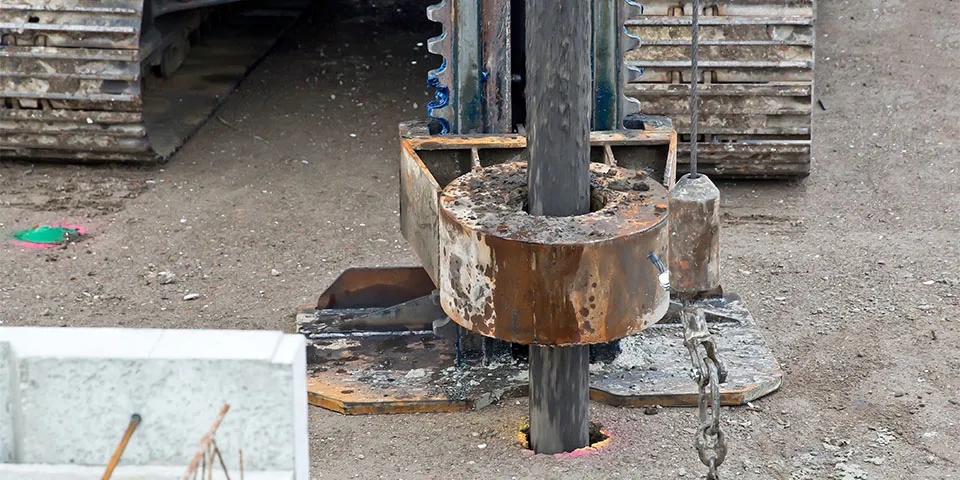
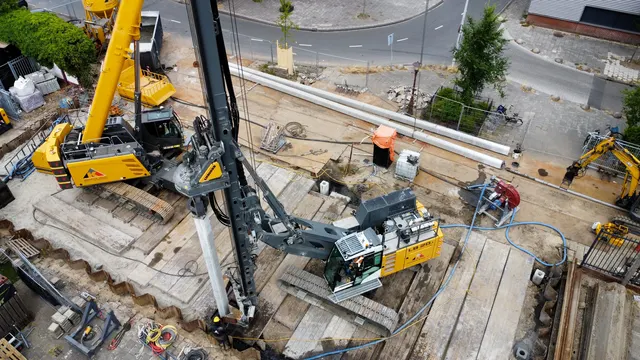
Mini Vibropiles can be installed faster, at up to 250 piles per day, than other types of piles or gravel columns.
Load-bearing stratum
Leave the creation of load-bearing capacity to Van Berlo. The family business offers clients a complete package, with its own design and foundation departments. “Our Mini Vibropiles are generally installed at depths of 3 to as much as 25 metres below ground level, depending on the depth of the load-bearing stratum,” Crampe explains. “The piles can only be loaded in compression and provide a stable foundation for the industrial or commercial floor. Differential settlement in the intermediate layers does not affect the floor.” According to Crampe, the gravel columns popular in Belgium do not provide a settlement-free solution either. “Installing gravel columns is a form of ground improvement. The system limits settlement, whereas our Mini Vibropiles provide an actual foundation that is free from settlement. That is an essential difference.”
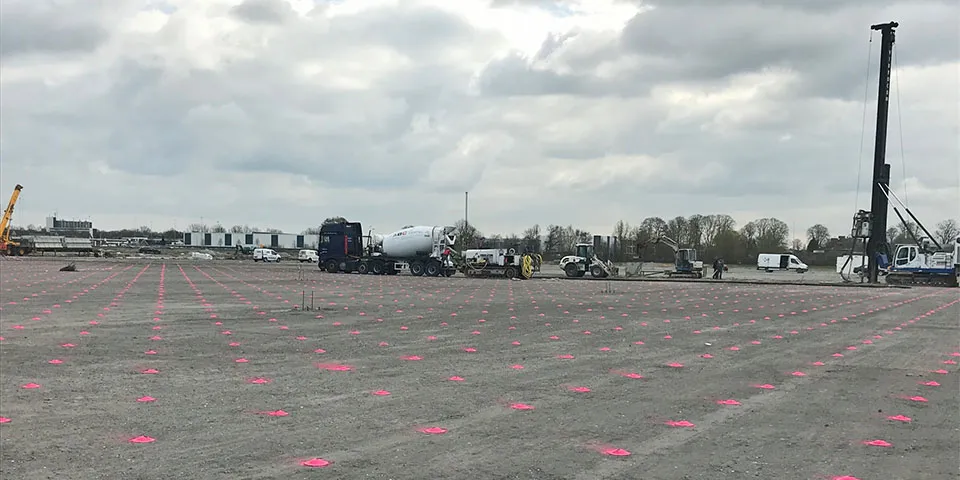
The floor design is closely linked to the pile design.
Poor ground conditions
Mini Vibropiles originated in the Netherlands. Crampe says: “Ground conditions here are generally considerably worse than in Belgium. But we are now seeing more and more construction in Belgium on poor ground too. The good ground is no longer available. That is why our piling system is also gaining popularity in Belgium. Mini Vibropiles can be installed faster, at up to 250 piles per day, than other types of piles or gravel columns. They require virtually no additional groundworks, and the result is free from settlement. In 90% of cases, they are also a more cost-effective solution. This does mean that we need to be involved in a construction project at an early stage. Since Van Berlo can handle the design in-house, as well as the foundation and the floor, we can provide clients with a complete concept and support them from A to Z.”
According to Crampe, the floor design is closely linked to the pile design. “If the piles are spaced further apart, the floor needs to be thicker, and vice versa. We always aim for an optimal grid combined with an optimal floor design. By Belgian standards, this often results in a unique design: a bed of nails formed by piles. People needed some time to get used to such a slender foundation structure. But since we built the Colruyt distribution centre in Ollignies this way, it has become increasingly accepted. Many projects have followed, including Dematra in Deinze, Torfs in Temse, and large distribution centres for Heylen Warehouses and WDP.”
Een zakelijke vraag aan Van Berlo? Neem contact op
Bedrijven in dit verhaal

Blijf dit volgen
Bij een nieuw verhaal krijg je een e-mail. Geen account nodig.
- ThemaVloeren in beton en staal
- OnderwerpFoundation techniques
- BedrijfVan Berlo