Pontsteiger truss steelwork
Tekst Sjoerd MeulemanBeeld CIIID / Cees van Giessen
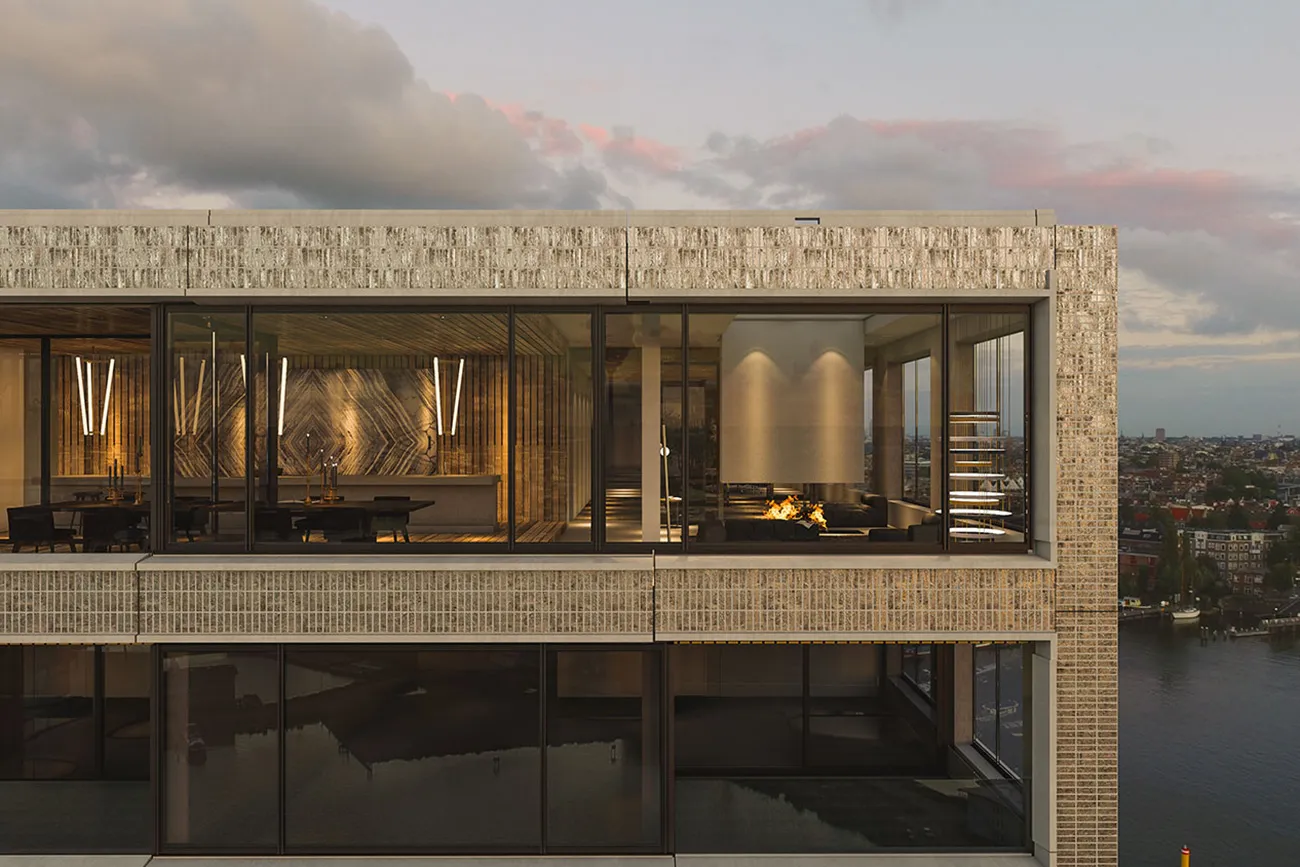
A high-profile project requiring staying power: the Pontsteiger residential development on Amsterdam’s IJ is a classic example of a structure that has finally got off the ground thanks to perseverance and hard work. More than nine hundred tonnes of steelwork are going into it, including trusses weighing eighty tonnes.
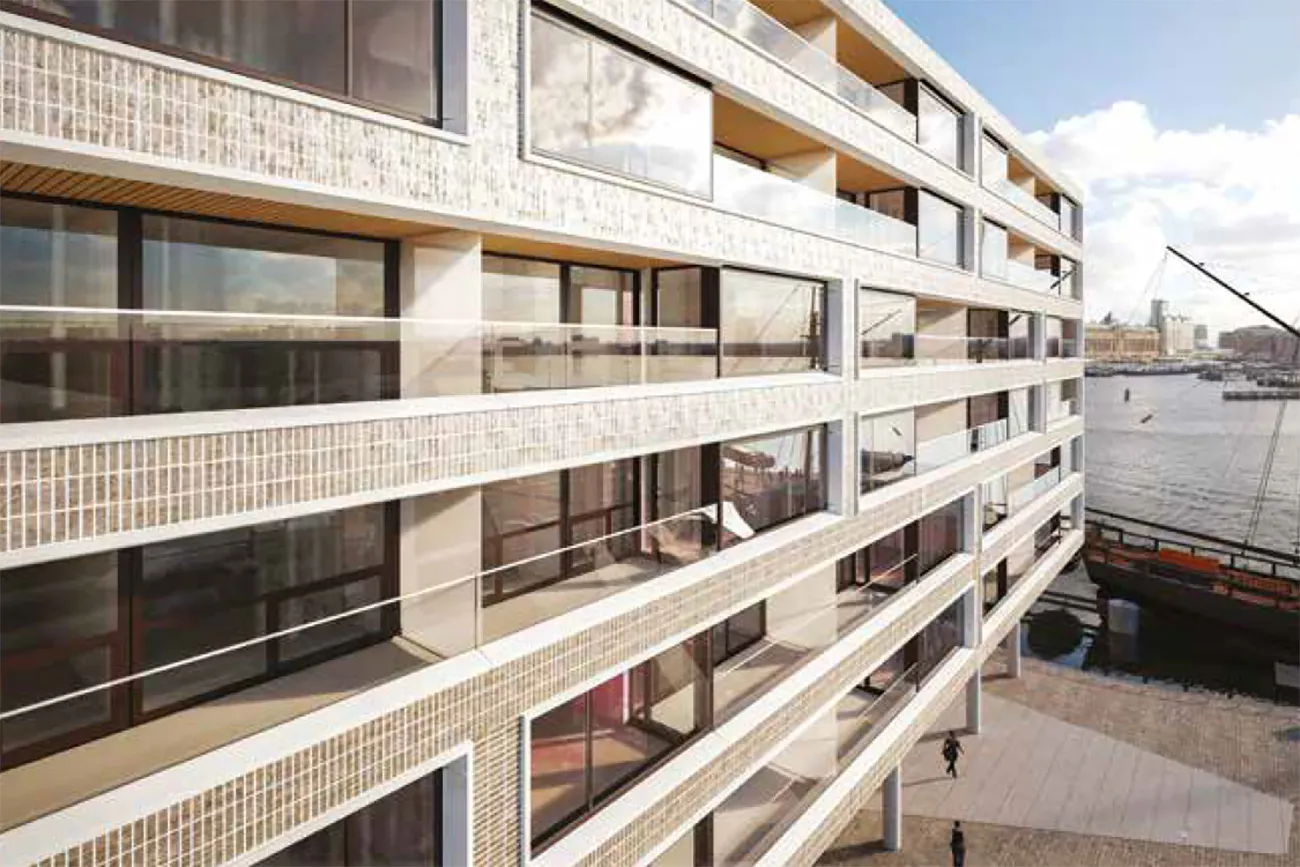
Even a layperson can see it: Pontsteiger Amsterdam is set to be a building with, to put it euphemistically, a challenging structure. It is no wonder, then, that Buiting Machinebouw en Staalconstructie from Broekland was particularly pleased to be awarded the contract for the steelwork on this new ‘gateway’ to the NDSM site in Amsterdam-Noord. “Complex structures are what drive us,” says Dennis Frankot, project manager at Buiting. “You won’t often see us building an industrial unit. This project is special for several reasons: it is an imposing and, above all, well-known building, so it is interesting to be involved. In addition, the enormous loads, combined with a variety of unusual sections, result in complex welded connections. Finally, the transport and installation process is, to put it mildly, challenging.”
SLENDER
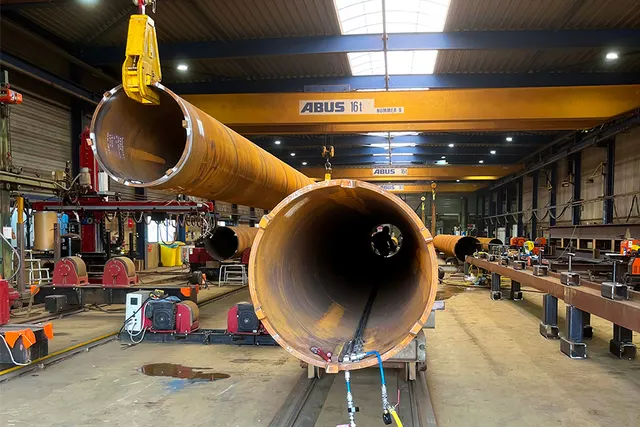
Buiting is supplying and installing more than nine hundred tonnes of steel in total throughout the building. By far the most attention is drawn to the bridge structure, built partly from steel trusses, which connects the two residential towers. Weighing eighty tonnes each, these are partly made using HD girders, special elements manufactured specifically for this project. Frankot says: “The choice of HD girders stems from the architect’s wish to make the trusses and bracing structures as slender as possible. The trusses are made in one piece, with the largest measuring 48 metres long and 9 metres high. The trusses will be installed using several mobile cranes.” The alternative of prefabrication, with assembly on site, was ruled out straight away, mainly for structural safety reasons. According to Frankot, it would involve too many risks.
OBSTACLES
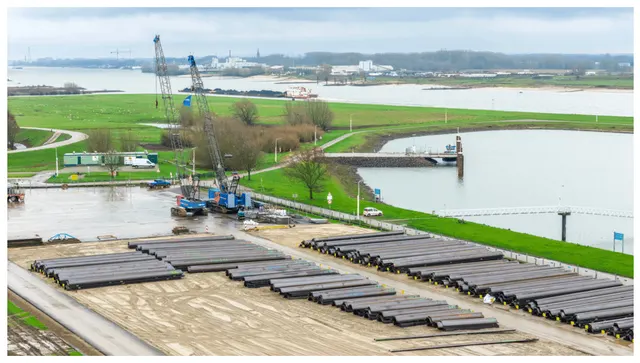
The girders are impressive in themselves, but the logistics plan is an even greater headache. There is really only one route available, and that is by water. And that is exactly how they will be transported from the production site in Almelo. Frankot says: “The most difficult part is the two-kilometre stretch over land, with bends, trees and lampposts along the way. For this, we are using a transport system with separate turntables, specially developed for large loads. The entire route from our factory, via the loading and unloading quay, across the water and on to the construction site, will have to be carefully coordinated. But I am convinced we will succeed.” Buiting is currently still working on production. Frankot expects the installation work, which will take around three calendar months, to start in January 2017.
EXPERTISE
Buiting became involved in the project in 2014, shortly after it became clear that the project could go ahead after all, partly thanks to a change in the structure. Frankot is pleased to be brought in early, as this enables the company to put its expertise to use rather than leave it untapped. “A project like this always involves close collaboration between the structural engineer, architect and contractors. We are broadly organised, which means we can put our knowledge to good use. Pontsteiger is certainly not an easy project, but that is exactly what we like. It has to have something special about it.”
Vraag over dit verhaal? Stel je vraag
Wie eraan werkte
Pontsteiger in Amsterdam
- staalwerkBuiting Machinebouw en Staalconstructie
Blijf dit volgen
Bij een nieuw verhaal krijg je een e-mail. Geen account nodig.
- ProjectPontsteiger
- OnderwerpSteel
- BedrijfBuiting Machinebouw en Staalconstructie