Concrete damage after rain, for when things go wrong…
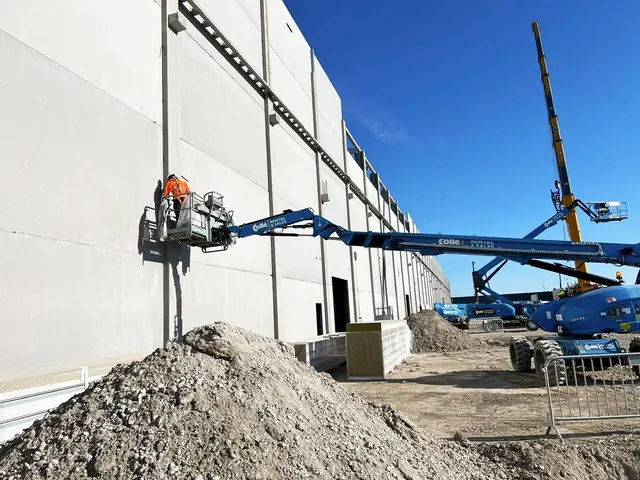
The weather has a mind of its own. Even when contractors have scheduled the pour of an extensive concrete floor, rainfall can throw a spanner in the works at a moment’s notice. The schedule grinds to a halt, the construction process stalls and the quality of the concrete floor is literally washed out. In such cases, Nieuwenhuis.nl can repair the damage.
Herbert Nieuwenhuis of Nieuwenhuis.nl knows all about failed concrete floors, particularly those damaged by rain. “Concrete floors are increasingly being used as finished floors,” he says. “That means they have to meet high standards. They may need to be smooth and wear-resistant, for example, or laid to a fall. Yet they are poured outdoors, where conditions are difficult to control.”
A range of risks
Of course, contractors and concrete suppliers have an increasing number of tools at their disposal to identify the best conditions. Apps such as ‘buienradar’ and ‘het weer’ provide increasingly detailed information about the weather ahead. But when rainy periods drag on, contractors are still prepared to take greater risks. “And that’s when things go wrong,” Nieuwenhuis says, drawing on his experience. “Rainy periods are a major and costly obstacle to the construction process, particularly in spring and autumn.”
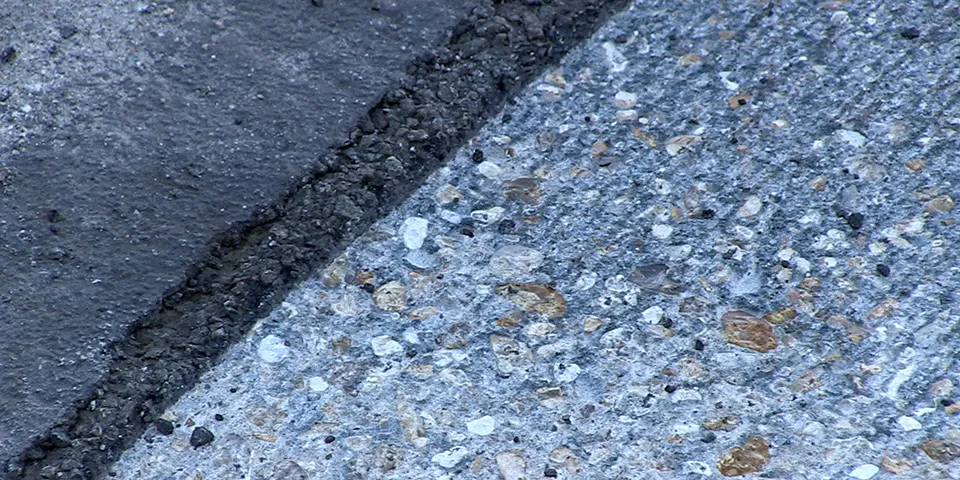
Concrete floors poured in the wrong conditions never meet the required quality standards.
Uneven surfaces
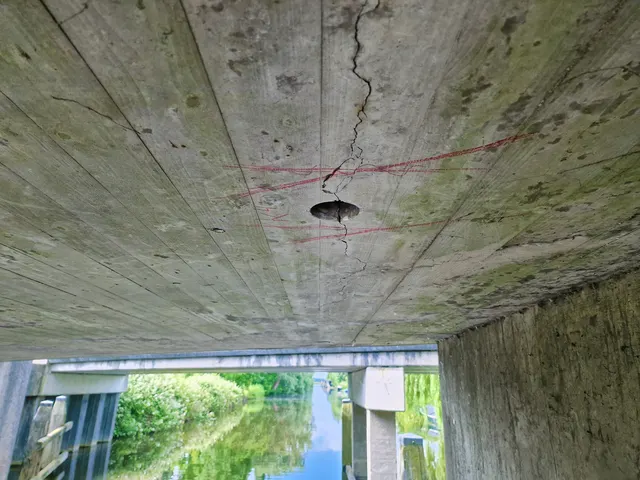
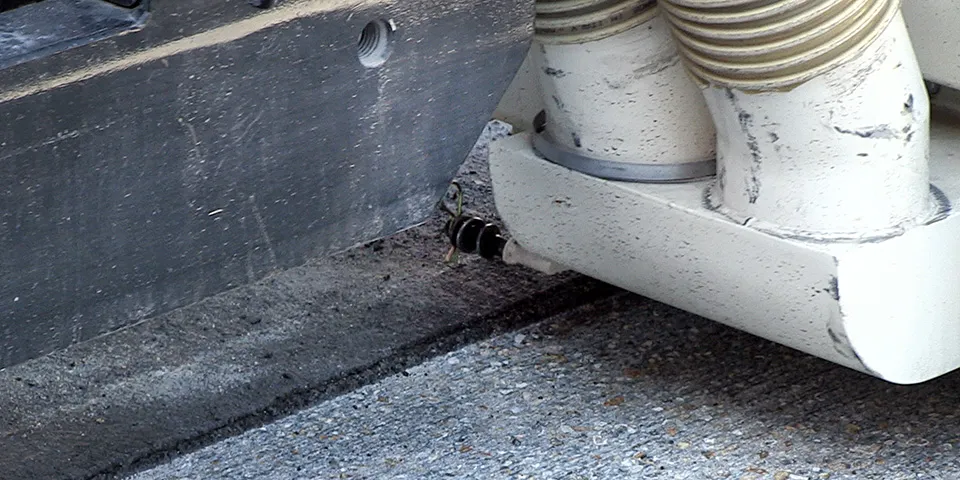
Concrete floors poured in the wrong conditions never meet the required quality standards. In heavy rain, the floor takes on the appearance of exposed aggregate concrete. Its surface is open and uneven, which means its wear resistance cannot be guaranteed either. If the floor is poured around a steel structure, the consequences are even more serious. In that case, drip holes form at the connection points, posing a risk to the stability of the structure.
Grinding and impregnating
“We offer several solutions for repairing rain damage,” Nieuwenhuis says. “In less severe cases, we grind off the top layer of the concrete floor until it has the smooth finish required. After applying an impregnating layer to prevent the floor from continuing to release dust, it is ready for use.”
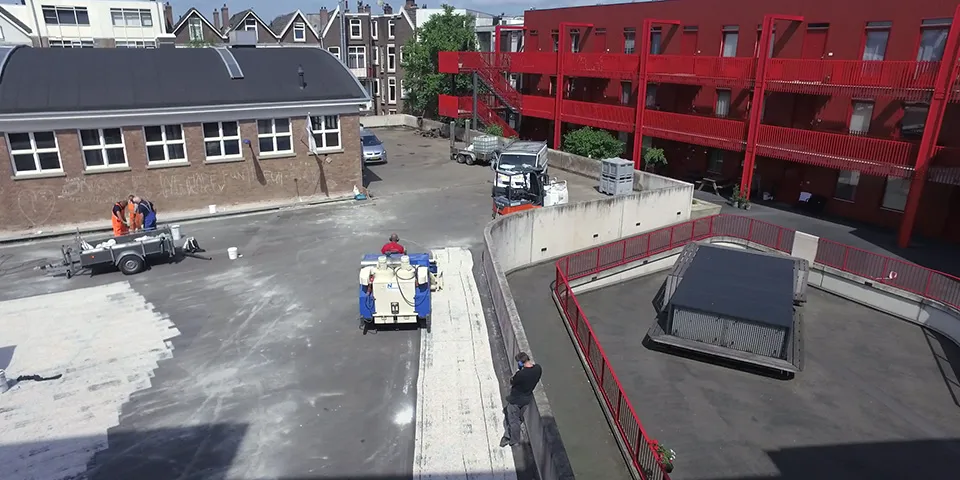
In more severe cases, Nieuwenhuis removes all the weak layers before applying a new industrial levelling layer. Nieuwenhuis says: “For large areas, this layer has to be pumped into place. We make sure the new layer meets the specified requirements exactly. And, of course, this floor can also be impregnated to prevent dust.”
Lightning fast
“Unfortunately, repairing the floor is only part of the problem,” Nieuwenhuis says. “By the time we are called in, the contractor is also dealing with a construction process that has stalled. So, as a rule, they would rather see us yesterday than today. We understand that. That’s why we always move quickly. We come as soon as possible. Pumping is generally completed in one day; the curing and levelling process takes two to three days. After that, the contractor can carry on.”
Een zakelijke vraag aan Nieuwenhuis.nl? Neem contact op
Bedrijven in dit verhaal

Blijf dit volgen
Bij een nieuw verhaal krijg je een e-mail. Geen account nodig.
- ThemaVloeren in beton en staal
- OnderwerpTreatment & protection
- BedrijfNieuwenhuis.nl