Four-step protocol detects Chromium VI

The first alarm bells rang in 2017. The presence of Chromium VI in coatings is extremely harmful to our health. But knowledge was lacking. Where and how should organisations begin investigating this hazardous substance? Now, two years later, we have a four-step protocol that can pinpoint the presence of Chromium VI with exceptional accuracy.
Since 2017, several methods have been developed to detect Chromium VI, each with its own advantages and disadvantages. The method that produces the most reliable results is SGS’s. It establishes in four steps whether Chromium VI is present, including the quantity and concentration in which the substance was used.
Risks of direct contact
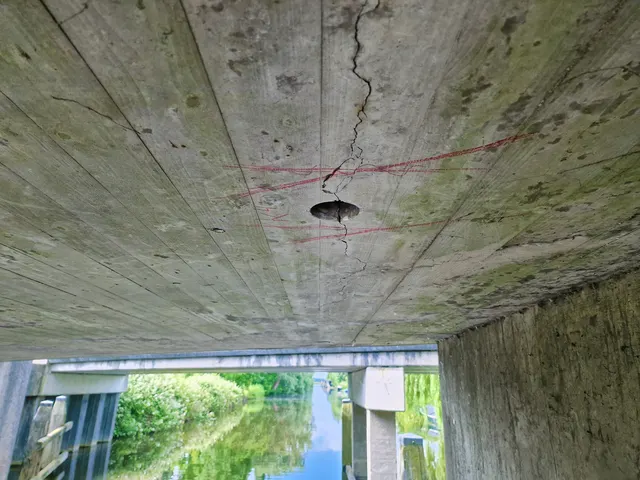
“Chromium VI is all around us,” says Wil Klarenaar, materials researcher at SGS. “Even where you would not expect it. It can be present in the finish coatings on kerbs, fences, bridges, boats and vehicles. Fortunately, it is usually not dangerous. As long as there is no direct contact, there is no problem. Harmful effects can occur if the coating is worked on, for example by grinding or sanding.”
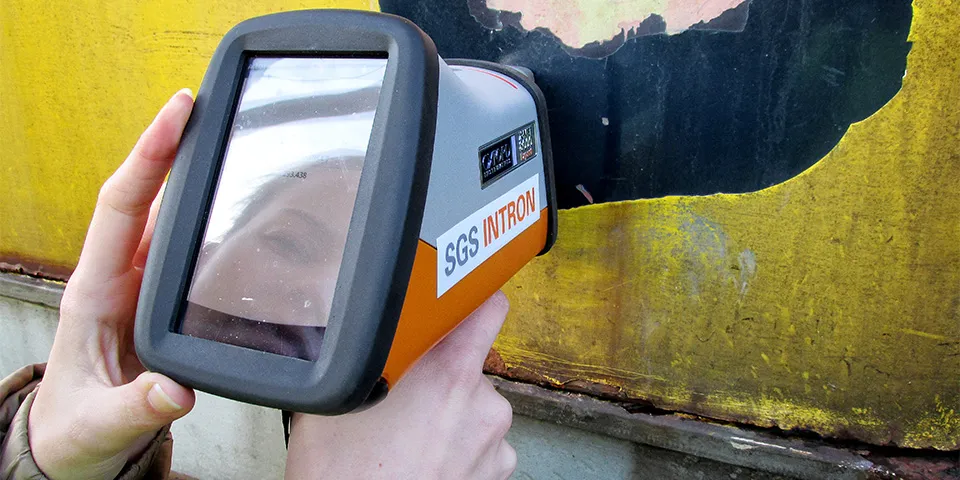
Step 1 of the SGS testing protocol.
Difficult to investigate
When the risks of Chromium VI became known, there was a strong demand for a method to determine whether it was present before work began on materials. But this proved difficult. Klarenaar: “Chromium VI is used for a reason. For example, it provides excellent adhesion. That makes it difficult to remove. It is also reactive. As soon as Chromium VI comes into contact with another substance, it can easily turn into Chromium III.”
Four-step protocol
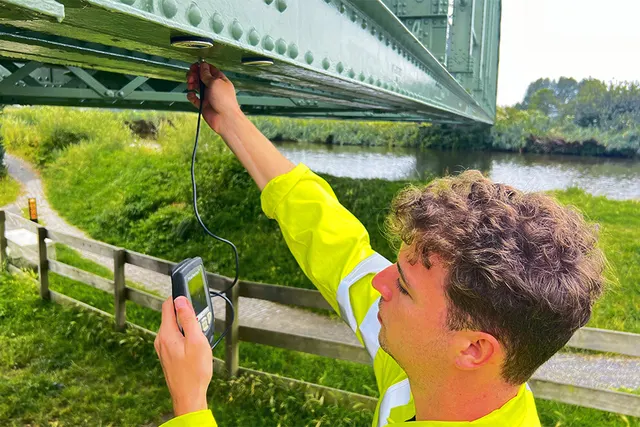
SGS’s four-step protocol addresses these problems. In step 1, a portable measuring instrument is used to scan the inspection site for the presence of chromium. In step 2, Chromium VI is distinguished from other forms of chromium on site. During step 3, the laboratory determines the concentration of the substance, and in the final step, an electron microscope is used to examine where in the paint the Chromium VI has been applied. “These four steps guarantee a reliable result,” Klarenaar assures us.
Vraag over dit verhaal? Stel je vraag
Blijf dit volgen
Bij een nieuw verhaal krijg je een e-mail. Geen account nodig.
- ThemaNormen, testen en aansprakelijkheid
- OnderwerpTreatment & protection