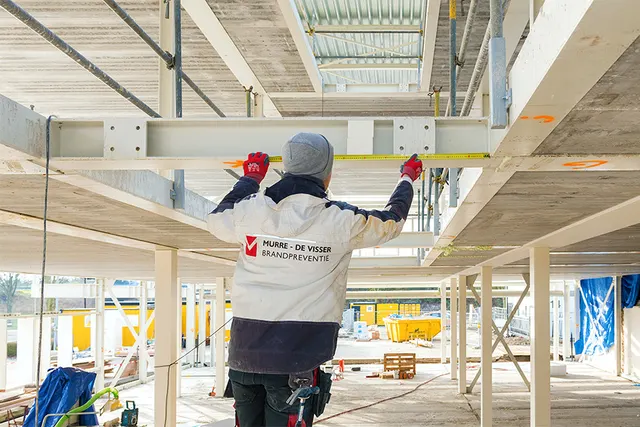
Effective protection of structures is vital
Tekst Jan MolFotografie TU Delft

New coating and application techniques to protect against corrosion
If anyone can call themselves an expert in the protection of structures, it is Prof. dr. ir. Arjan Mol of TU Delft. As structures across the country are increasingly being brought in for maintenance, Mol and his team are being called on for their expertise more and more often. Beton & Staalbouw asked Mol to shed light on coatings and their role in the corrosion of metal structures.
The problem with chromium-6 coatings
“We still come across coatings containing chromium-6 when structures are being maintained or demolished,” Mol begins. “When sanding or removing a structure, you may encounter this chromium-6 layer. We now know how harmful the dust released during sanding can be. To prevent health problems and avoid harming the environment, special technical, organisational and personal protective measures must be taken during renovation or demolition work. Now that we have entered a period of increased maintenance of structures, it is more important than ever to handle coatings containing chromium-6 with care.” Caution is therefore essential when chromium-6 is present. “Fortunately, we can now use pretreatments and coatings that no longer contain chromium-6.”
How can you recognise a poor coating?
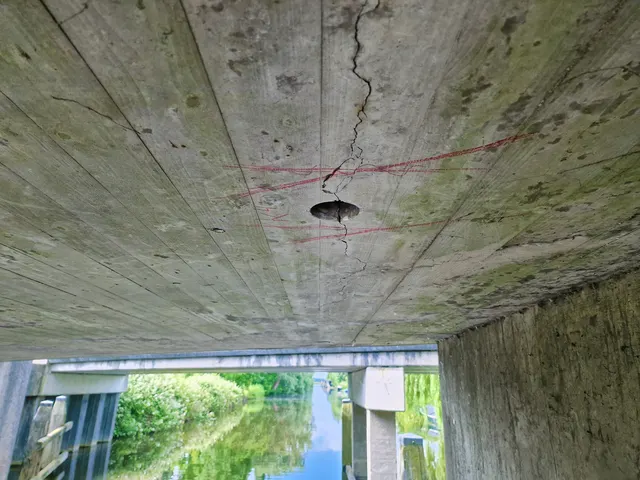
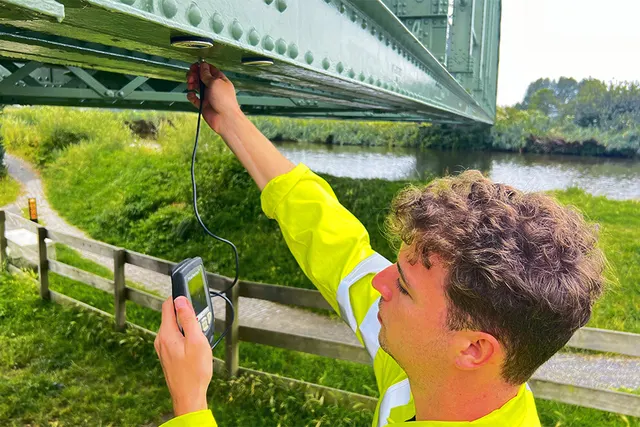
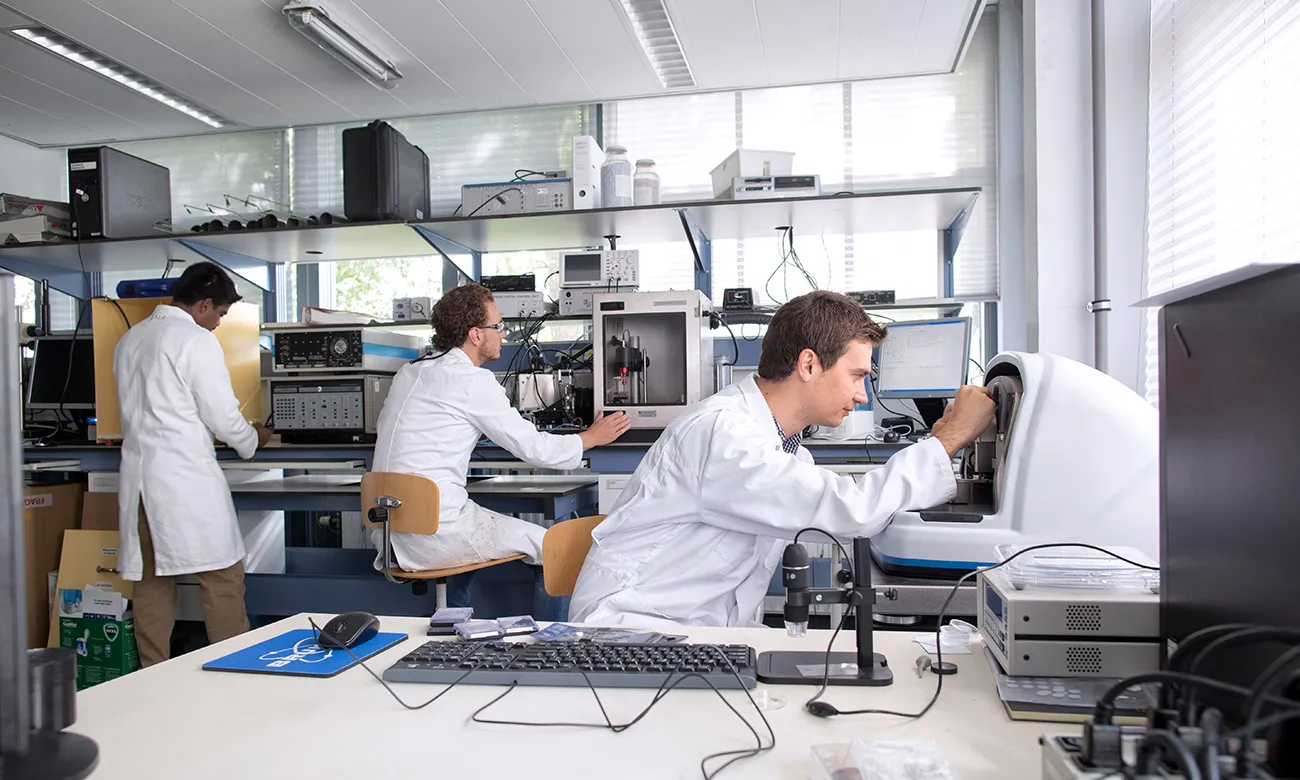
A coating may look sound on the surface, while corrosion can be developing underneath, Mol says. “Fortunately, our monitoring techniques allow us to establish at an early stage whether corrosion is present, before it becomes visible. Many inspection companies are already using the latest monitoring techniques, including electrochemical measurement methods. Different analysis methods often need to be combined. ‘Hot spots’ are located using electrochemical techniques, while large areas are examined using drones. Damage is identified by local differences in colour and reflectivity across the coating surface. Several companies in the sector are making good progress with this method.”
Replacing coatings on site
“When a coating needs to be replaced on site, we have to take account of the constraints of working in the field,” Mol explains. “To achieve robust adhesion on site, we generally have to use different pretreatment and coating procedures from those used to protect a new structure in a factory. Carrying out the right pretreatment and applying the coating in the field is a challenge. Everything has to be just right.” Asked whether the colour of a coating affects its service life, Mol replies: “Not all pigments are equally resistant to UV or chemicals. Pigments interact with the polymer matrix in a coating. If you change the composition, or if degradation causes the pigment to detach from the matrix interface, that can indeed affect corrosion resistance.”
Coatings as an integral part of service-life prediction
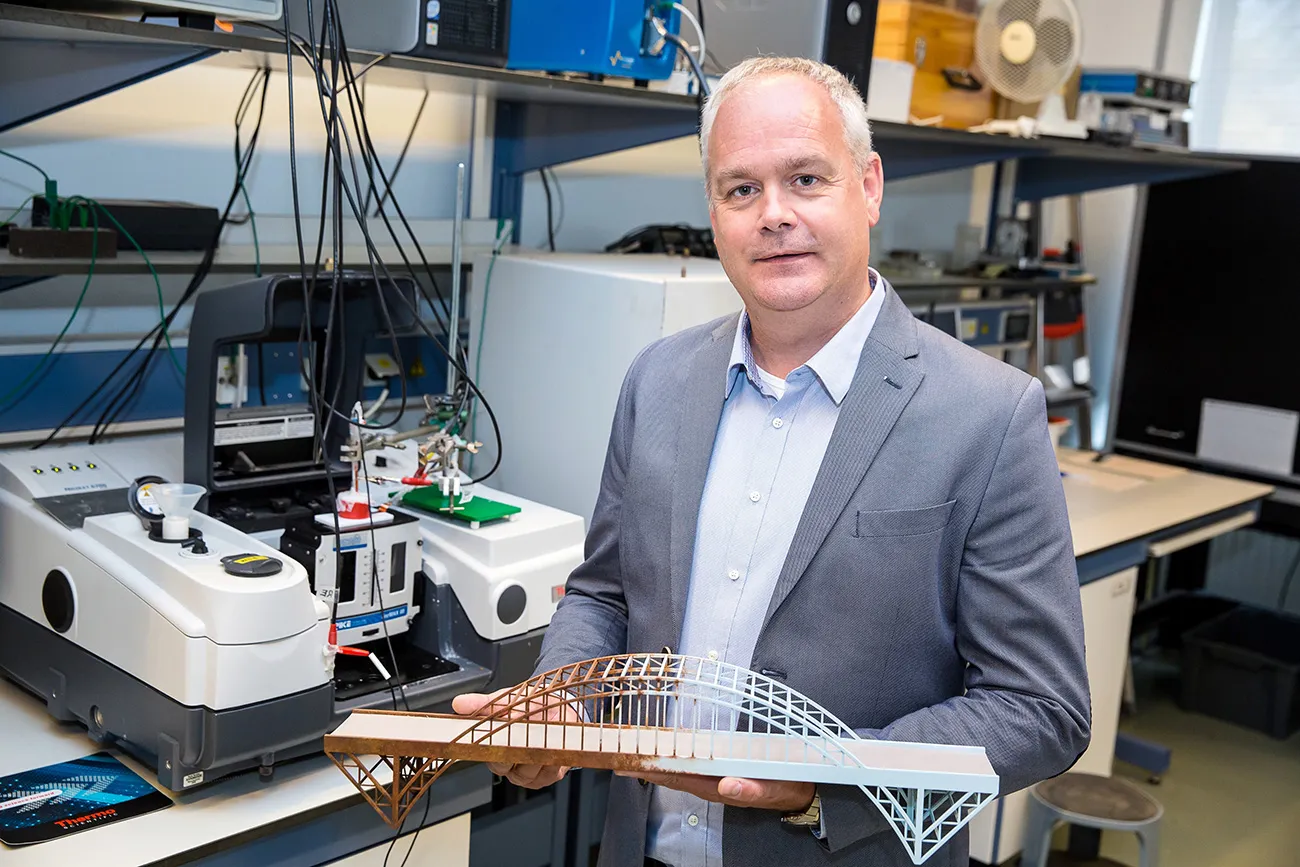
A major proposal was recently approved by NWO (Netherlands Organisation for Scientific Research), under the title ‘SUstainaBle and reLIable Macro stEel infrastructures (SUBLIME)’. Mol explains: “It is a collaboration between Eindhoven University of Technology, TU Delft, the University of Twente and Leiden University, together with companies and organisations across the supply chain. We want to make progress with Digital Twins and Artificial Intelligence, linking corrosion measurements to predictions of the remaining service life of structures. This will take us from monitoring to prediction, and make it possible to include coatings in condition-based maintenance management. In other words: ‘Take action before problems arise’. We are talking not only about corrosion, but also about fatigue. We have brought together a great consortium, full of expertise and practical experience, so we can explore the subject in depth and tackle the problem with impact.”
Vraag over dit verhaal? Stel je vraag
Blijf dit volgen
Bij een nieuw verhaal krijg je een e-mail. Geen account nodig.
- ThemaBruggen en kunstwerken langer mee
- OnderwerpTreatment & protection