Sustainability, the environment, occupational safety and circularity
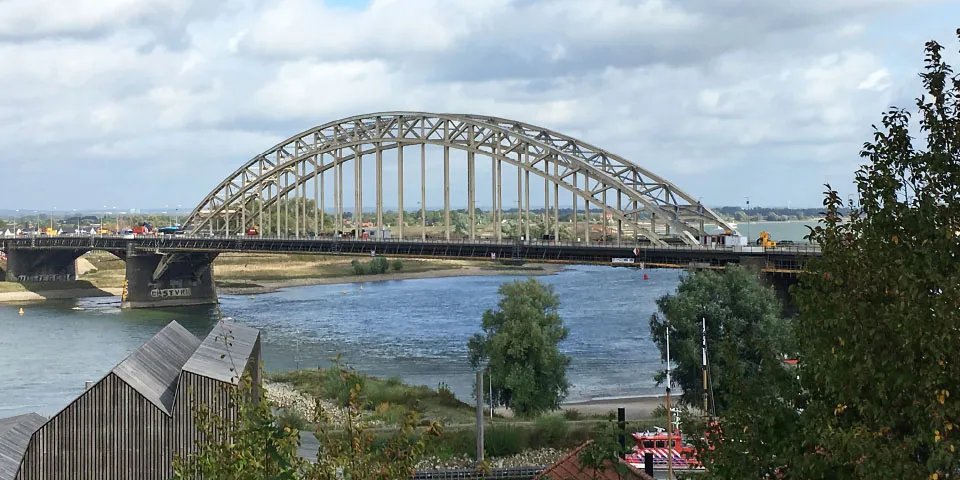
Sustainability, the environment, occupational safety and circularity are concepts that are often considered separately. In the world of surface engineering, where ‘hazardous’ substances are used, that is not an option, according to Egbert Stremmelaar, director of the Vereniging Industrieel Oppervlaktebehandelend Nederland (Vereniging ION). “But it does happen, in The Hague, in Brussels, …, not to mention the number of NGOs, each with just one focus. The problem is that society is not so simple.”
How the issues are connected in surface engineering
Although widely used, the term ‘hazardous substances’ is not correct in ION’s view. “There are substances that can cause (serious) harm to health if they are not used by trained personnel. The danger lies mainly in how people handle them. The term SVHCs (substances of very high concern) is therefore more appropriate,” says Stremmelaar. “By far the majority of SVHCs are production substances and are not present (as free substances) in the end product.”
Swimming
Stremmelaar begins by explaining his view with an example. “Water, we have plenty of it in the Netherlands. If you stay under water too long or drink too much of it, you risk suffocation or poisoning. That is why we have all taken various measures to ensure that we use water safely. We teach children to swim from an early age, dangerous places are supervised and, should anything go wrong, there is always the lifeboat service. The same system is in place for working with hazardous substances. Only people trained to handle these substances work with them, following clearly defined procedures and controlled processes in a factory. And here too, should anything go wrong, there is a well-prepared evacuation plan, with the fire brigade and safety region as back-up.”
Chromium-6
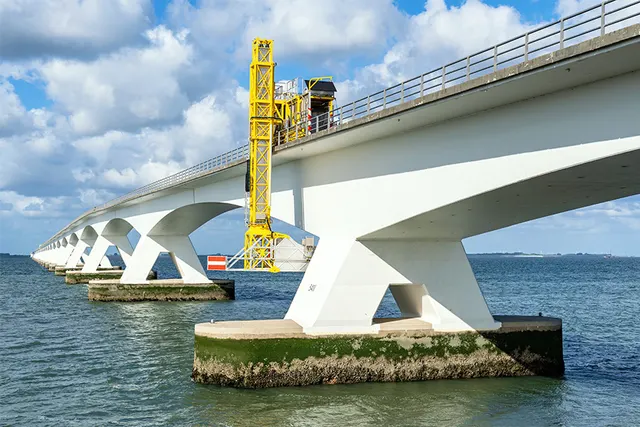
“The Oosterschelde and Maasland storm surge barriers protect us from rising water levels,” Stremmelaar continues. “If the piston rods were not treated with chromium-6, they would rust solid within six months. In other words, if you ban chromium-6, you introduce other hazards. But if this substance is used in a suitable installation and processed according to procedure, it need not pose a health risk, and you can achieve a durable, safe and potentially circular end result. For the avoidance of doubt, chromium trioxide (chromium-6) is the production substance used in the factory. The end product contains metallic chromium, comparable to that on a bathroom tap. The message needs to be communicated from every angle, and that is the biggest problem. These are separate issues, including in The Hague. The Ministry of Infrastructure and Water Management approaches matters from an environmental perspective, while the Ministry of Social Affairs and Employment focuses on safety and occupational hygiene, and the Ministry of Economic Affairs acts from an economic perspective. They are all islands, each doing its own thing. We are seeing the same thing now with the coronavirus crisis: the discussion is only about health.”
Emotions
According to Stremmelaar, emotions play far too large a role, particularly in the world of surface treatment. “That is what we run up against. If you were to assess a substance such as chromium-6 objectively, you could reach very different conclusions. Of course, chromium-6 is harmful to health, but we can manage the risks by using it in suitable installations, following established procedures and working in a controlled environment. In that case, it has no adverse effect on the health of the people who work with it. Bear in mind, moreover, that 10,000 people in the Netherlands work with chromium-6 and that the substance is used in 200 processes. Are we going to lay off those people? An aviation company has an electroplating facility at Schiphol-Oost so that damaged aircraft can be repaired within two hours. If we were to close that facility in order to ban chromium-6, the aircraft would have to be sent to a location outside the EU for the same work. That means an aircraft would be out of service for three days and would fly there and back empty. What impact would that alone have on CO2 emissions?”
Renewable
Circularity also involves several facets, Stremmelaar explains. “As a result of extensive recycling, for example of aluminium, the raw material becomes increasingly contaminated. Coffee capsules are collected together with aluminium window frame profiles, after all. To produce a window frame profile that is as sustainable and renewable as possible, an ‘aggressive’ pre-treatment is essential before applying a coating. Alternatively, everything would need to be collected and recycled to a high standard. That would mean several sorting and/or collection systems for aluminium alone, let alone for other metals. In short, that is undesirable and probably unfeasible too. Yet the solution and the system are readily available, just as in all the examples above. A solution that does as little harm as possible to the economy, puts as little strain as possible on people and the environment, and maximises service life.”
Een zakelijke vraag aan Vereniging ION? Neem contact op
Bedrijven in dit verhaal
Blijf dit volgen
Bij een nieuw verhaal krijg je een e-mail. Geen account nodig.
- ThemaMinder CO2 in beton en staal
- OnderwerpTreatment & protection
- BedrijfVereniging ION