CO2 reduction in hot-dip galvanising
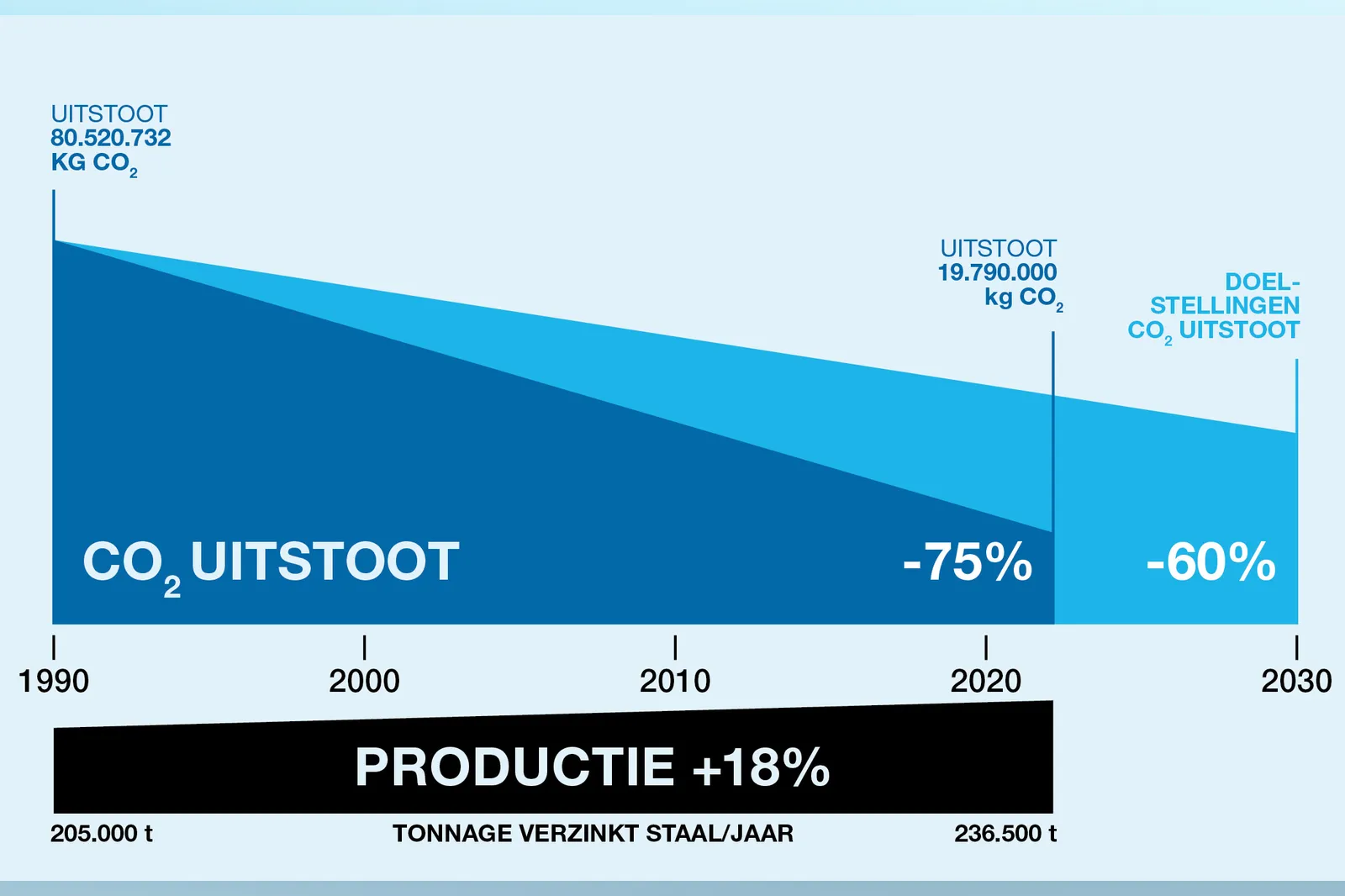
Zinkinfo Benelux members already meet the CO₂ reduction requirements for 2030 set out in the Dutch Steel Construction Agreement. This agreement, which involves the entire steel construction chain, is based on the targets set by the European Commission as part of the Green Deal. The steel construction chain aims to cut emissions by 60% by 2030 compared with 1990.
Reconstruction of CO₂ emissions in 1990
As detailed historical records are unavailable, the emissions data were reconstructed in collaboration with the European General Galvanizers Association (EGGA). Emissions in 1990 were estimated at 80,520,732 kg CO₂.
CO₂ emissions in 2022
Emissions in 2022 were recorded at 19,790,000 kg CO₂, a reduction of 75% compared with 1990. This is a particularly impressive result, given that the volume of galvanised steel rose from 205,000 tonnes in 1990 to 236,500 tonnes in 2022 (+18%).
Key reduction factors
- Reduction in the number of galvanising lines in operation
- Higher utilisation of existing lines
- Increased reuse of heat from flue gases
- Electrification of internal transport
- Use of electricity with a lower CO₂ footprint
Conclusion
Zinkinfo Benelux members are ahead of the climate targets and demonstrate that sustainable production processes can go hand in hand with growth in production volumes.
Een zakelijke vraag aan ZINKINFO BENELUX? Neem contact op
Bedrijven in dit verhaal
Blijf dit volgen
Bij een nieuw verhaal krijg je een e-mail. Geen account nodig.
- ThemaMinder CO2 in beton en staal
- OnderwerpSteel
- BedrijfZINKINFO BENELUX