










From scepticism to proven technology
Tekst en beeld Zinkinfo
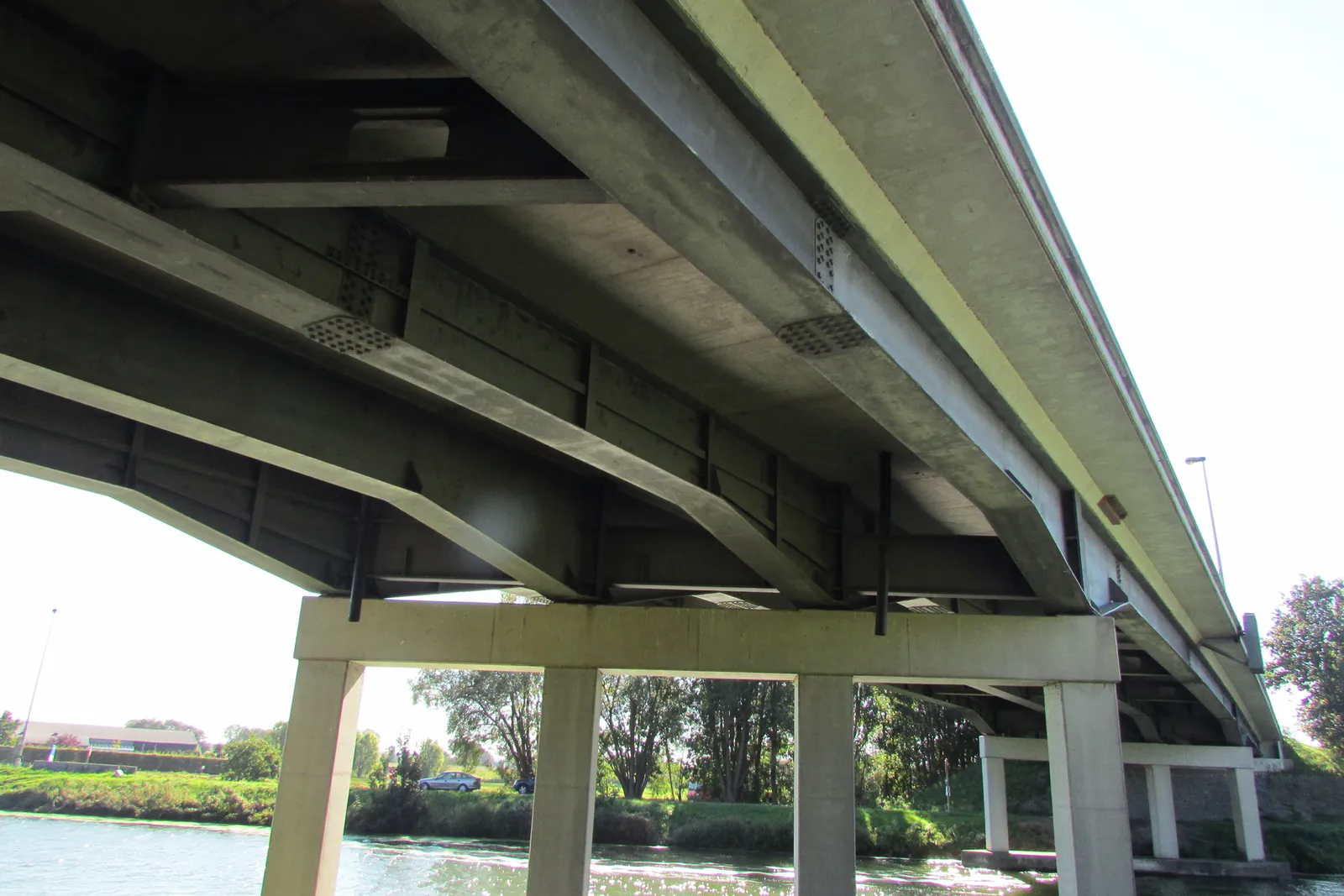
Hot-dip galvanised steel is increasingly used in bridge construction. This was not always the case. In the past, the combination of hot-dip galvanising and steel bridges was often considered problematic. Questions around bolted connections, welded connections, fatigue, slip-resistant connections and composite steel-concrete structures made designers and clients cautious.
Hot-dip galvanised steel in bridge construction
Over the past forty years, however, extensive research has been carried out into these topics. As a result, clear technical solutions have been developed for many of these issues. Several have now been incorporated into standards and guidelines, and the second-generation Eurocodes also provide further information. Hot-dip galvanising has therefore evolved from a risky option into a technically substantiated choice.
Corrosion protection as a starting point
Corrosion protection is central to the choice of hot-dip galvanising. A correctly designed and galvanised steel structure can function for a long time with virtually no maintenance. This offers clear benefits for bridges, where maintenance work is often complex and costly. In terms of sustainability and life-cycle costs, hot-dip galvanising is therefore an attractive alternative to traditional paint systems. Its natural matt grey finish can also be used to architectural effect, for example in combination with materials such as concrete or wood. Where a different aesthetic finish is desired, a duplex system can be used. This involves applying a paint or powder coating system after hot-dip galvanising. Combining the two protection methods generally results in a longer service life than either system alone.
Sustainable Steel Preservation Guide
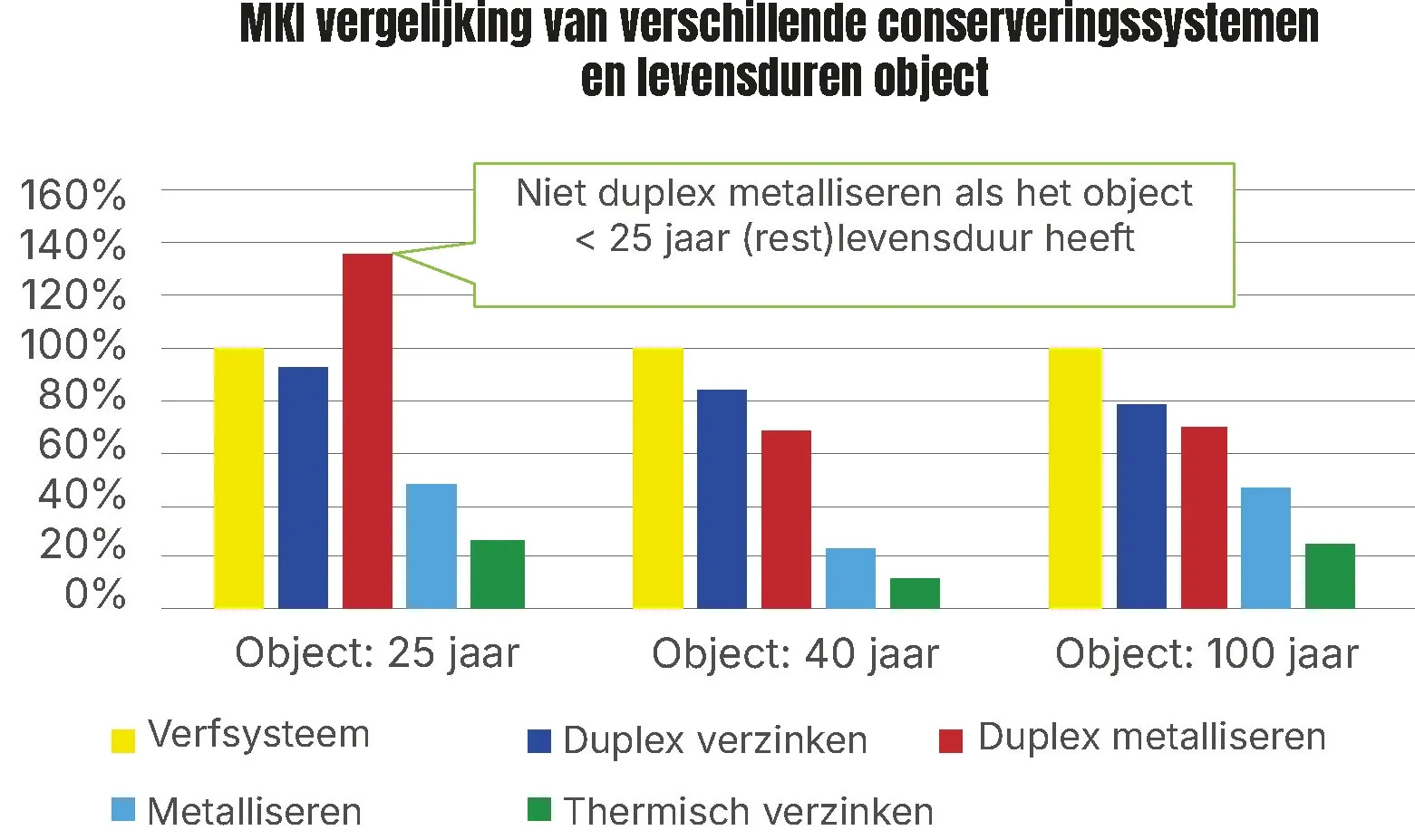
Rijkswaterstaat has recently completely revised its Sustainable Steel Preservation Guide. In the new version (2.0, July 2025), hot-dip galvanising has now, quite rightly, been included as the first and preferred option for protecting steel structures. According to the new RWS decision-making chart, hot-dip galvanising is the most sustainable choice where technically feasible. It has the lowest environmental impact over the structure’s entire service life and performs better than thermal spraying or paint systems. The service lives of the systems used as the basis for the MKI calculations and maintenance intervals have been determined using expert judgement.
The graph compares the MKI of the various preservation systems suitable for steel structures exposed to atmospheric conditions. Paint systems are the baseline, with a value of 100%. A higher percentage indicates a less sustainable system, while a lower percentage means it is more sustainable than a paint system. The MKI depends on the service life of the structure. On the left, the graph shows the MKI for a structure with a service life of 25 years, in the middle for 40 years and on the right for 100 years. In all three cases, hot-dip galvanising performs noticeably better than alternative preservation systems.
Allowing for the galvanising process
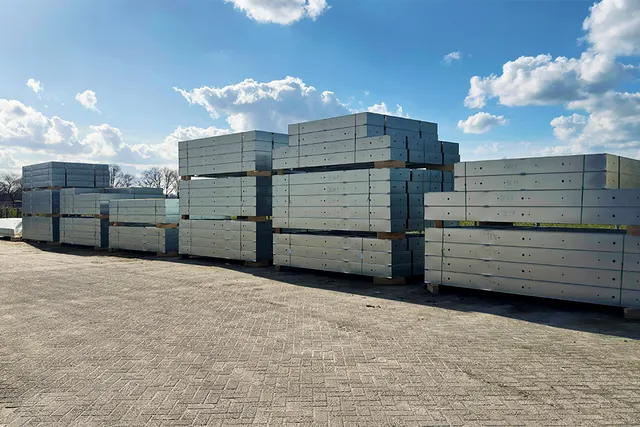
An important consideration when designing hot-dip galvanised bridges is to coordinate the design with the available galvanising baths. The maximum length, width and depth of a bath determine the dimensions of the individual components. It is therefore essential to consult the galvaniser at an early stage. If elements are larger than the available bath, a so-called ‘double dip’ can be used, with the element galvanised in two stages. Another option is to divide the structure into several sections that are assembled after galvanising. Modular bridges are particularly well suited to this approach. They consist of repetitive elements, often trusses, assembled using bolted connections.
Connection design and weld zones
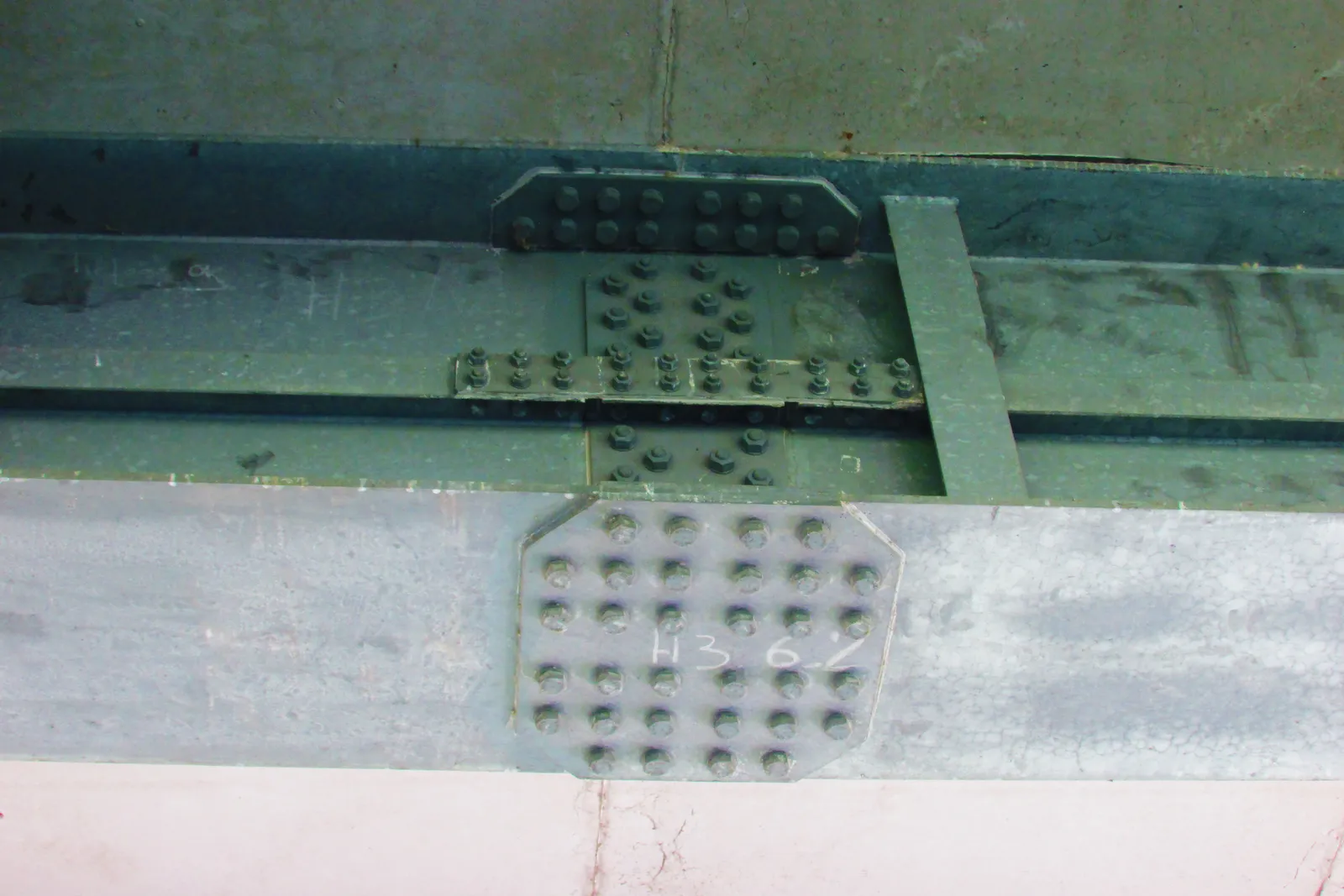
Connections are a crucial consideration in hot-dip galvanising. If components still need to be welded after galvanising, specific areas can be masked beforehand with special products such as Wabodur, so they are not galvanised. Care is needed when applying the product: it must be applied in two coats, with a 24-hour wait between them.
The product must, of course, be removed after galvanising. After welding, corrosion protection is locally restored, for example by zinc metallising. This process requires careful preparation and quality control. Weld zones must be completely free of zinc residues, as welding galvanised material is not permitted. Particular attention should also be paid to the transition zones between hot-dip galvanising and zinc metallising. Practical considerations, such as fitting lifting lugs before galvanising and checking the galvaniser’s lifting capacity, are also part of a well-considered design process.
Experience in practice: bridges in Belgium
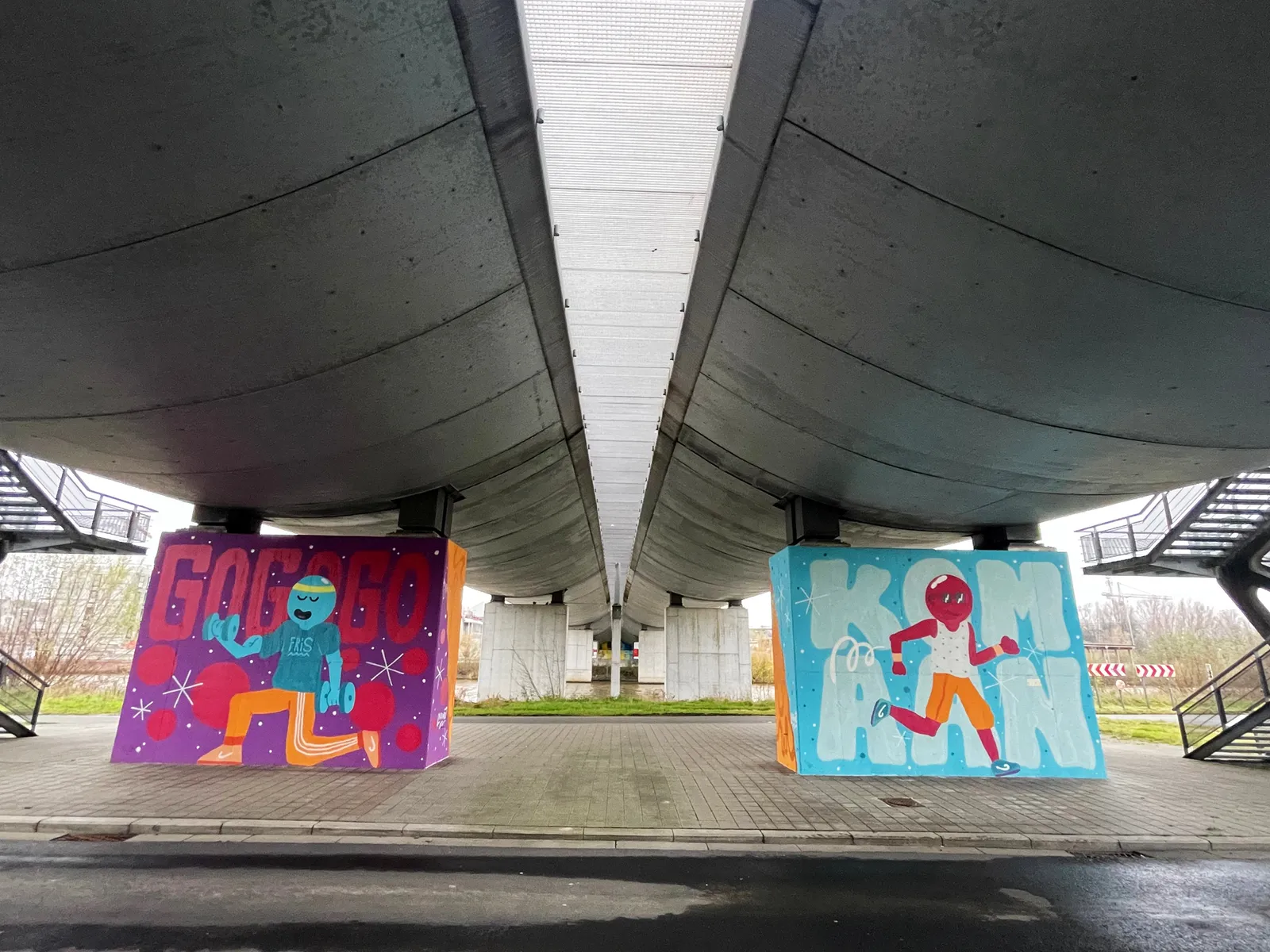
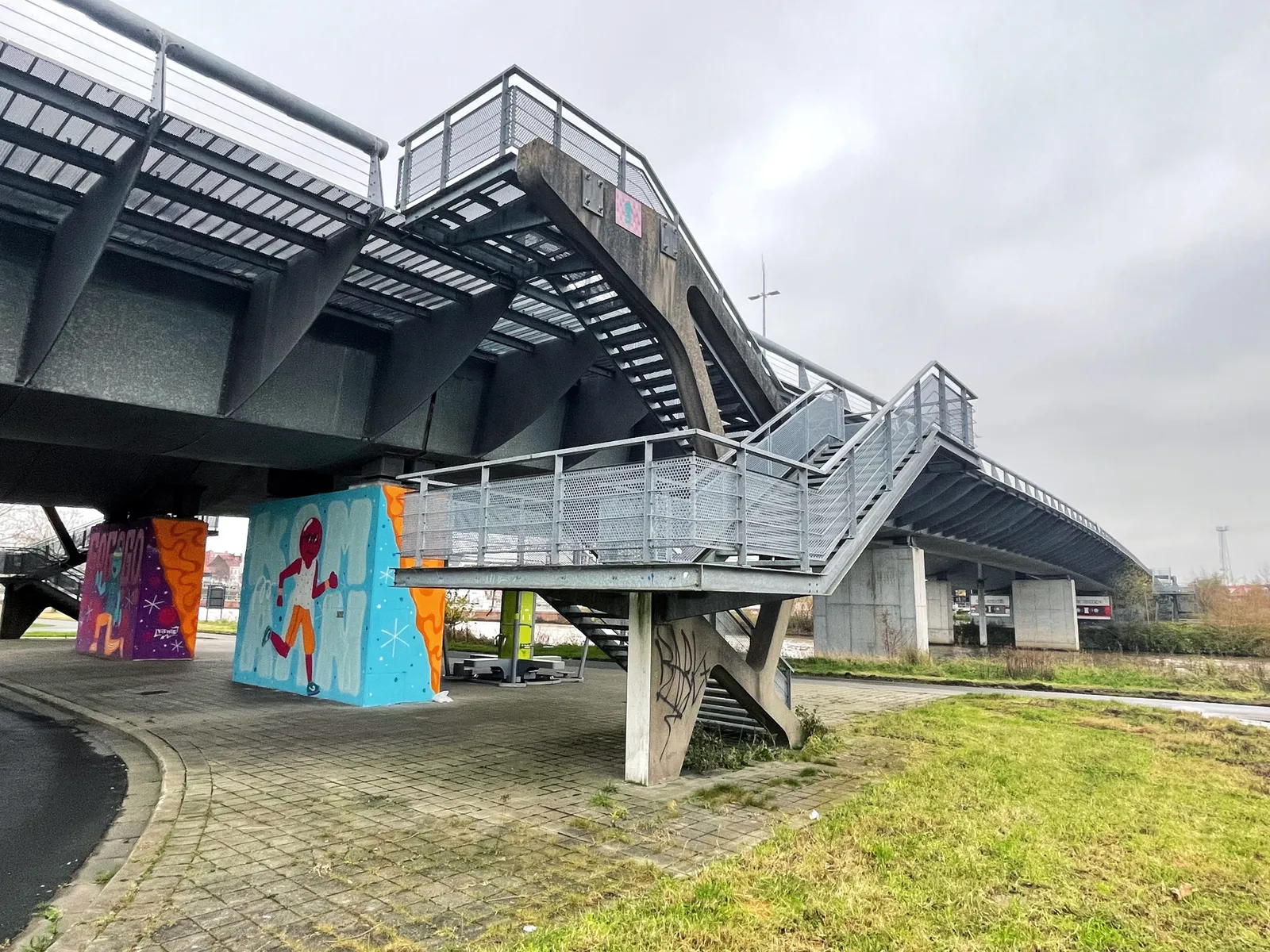
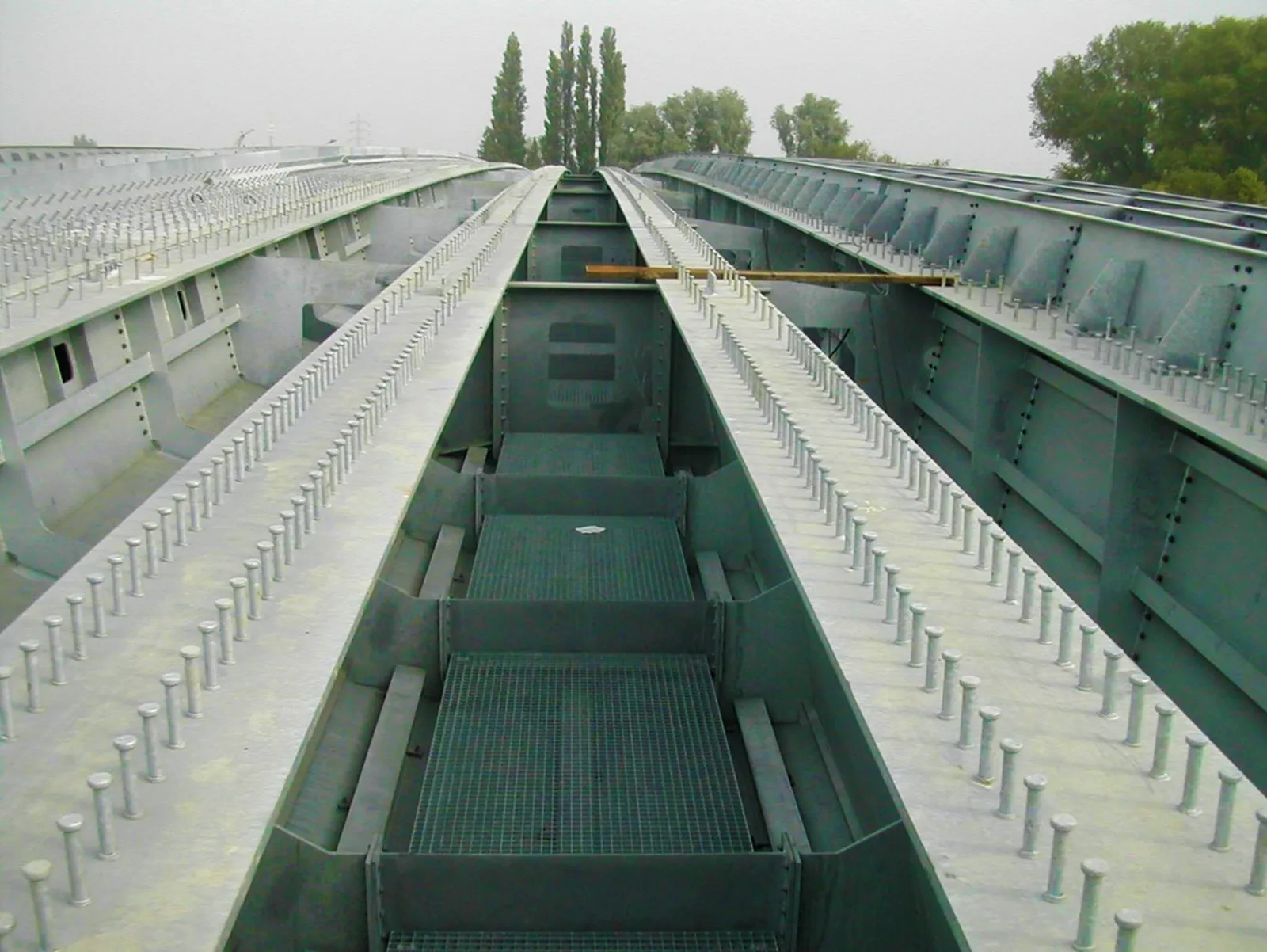
Practical examples show that hot-dip galvanising is also feasible for large bridge structures. The Ronde van Vlaanderenbrug in Kortrijk, a 154-metre bridge with five spans, was built from several galvanised sections that were subsequently welded together. In fact, there are two bridges side by side, one for each direction of travel, giving a total of four main girders. These main girders are essentially U-shaped beams welded into a single unit (see photo). The two main girders are connected underneath by crossbeams. Each main girder is designed so that its geometry allows it to fit into a galvanising bath. The studs were welded to the girders before galvanising. The various sections were delivered by ship. Despite the long spans, the length of the structure did not pose an insurmountable constraint, provided it was divided into suitable sections.
A curved plate is fixed to the underside of the Ronde van Vlaanderenbrug to conceal the structure beneath it (see photos). This hides the visual effect of the dark stripes left by zinc metallising. Most importantly, not a trace of corrosion has been detected after more than twenty years.
A comparison with the nearby Groeningebrug, built during the same period (2002-2003) using a traditional paint system, illustrates the difference in maintenance requirements. While painted bridges show signs of deterioration and corrosion over time, hot-dip galvanised structures remain in excellent condition even after more than twenty years. A similar example is a road bridge over the Netekanaal in Lier, with a total span of 88 metres, built from several galvanised sections joined with bolted connections. In the transverse direction, the bridge comprises four main girders and welded I-beams (see photos). These are taller over the piers than at midspan. In this case, no joints were welded after galvanising; instead, there are five bolted connections, giving a total of six sections. The longest section is just over 15 metres and fits perfectly in the galvanising bath. The heaviest section weighs 6.3 tonnes, which poses no problem for the galvanisers. Recent inspections show that there are no signs of corrosion here either.
Service life and standards
The expected service life of a zinc coating can be determined using standards such as ISO 9223 and ISO 9224. These describe the relationship between the reduction in zinc coating thickness and environmental conditions. Even in relatively aggressive environments, such as categories C4 and C5, a very long remaining service life can be achieved, depending on the original coating thickness and exposure conditions.
Clear guidelines are now also available for preloaded connections. Under EN 1090-2, hot-dip galvanised contact surfaces may be used, provided they are lightly blasted beforehand (‘sweep blasting’) to achieve the required slip factor. Hot-dip galvanising is explicitly included in the eighth edition of the American AASHTO bridge design standard. It specifies a slip factor of 0.30 for hot-dip galvanised structures, without any additional treatment. This value increases to 0.45 if the surface is additionally blasted or a special friction coating is applied.
Towards further integration in bridge design
Once viewed with suspicion, hot-dip galvanising has
now become an established technique in bridge construction. Thanks to continuing research, the development of standards and practical experience, designers now have clear guidelines for its use. Although fatigue was not covered in this article, recent developments in the new generation of Eurocode 3 show that this aspect is also being addressed. This confirms that hot-dip galvanising is no longer an exception, but a sustainable and technically sound choice in modern bridge design.
Een zakelijke vraag aan ZINKINFO BENELUX? Neem contact op
Bedrijven in dit verhaal

Blijf dit volgen
Bij een nieuw verhaal krijg je een e-mail. Geen account nodig.
- ThemaBruggen en kunstwerken langer mee
- OnderwerpSteel
- BedrijfZINKINFO BENELUX