Concrete as the foundation of the circular economy
Concrete is known as a strong, robust and fire-protective material that requires little maintenance and has a long service life. No other material scores higher in terms of safety and functionality. However, concrete’s potential for circular applications is still not widely recognised. Steel and timber are sometimes seen as having a lower environmental impact. This is borne out by independent research conducted by USP Marketing Consultancy on behalf of Betonhuis.
Safety and functionality
The research shows that concrete outperforms other materials, such as timber and steel, by a wide margin in terms of safety and functionality. Architects and local authorities in particular have a very positive view of concrete’s strength and robustness. The market also regards it as the best material for fire-protective construction. The market’s view of concrete’s functionality is also more positive than average compared with other materials. In addition, concrete receives the highest ratings for its long service life and the low level of maintenance required over its life cycle.
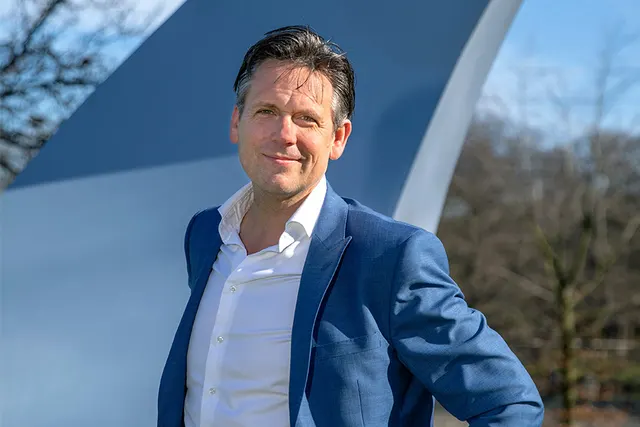
Remco Kerkhoven
Concrete’s strongest environmental advantage is undoubtedly its very long service life and low maintenance requirements. That is why concrete is the most widely used material in the world.
Concrete gets a green image
Remco Kerkhoven, Technical Marketing, Communications and Statistics Adviser at Betonhuis, acknowledges that concrete’s green credentials need to be better highlighted. “Concrete meets the practical approach set out in ‘The Netherlands Circular in 2050’, and the material is often put to a new use. Concrete frames are transformed into entirely new buildings. When a building is demolished, 100% of the concrete rubble is reused, either as recycled concrete aggregate in road sub-bases or as aggregate in new concrete. Concrete is circular.”
Environmental benefits of concrete
“Concrete’s strongest environmental advantage is undoubtedly its very long service life and low maintenance requirements. That is why concrete is the most widely used material in the world.” Its large-scale production naturally results in a certain level of CO₂ emissions. In the Netherlands, these account for just 1.6% of total emissions, but Kerkhoven says they must be reduced, with the aim of reaching zero in the long term. “In line with the European Green Deal, the industry is working towards carbon-neutral cement and concrete by 2050.” He urges caution when considering claims about a material’s environmental performance. “These figures are based on a life cycle assessment (LCA). It would be better to also take into account the organic material left behind and the service life of a material.” Betonhuis therefore believes that the results of LCAs at building level, including the use phase, are more relevant than a direct comparison between materials themselves. Kerkhoven concludes: “Concrete as a circular material deserves a bigger platform, and Betonhuis will be working to make that happen in the coming period.”
Further information
For further information, contact Remco Kerkhoven, send an email.
Vraag over dit verhaal? Stel je vraag
Blijf dit volgen
Bij een nieuw verhaal krijg je een e-mail. Geen account nodig.
- ThemaMinder CO2 in beton en staal
- OnderwerpSustainability & circularity