First Flemish Concrete Agreement signed
Tekst EMBUILDFotografie EMBUILD
The construction sector has launched the first Flemish Concrete Agreement. Over the past two years, the sector has worked on it, taking the Dutch agreement as a model. This statement of ambition marks a milestone for all stakeholders in the concrete supply chain, who are joining forces to make concrete greener. As primary raw materials become scarcer and climate ambitions need to be stepped up, this is a crucial move towards reducing CO2 emissions through circular principles and cutting material use in the sector.
All construction partners join forces to make concrete more circular and greener
The initiative was launched by the project partners in the ‘Circular Concrete’ project, supported by the Flemish government. The founding partners represent the construction supply chain: Groen Beton Vert, Buildwise, Vereniging van sloop-, ontmantelings- en recyclagebedrijven, Fedbeton and Embuild Vlaanderen. Construction professionals and stakeholders throughout the concrete supply chain can now read and sign the Concrete Agreement via www.betonakkoord-vlaanderen.be. The initiators are urging their members and stakeholders to sign up in large numbers. More than forty construction companies and organisations have already digitally endorsed the Concrete Agreement.
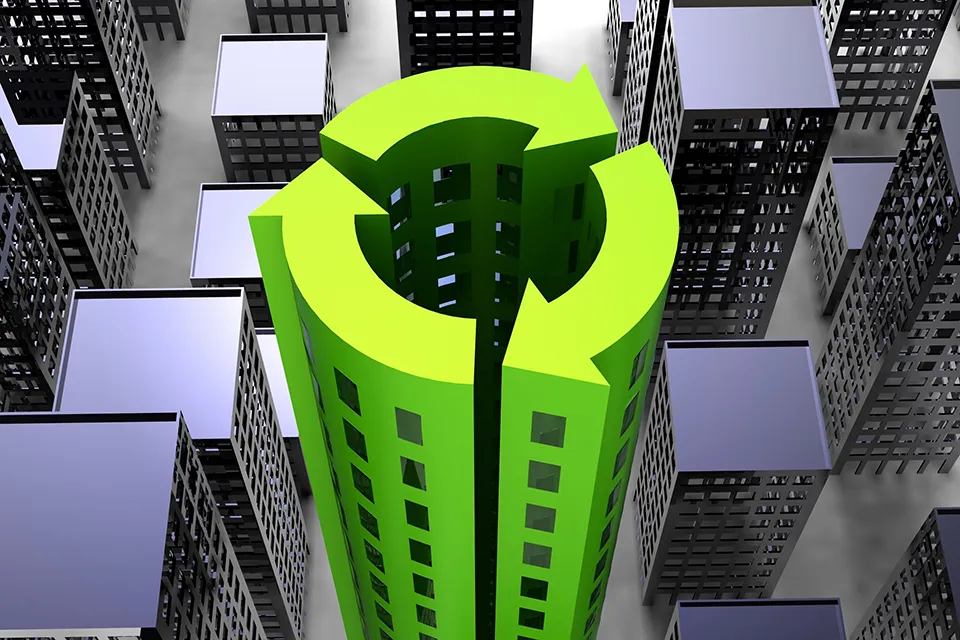
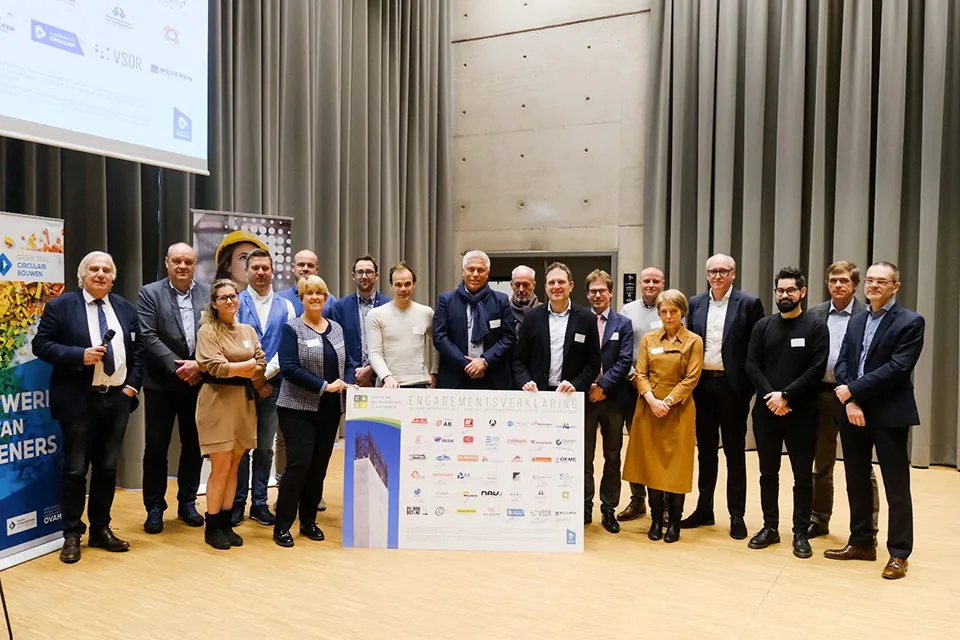
The Flemish Concrete Agreement was presented to the public at the fourth Green Deal Circular Construction action day in Bruges on Tuesday 6 December. Many companies and organisations officially signed the agreement at the event, signalling their support for its ambitions.
100% recyclable
Concrete is the most widely used building material worldwide, and therefore accounts for a significant share of CO2 emissions. Cement production alone is responsible for 7% of global emissions. However, concrete is 100% recyclable if it is recovered in a sufficiently pure form during demolition. Production of green and circular concrete is growing, but needs to accelerate. Through the Flemish Concrete Agreement, the sector aims to remove administrative and technical barriers to achieving this ambition. This supports the European target of cutting global CO2 emissions by 50% by 2050 and reducing material use by 30% by 2030. With the Concrete Agreement, the sector is now calling on all stakeholders to help meet these targets. The Dutch Concrete Agreement served as a reference.
The Flemish Concrete Agreement sets out concrete ambitions:
By 2030: a 50% reduction in CO2 emissions from concrete production in Flanders (including raw material extraction and reuse, transport, and construction/installation), compared with emissions in the 1990 baseline year.
By 2050: 0 kg CO2 per m³ of concrete produced.
By 2030, the design of buildings and civil engineering structures must ensure that concrete elements can be reused to the greatest possible extent, or that the functions of the building can be adapted as much as possible. Buildings will also have to be free of substances that prevent recycling.
This forms part of the ‘Targeted Call for the Circular Construction Economy’. Launched in 2020 by Vlaanderen Circulair and OVAM, the call for projects supports innovative circular construction projects and helps overcome barriers to sustainable innovation in the construction sector. Flemish Minister for the Environment Zuhal Demir allocated 2.2 million euros for this purpose. Vlaanderen Circulair is a partnership of public authorities, businesses, civil society and research organisations working together to help achieve the ambition of a circular economy in Flanders by 2050. For more information, see: vlaanderen-circulair.be/nl
Vraag over dit verhaal? Stel je vraag
Blijf dit volgen
Bij een nieuw verhaal krijg je een e-mail. Geen account nodig.
- ThemaMinder CO2 in beton en staal
- OnderwerpSustainability & circularity