Breakthrough technology cuts CO2 emissions from the cement industry
Tekst Roel van GilsFotografie Ecocem
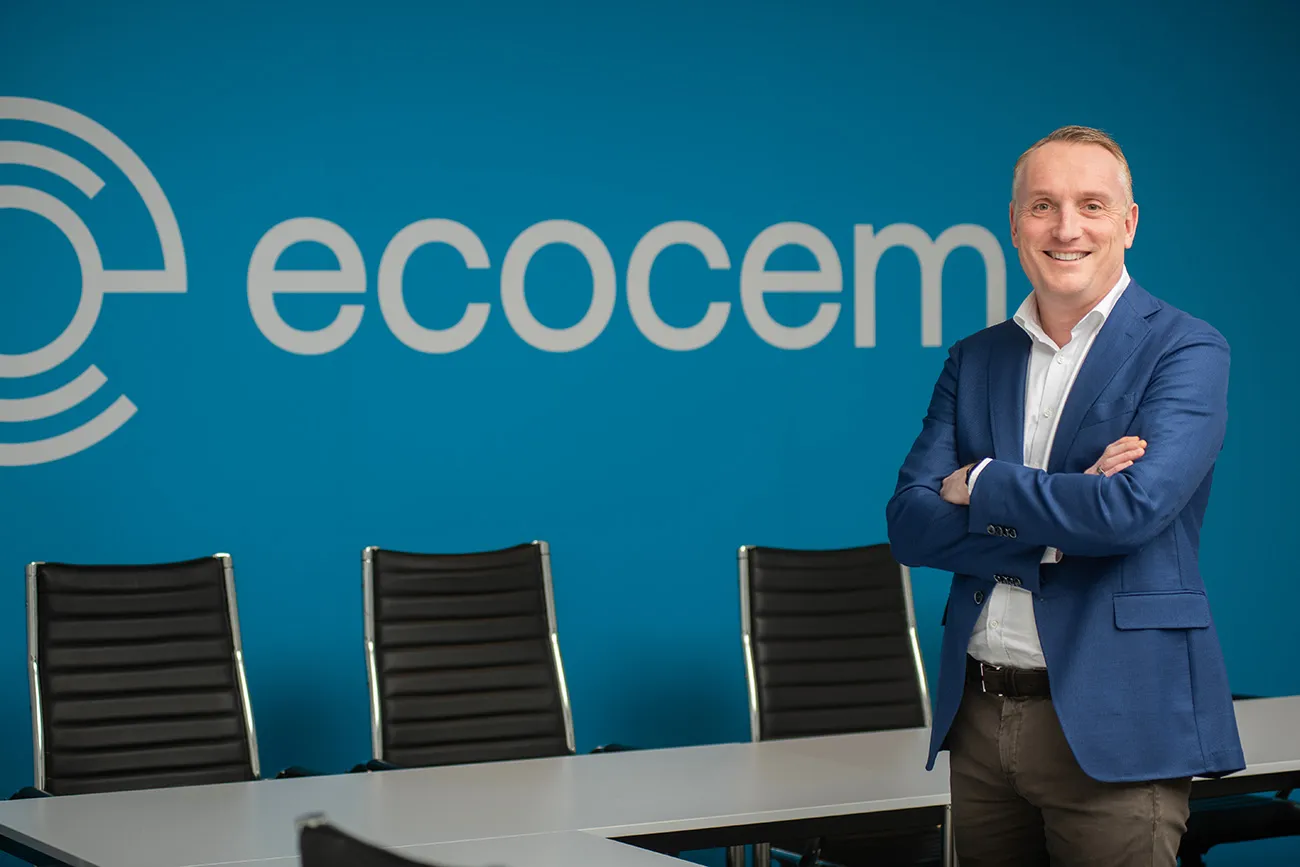
Concrete is one of the most widely used construction materials in the world, but it is also responsible for significant CO2 emissions. If concrete is to remain in use in the future, the material must be made sustainable worldwide, and quickly. Many initiatives are under way to capture CO2, for example, but these require very large and expensive investments that are likely to take years to become operational. If we want to achieve anything before 2030, there is no time to lose. So says Paul Roos, managing director of Ecocem Benelux. With ACT, Ecocem is offering a new technology that can cut the cement industry’s CO2 emissions by as much as 70% over the coming decades!
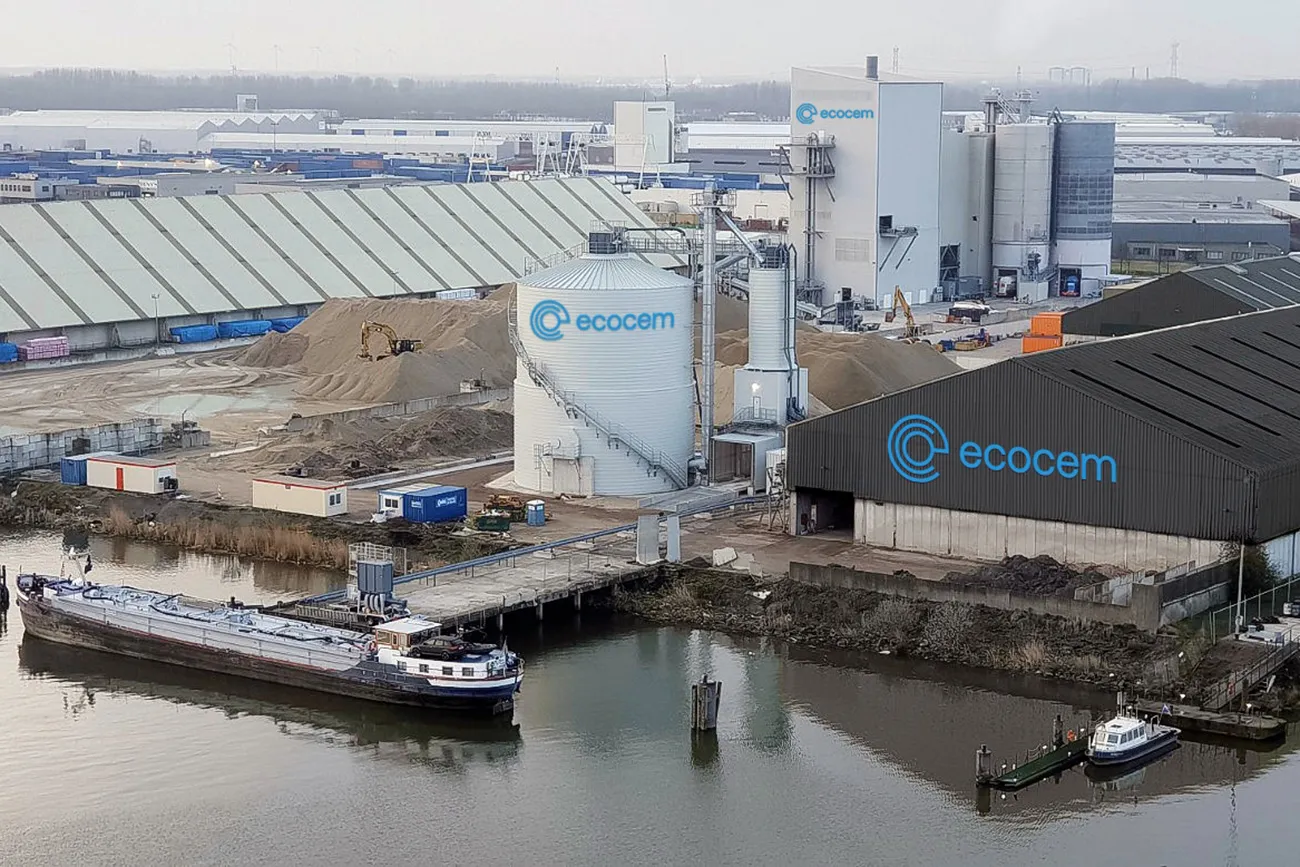
Making cement and concrete more sustainable has been Ecocem’s mission since it was founded in 2001. “In the Netherlands, we have been very successful in doing this through the use of ground granulated blast-furnace slag,” says Roos. “Standard CEM III/B cement, for example, now contains just 30% clinker and 70% blast-furnace slag. This leads to huge CO2 reductions. On a global scale, however, it is just a drop in the ocean. Blast-furnace slag is available only in limited quantities. As a result, clinker still accounts for around 70-75% of cement worldwide. So if we want to help prevent global warming on a global scale, we need to look for alternatives to blast-furnace slag.”
Local raw materials
Ecocem appears to have found that alternative. With ACT, the company has developed a breakthrough technology that reduces the amount of clinker in cement by using locally available materials such as limestone filler and other inert materials. This can cut CO2 emissions from cement production by up to 70%. “With ACT technology, specially developed additives allow us to make those inert materials work effectively, which until recently was the biggest challenge. Another advantage is that the resulting concrete is not only more sustainable, but also stronger. In addition, the amount of water needed to produce the concrete mix is significantly lower than with the traditional recipe. Finally, using ACT technology does not require major investment or changes to existing infrastructure at cement and concrete companies.”
Experimentation
Ecocem intends to obtain CE marking for ACT technology this year, with the aim of rolling it out worldwide from 2025. Roos says that equipment for experimental use will already be available later this year. “The idea is also to manufacture the technology under licence, so that we can scale up quickly around the world. It can of course also be used in the Netherlands, but for now the need is less urgent thanks to the availability of blast-furnace slag. That does not mean we are not preparing for the future with this technology in the Netherlands, because the availability of blast-furnace slag will decline as the steel industry continues to become more sustainable. We strongly encourage companies to start experimenting with it. A number of tests have already been carried out at our factory in Paris, which is also home to our innovation centre. These have been conducted not only at laboratory scale, but also at industrial scale, albeit to a limited extent so far. The initial results are promising, and we will share them with the market shortly.”
Een zakelijke vraag aan Ecocem? Neem contact op
Bedrijven in dit verhaal
Blijf dit volgen
Bij een nieuw verhaal krijg je een e-mail. Geen account nodig.
- ThemaMinder CO2 in beton en staal
- OnderwerpSustainability & circularity
- BedrijfEcocem