Progress, obstacles and challenges: Where do concrete and steel construction stand in the circular economy?
Tekst Liliane Verwoolde
The Netherlands needs to become more sustainable. Everyone is convinced of that.
But sustainable construction is also about retaining value. With a three-step plan, the Transitieteam Circulaire Bouweconomie is working towards a fully circular construction economy by 2050.
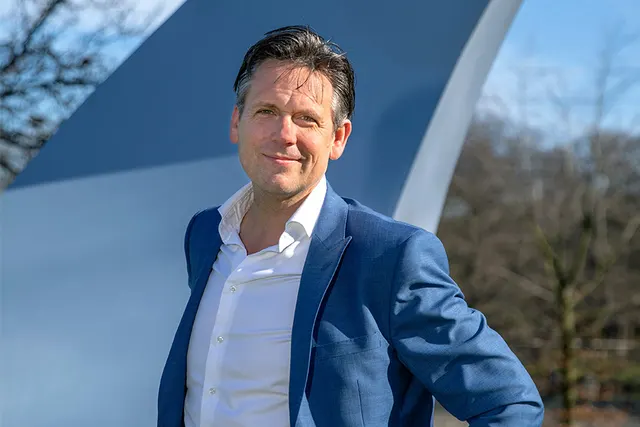
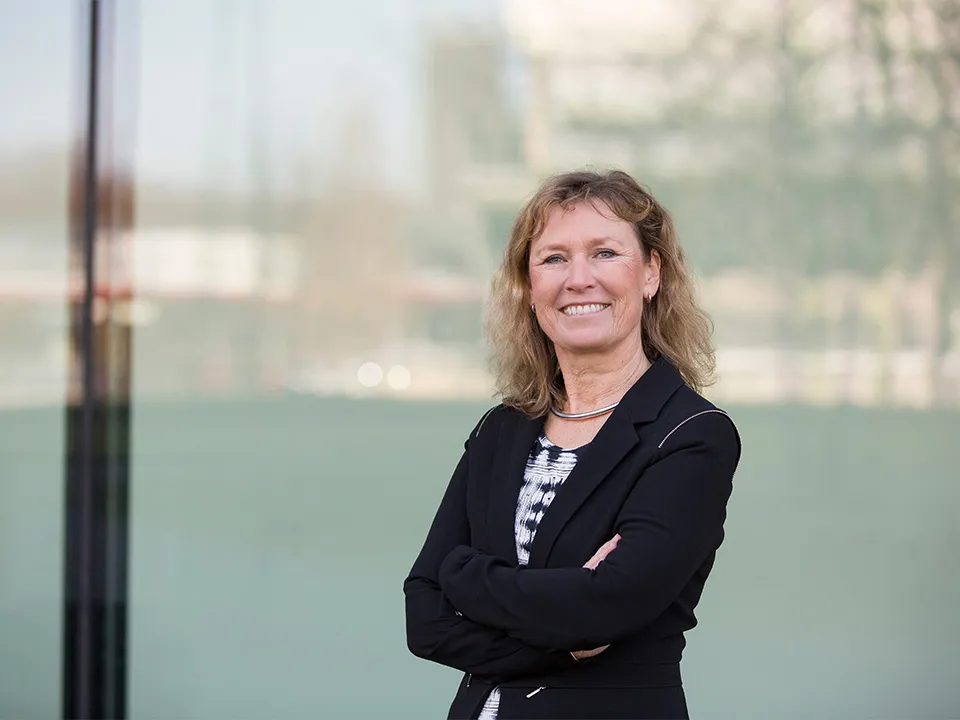
Elphi Nelissen, who joined the Executive Board of Fontys on 1 September, is Professor of Building Sustainability and chair of the Transitieteam Circulaire Bouweconomie. She is optimistic about the circular ambition. “Of course we will achieve it. If you look at where we have come from and where we are now, there is already a big difference. Contractors, consultants and architects know that we can no longer continue using new materials. Many are seeking a new balance and aiming for the highest possible level of reuse.”
Three stages to the summit
The Transitieteam Circulaire Bouweconomie uses the metaphor of a three-stage mountain climb to describe the process of moving towards a circular economy by 2050. From 2018 to 2023, it is establishing base camp. “We have assessed where we stand, set out our objectives, developed an implementation plan and issued recommendations to the national government,” says Nelissen. “In addition, the team and many people around it are working to raise awareness. We are telling our story everywhere.” Between 2023 and 2030, 50% of the ambition will be achieved, and from 2030 to 2050 the goal, ‘the summit’, will be reached.
Direct reuse of steel is better than recycling
With steel as its raw material, steel construction is in a strong position. Steel is 100% recyclable. Yet there is still considerable progress to be made here too, according to Nelissen. “Melting steel is one way to build circularly, but it also requires energy, so it is better to reuse the steel beams directly. This becomes possible if the beams are bolted rather than welded. If we also combine bolted connections with standardised dimensions, the chances of direct reuse
increase considerably.”
Innovative concrete connections
The use of concrete has already fallen considerably as a result of the Betonakkoord. Concrete is also recyclable, but the process is costly and not yet ready for the mass market. “This is still a challenge for technical developers. Alternative connections could also be devised for concrete, making the elements more suitable for reuse. Structural engineers and architects could also split large concrete elements, making them easier to reuse.”
The first steps
Nelissen understands that contractors are putting off taking the first steps. Nevertheless, she wants to encourage them to get started. “From 2023, circular construction will be a requirement in tenders. Coaches can provide excellent guidance on the first steps towards circularity.” On the other hand, Nelissen notes that these steps are more difficult if the motivation does not come from within. “You have to believe in it, of course.”
Circularity is a familiar concept
Overall, Nelissen is satisfied with progress on the step-by-step plan. “Circularity is a familiar concept and our climb is on schedule. We will not manage to become fully circular by 2050, but with the necessary innovations, we certainly can achieve this in new-build construction.”
Vraag over dit verhaal? Stel je vraag
Blijf dit volgen
Bij een nieuw verhaal krijg je een e-mail. Geen account nodig.
- ThemaMinder CO2 in beton en staal
- OnderwerpSustainability & circularity