Reuse of steel tubes and sections
Steel is a product for repeated use, not something you consume. Steel beams and hollow sections retain the same properties as new ones, provided they are properly conditioned. In many cases, they can easily be used a second time, or even several times, without any adverse effects. This makes them a perfect fit for the drive towards a circular economy. Through its ‘Donorstaal’ platform, Swanenberg IJzer Groep is promoting the reuse of steel. This offers unprecedented opportunities and environmental benefits, particularly in the infrastructure sector.
Steel tubes and sections are materials that are perfectly suitable for reuse.
“Reusing materials, reducing CO2 emissions and offsetting nitrogen emissions: these are topics of daily discussion. Steel tubes and sections are materials that are perfectly suitable for reuse,” says Frank van der Loop of Swanenberg IJzer Groep, based in Schaijk. “By actively participating in and contributing to various initiatives on this subject, we stay up to date with the possibilities for reusing steel. And those possibilities are considerable. Partly in response to stricter government regulations on steel traceability, we try to establish the exact properties of used hollow sections, steel structures from buildings and old pipelines, for example. This gives us the information we need to give these sections a second life.”
With a stock of more than 150,000 tonnes of steel tubes and beams, Swanenberg IJzer Groep can deliver very quickly on request.
Recertification
Swanenberg IJzer Groep has been the greenest steel supplier in the Netherlands for 55 years. “After all, we have been trading in used steel all that time,” says Van der Loop. “With a stock of more than 150,000 tonnes of steel tubes and beams, we can deliver very quickly on request. We began by buying and selling used steel. As the business has changed, we have also become one of Europe’s largest stockholders of new, first-choice steel with full mill certification, as well as unused surplus stock. We are also increasingly focusing on changing the intended use of materials. In particular, this means certifying products that have already been rolled. A product can often be used in several different ways. Tubes originally manufactured for use as gas pipelines can, in consultation with the manufacturer, be recertified to a different standard for acceptance in the infrastructure sector, for example. Applications include combi-walls, bracing frames, rotary piles and driven piles. We also work closely with testing laboratories, which can carry out chemical and mechanical analyses where necessary to verify the grades of used steel, so it can be used for its intended application.”
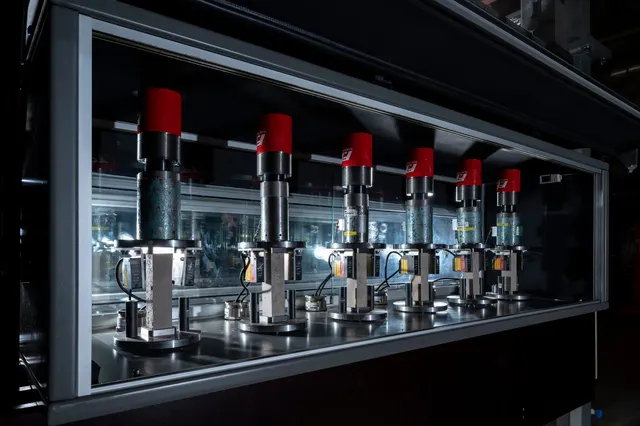
Tubes originally manufactured for use as gas pipelines can, in consultation with the manufacturer, be recertified to a different standard for acceptance in the infrastructure sector, for example.
More cost-effective
Using used steel sections means there is no need to produce new steel. “Bear in mind that a steel structure, if properly conditioned, can last an incredibly long time,” Van der Loop stresses. “Its service life is often much longer than its period of use. There is therefore a huge amount of used steel in circulation. Current regulations (EN 1090, etc.) mean that new steel is often chosen for a project. That is a waste, especially when there are no further requirements, or when the steel grades are known and used products with the same properties as new steel can be given a second life. Using used steel in this way delivers enormous environmental benefits. Fortunately, more and more clients are aware of this. It also reduces costs, so it is a win-win situation.”
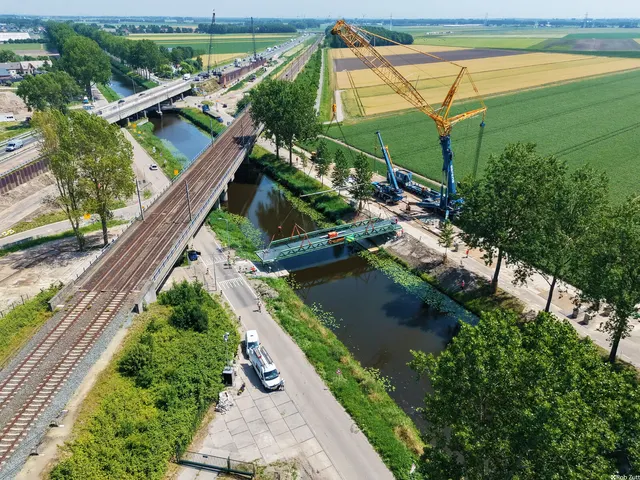
Using used steel is more cost-effective, often available from stock and better for the environment. The infrastructure sector has already discovered this and is reaping the benefits.
Vraag over dit verhaal? Stel je vraag
Blijf dit volgen
Bij een nieuw verhaal krijg je een e-mail. Geen account nodig.
- ThemaMinder CO2 in beton en staal
- OnderwerpSustainability & circularity