‘Concrete offers enormous potential in the circular economy’
Tekst Roel van GilsFotografie Betonhuis
Concrete is the world’s second most widely used material after water and, according to Betonhuis, has enormous potential in the circular economy. Concrete can be reused 100% without loss of quality, provided certain conditions are met. The concrete sector is working hard to achieve the circularity targets for 2030. As a knowledge centre, Betonhuis is constantly looking for new ways to contribute to a better world. Its priorities include making work even safer, as well as nature-inclusive and climate-adaptive construction, energy-efficient designs, more slender structures, and adaptive, demountable concrete elements.
Circular Construction Economy Transition Team
At present, only 5% of the ingredients in new concrete are recycled materials. “A great deal of concrete waste is still used in other applications, such as road foundation material. The Betonakkoord, however, stipulates that concrete waste from the built environment must be reused in new concrete. This means that demolition contractors and recyclers must be instructed to carry out selective demolition. Unfortunately, this still does not happen in every case, far from it.” Paul Ewalds, concrete manager and policy and regulations coordinator at Betonhuis, explains: “Betonhuis is actively informing the entire supply chain to help steer it in this direction. TU Delft is also working on a method for assessing concrete quality before demolition, so that high-quality concrete can be reused at a high value rather than in low-grade applications. That is when we will truly close the loop. Fortunately, this vision is widely shared. The Circular Construction Economy Transition Team, for example, is working on the construction sector. Its report, ‘advice roadmap to a circular construction economy’, sets out recommendations for the government on achieving the targets for reducing raw material use. It also devotes considerable attention to concrete. This is a positive development, particularly because it involves the entire supply chain in achieving the targets.”
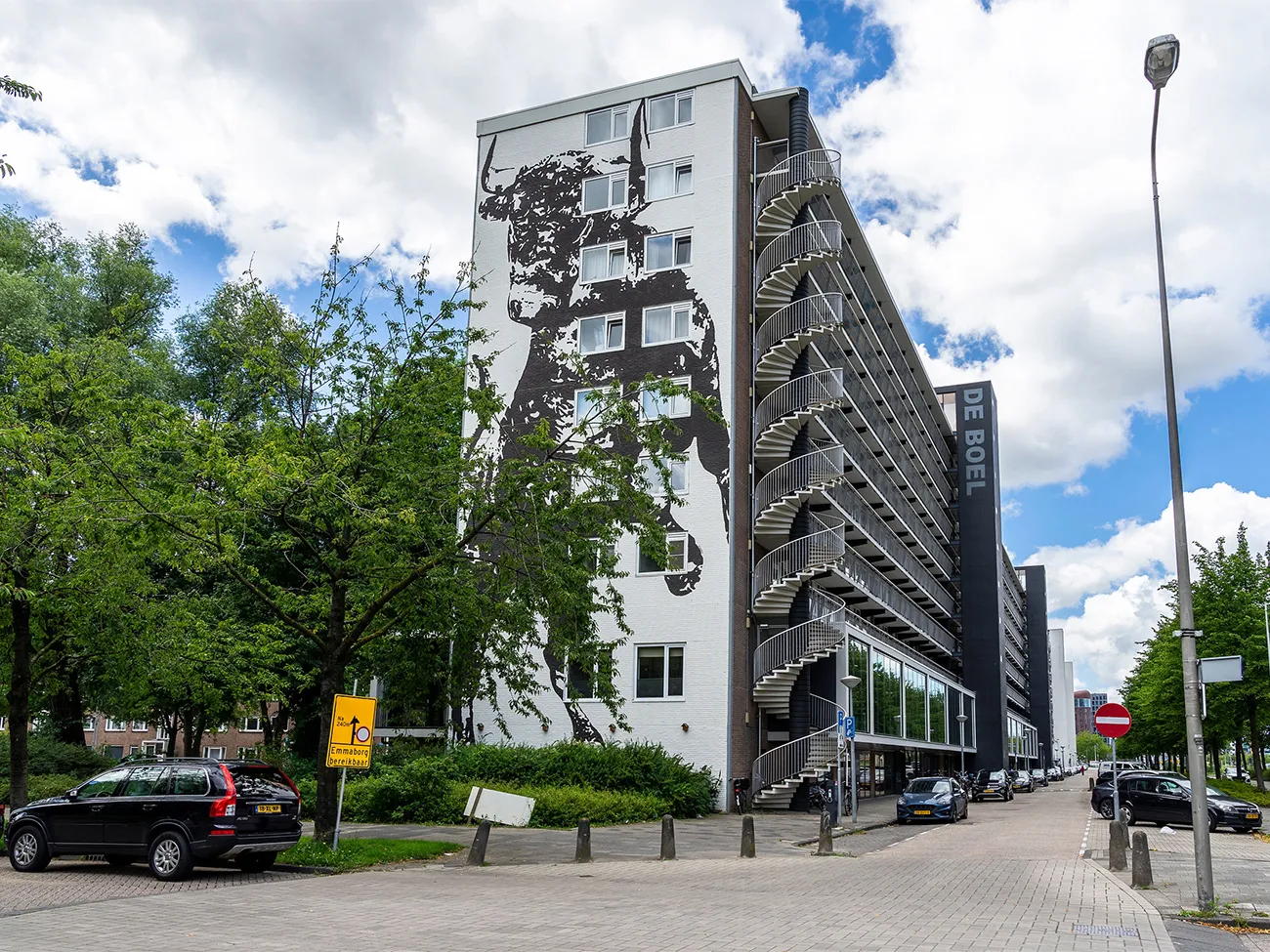
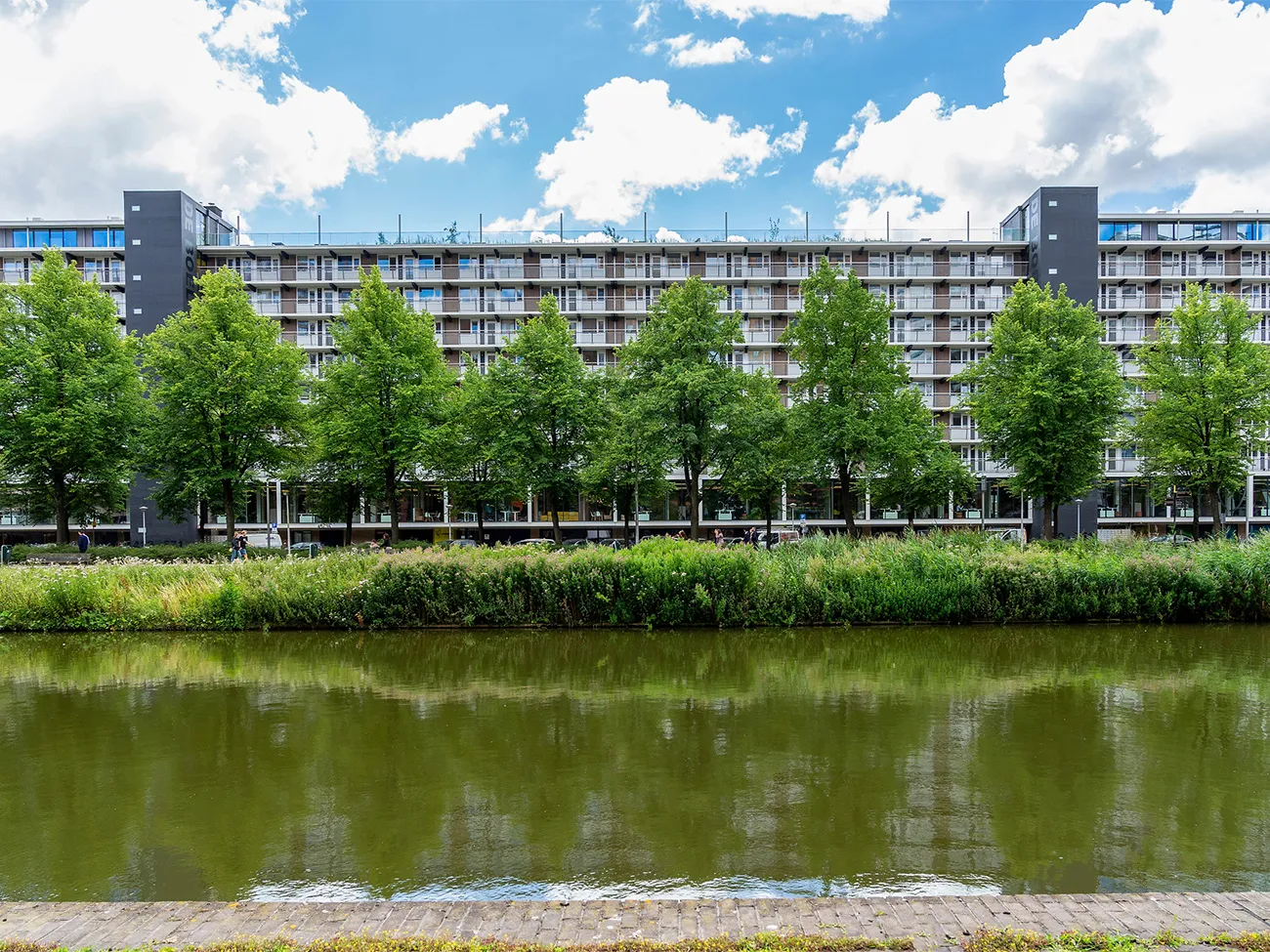
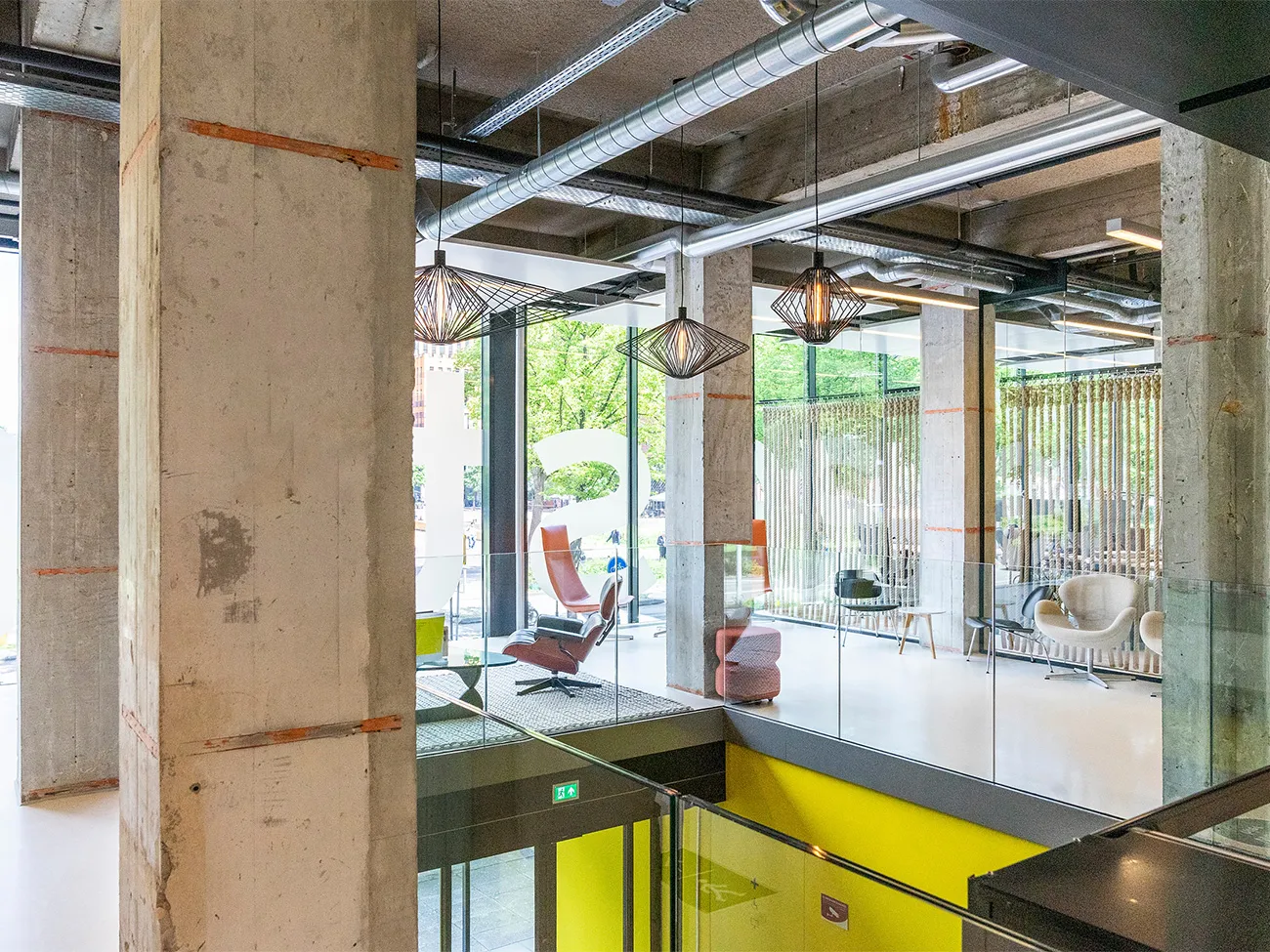
Photos 1-3:
Amsterdam residential and office building with a roof garden. The building was transformed by Van Heeswijk Architecten in 2016. Client Vesteda has its head office on the first floor. The architect recommended stripping the building completely, exposing its concrete structural frame. A 700 m2 communal roof garden with panoramic views was created on top of the building. This was made possible by adding a reinforced concrete topping to the roof structure.
Building Value Model
As the Betonakkoord also states, only part of concrete’s performance in terms of circularity and sustainability is determined by the material itself. “Most of the circularity targets have to be achieved at the design stage,” Ewalds emphasises. “We need to focus on circular design. The Building Value Model is a useful tool for this. One of its most important aspects is service life, and therefore circular design. We still design linearly. In other words, the concrete structure is designed for its first user and purpose, whereas it is far more sustainable to look beyond the current brief at the design stage. We build for more than 100 years. How can a building be used once it has outlived its intended purpose? The Building Value Model advocates adaptive and demountable design, allowing the concrete structure to be modified and/or dismantled to meet the needs of other users and functions. Under the current system, buildings are written off after 50 years. This is completely unnecessary! A building, and certainly its concrete structure, is still worth a great deal after that period, as it can easily last 100 to 150 years. That is three times as long, bringing substantial sustainability and circularity benefits.”
Ewalds: “The temporary Amsterdam courthouse, for example, shows the future of construction. Ideally, within 30 years all buildings will be designed to be easily adapted or rebuilt elsewhere, and concrete and concrete structures will be designed to last, for example, 150 years. But there is still a long way to go. And we need the entire supply chain to get there. We have taken the first steps in that direction. Concrete has enormous potential in the circular economy.”
The Netherlands as a frontrunner
The Netherlands is also Europe’s frontrunner in using concrete waste in new concrete. The proportion is only 5%, but that is still higher than in neighbouring countries. We are also ahead when it comes to concrete’s total CO2 impact. In the Netherlands, concrete accounts for 1.6% of total CO2 emissions. The European average is 6%, while the global figure is as high as 9%. According to Ewalds, this is because secondary materials such as fly ash and blast furnace slag are used across the board in the Netherlands. “The Betonakkoord offers plenty of scope for further reducing CO2 emissions, because ultimately we want to achieve zero emissions. The cement industry, for example, is working intensively on capturing CO2 and reusing it in other materials, even outside its own supply chain. In the Netherlands, the concrete industry is miles ahead of other sectors in this respect, thanks to the Betonakkoord.” This is probably also why Betonhuis has been asked to chair the circular economy working group at the European umbrella organisation. Europe, and indeed the rest of the world, could take a leaf out of the book of the Dutch concrete industry, which is working as a supply chain to meet the climate targets.
First Circularity Economic Package
There are also positive developments at European level. Ewalds points to the First Circularity Economic Package, which announced that the Construction Products Regulation would be revised. “Cement and ready-mixed concrete will receive a CE mark. This will have a considerable impact, as it means products made on site, such as ready-mixed concrete, will also fall under the CPR. Contractors need to realise that they too will have a significant role to play: they will have to issue a Declaration of Performance. A new system for sustainability and circularity has also been announced. It will replace the current system, which is not harmonised across all countries. Under the plans, the new framework would form part of the Ecodesign Directive. It could have a major impact on local assessment methods such as the MPG. The aim is to assess not only materials, but also the environmental impact of the project as a whole. In short, there is a great deal still to come.”
Suppose it is 100 years from now and the Netherlands is building as much as it is demolishing. Could we then make new concrete from 100% recycled concrete waste? “Absolutely,” says Ewalds emphatically. “The concrete industry has long been equipped to recycle concrete to a high standard, but circularity goes far beyond that. And we need the entire supply chain to achieve it. The first steps have already been taken, and we can already use all the concrete waste currently becoming available in new concrete.” Clients can also use the CSC-R module from Betonhuis to specify how much circular material may be used in new concrete when working with CSC-certified companies. For those interested, the CO2 module shows the maximum climate impact of the concrete ordered. Concrete has enormous potential in a sustainable and circular economy too.
Vraag over dit verhaal? Stel je vraag
Blijf dit volgen
Bij een nieuw verhaal krijg je een e-mail. Geen account nodig.
- ThemaMinder CO2 in beton en staal
- OnderwerpSustainability & circularity