A new step towards sustainable construction
Tekst BetonhuisBeeld Heijmans, Kees Jansen, Betonhuis
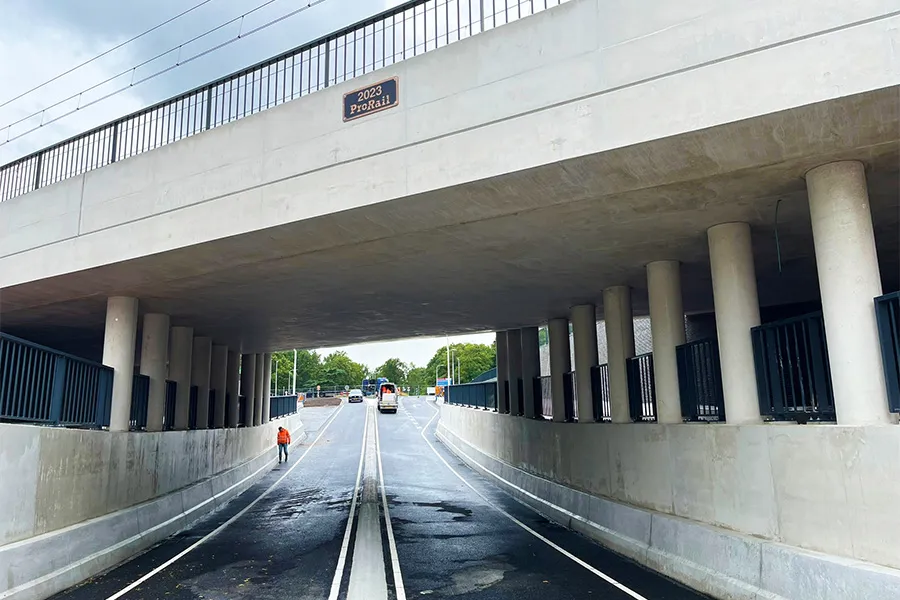
Self-healing concrete in Rijen
Concrete that repairs itself may sound like a dream, but in Rijen that dream has become reality. An innovative application of self-healing concrete has been successfully put into practice in a wall of the pumping station for the railway underpass in the Brabant village. This project, carried out by contractor Heijmans in collaboration with ABC Betonmortel and Basilisk, marks an important step towards more sustainable concrete structures.
The concept behind self-healing concrete is as ingenious as it is effective. The key is an additive developed by Basilisk in Delft. The company, which originated at TU Delft, has developed a technology in which bacteria produce limestone and seal cracks in concrete. This keeps the concrete watertight without the need for additional repairs.
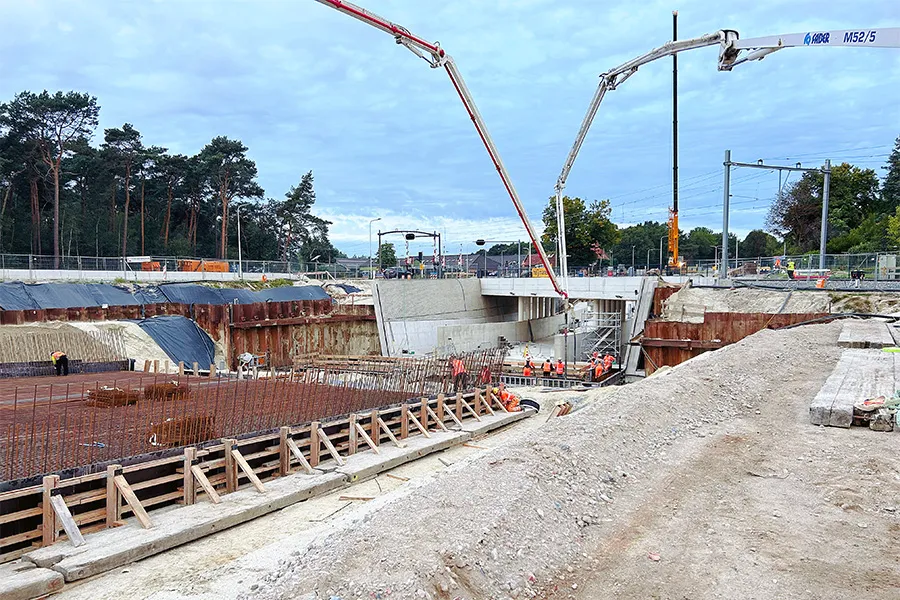
Less reinforcement, more sustainability
One of the major benefits of this innovative concrete is that it requires less reinforcement. Normally, additional reinforcing steel is used to limit cracking and ensure watertightness. Thanks to the concrete’s self-healing properties, however, 35% less horizontal reinforcement was used in Rijen. This resulted in a 10% lower environmental impact, an important step towards more sustainable construction. Jeroen van Oosten, concrete technology adviser at Heijmans, explains: “Sustainability is one of our key priorities. Concrete is one of the most widely used materials in construction, so it is crucial to make it more sustainable. With this project, we are taking a tangible step towards circular concrete, something we strive for in all our projects.”
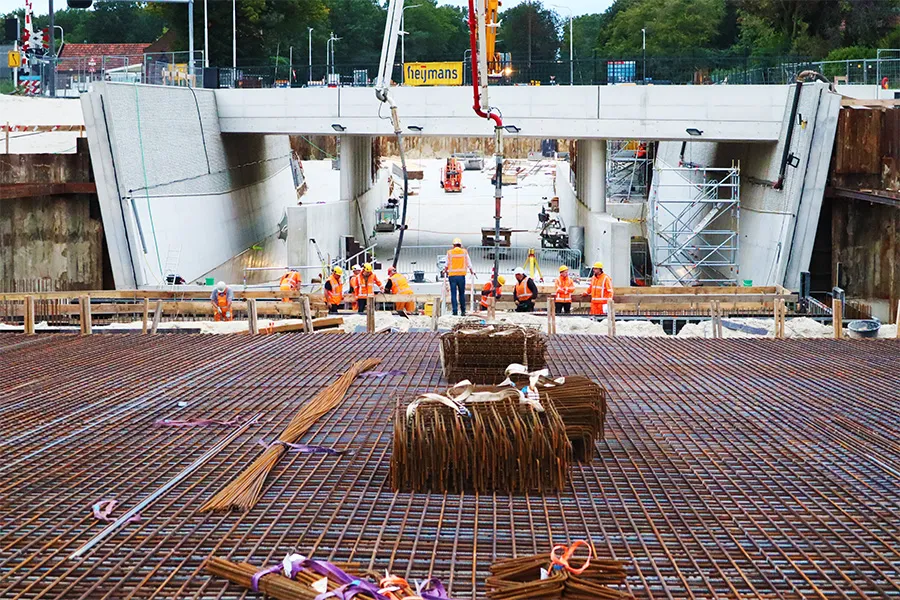
A broad collaboration
This project brought together several parties, all contributing to more sustainable construction. ProRail and the Province of North Brabant played a crucial role as clients and were open to innovation. Contributions from TU Delft and independent research organisations such as SGS Intron provided a scientific basis for the work and validated the results. Marc Ottelé, a researcher at TU Delft, highlights the importance of this integrated approach: “This project shows that sustainable construction is about more than material innovation. It also requires collaboration throughout the entire value chain. Every aspect, from design to execution and monitoring, has been documented and analysed.”
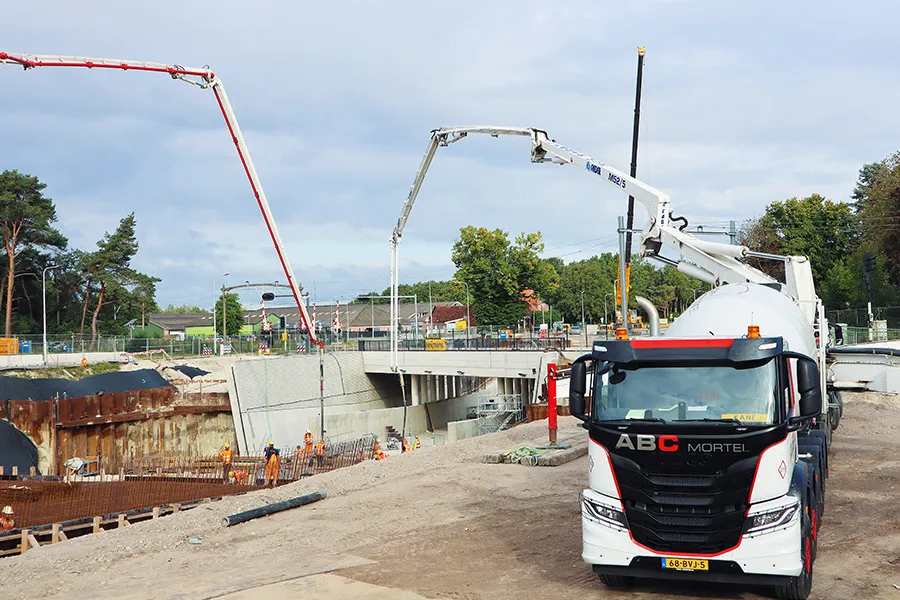
Testing in practice
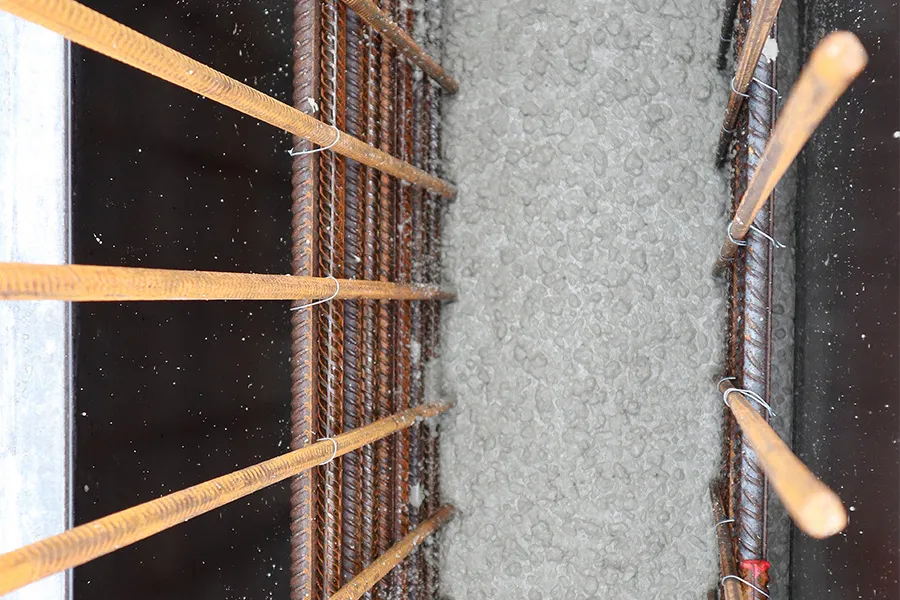
For this project, one of the long walls of a pumping station basement in the railway underpass was built using self-healing concrete. This provided the ideal test environment for assessing the material’s effectiveness. Four cracks up to 0.2 millimetres wide were observed after the concrete was poured, exactly as expected. To test whether the bacteria were doing their job, the basement was kept under water for six weeks. When the water was pumped out, visual inspections showed that the cracks had sealed and there were no leaks. Core samples were taken and examined by TU Delft to further validate the results. The initial findings confirmed that the self-healing concrete performed as intended.
Monitoring and comparative research
The project in Rijen is not only a test of self-healing concrete, but also an important scientific experiment. The railway underpass was designed to include a comparative test: one wall was conventionally reinforced, while the opposite wall was built with 35% less reinforcement. Over the next five years, Heijmans and ProRail will carry out annual inspections to compare the performance of the two solutions. Van Oosten says this approach is essential to further developing sustainable construction techniques. “This project provides valuable insights into how we can make concrete structures more sustainable. The CO2 savings we achieve are significant and could amount to up to 10% of a concrete structure’s total emissions.”
The future of self-healing concrete
The successful application in Rijen is an important step for self-healing concrete in the infrastructure sector. The technology is expected to be used increasingly in the future, in both new-build and renovation projects. In addition to railway underpasses and viaducts, self-healing concrete could also be used in sewers, tunnels, car parks and water engineering structures. For Heijmans, this project is one of many pilots involving sustainable concrete. “We want to keep innovating and testing new technologies,” says Van Oosten. “Self-healing concrete has the potential to become a standard solution in construction, and we are proud to be at the forefront of this development.” With the construction sector increasingly focused on circularity and CO2 reduction, self-healing concrete can make an important contribution to a more sustainable future. The experience in Rijen proves that this technology not only works, but is also a viable and effective solution to the challenges facing the modern construction industry.
Further scaling up and research
Wider adoption of self-healing concrete will require further scaling up and additional research. TU Delft and Heijmans will continue working with partners to improve the technology and reduce costs. New test projects are being planned, including in housing and water engineering. Cost-effectiveness is a key consideration. The current price premium for self-healing concrete remains a barrier to large-scale adoption. However, because it requires less maintenance and fewer repairs, its whole-life costs may be lower. This could make it an attractive option in the longer term for both public authorities and private investors.
Conclusion
The project in Rijen shows that self-healing concrete is a viable and effective solution for the future of sustainable construction. Collaboration between contractors, research institutions and clients has made it possible to successfully apply innovative technologies in practice. The coming years will show the scale of this development’s impact, but one thing is certain: self-healing concrete has the potential to fundamentally transform the construction sector.
Een zakelijke vraag aan Basilisk Self-Healing Concrete? Neem contact op
Wie eraan werkte
Spooronderdoorgang Rijen
- hulpstof
 Basilisk
- aannemerHeijmans
- opdrachtgeverProRail
- opdrachtgeverprovincie Noord-Brabant
Blijf dit volgen
Bij een nieuw verhaal krijg je een e-mail. Geen account nodig.
- ProjectSpooronderdoorgang Rijen
- ThemaMinder CO2 in beton en staal
- OnderwerpConcrete
- BedrijfBasilisk Self-Healing Concrete
- BedrijfHeijmans
- BedrijfProRail
- Bedrijfprovincie Noord-Brabant