Dew-point sensor provides clarity for painting work, saves time and delivers predictable quality
Tekst Tjerk van DuinenBeeld Dauwpuntsensor.nl
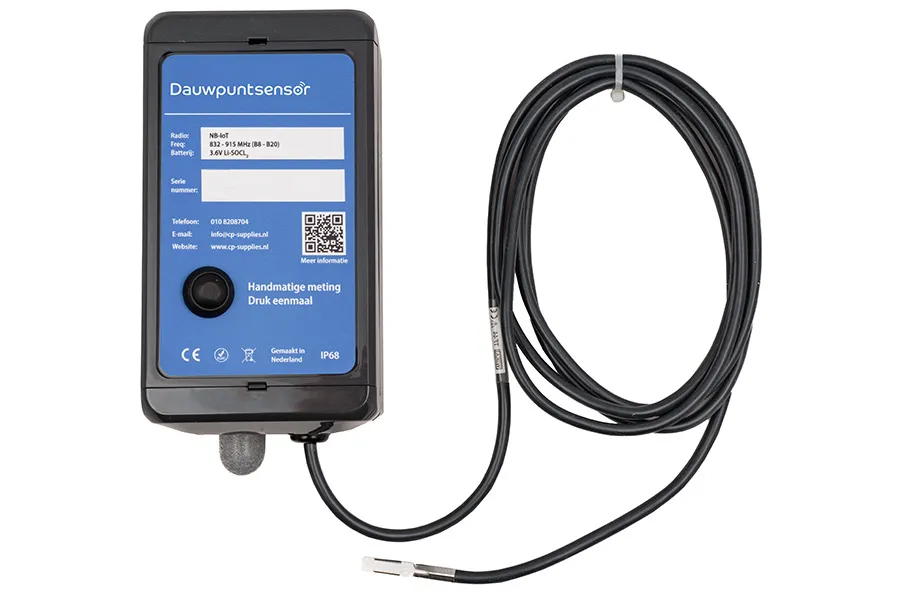
Things can take an unexpected turn, as Anthony van den Hondel of Cathodic Protection Supplies knows. For decades, he has worked to protect concrete structures using cathodic protection. This technique neutralises the corrosion process with an electric current or sacrificial anodes and is a proven method of significantly extending the service life of buildings, infrastructure and steel objects. Monitoring is also needed to ensure performance over time, through digitalisation and the use of IoT. This not only saves a great deal of time, it also provides a wealth of interesting and useful data. Could the same approach be used for painting work, a major client asked? Absolutely. And so, after a year of testing, the first fifty dew-point sensors were delivered in September.
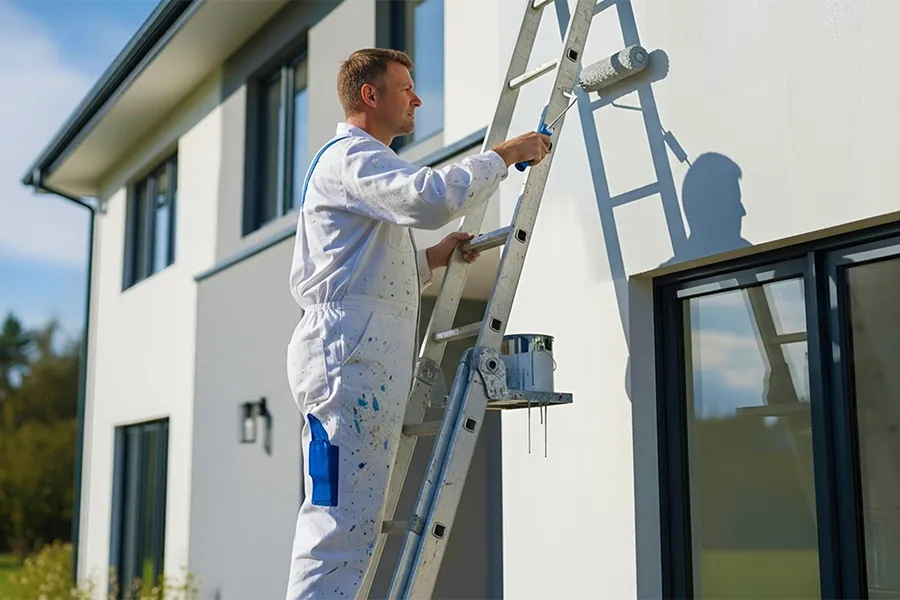
“A lot can go wrong with painting work, and one of the most important factors is inadequate adhesion,” says Van den Hondel. “That is not down to the tradespeople, the materials or the products used, but to the weather conditions during application. If it’s raining, you can’t paint, everyone understands that. But it is less obvious when it is just a little too cold. The applicable standard, NEN EN ISO 8502-4, specifies a surface temperature of at least 3°C above the dew point, unless agreed otherwise. If the temperature is too low, condensation forms on the material, whether it is wood, concrete or metal.”
Errors
You can take manual measurements to keep a close eye on the conditions in which painting is carried out. But all sorts of things can go wrong. Van den Hondel explains: “Conditions sometimes change quickly. A measurement taken in the morning may already be out of date an hour later. Or a measuring instrument is used straight away after being brought out of a heated site cabin. That’s not right, because the sensor needs time to adjust to the substrate. You also see incomplete checks, for example measuring only air temperature and relative humidity, when surface temperature and dew point are essential. Measuring and recording are manual tasks, and errors can occur. If dew forms, the result is substandard paintwork, which is certainly not what the client wants.”
Accurate data
For major purchasers of painting work, such as housing associations, the Central Government Real Estate Agency or Rijkswaterstaat, only predictable quality will do. “One of my contacts, a large company I do a lot of cathodic protection work with, is keen to deliver that predictable quality to its clients,” Van den Hondel continues. “All the measurements taken by people in the field were being entered manually into spreadsheets. That takes a lot of time and the risk of errors is high. My client then asked: can’t we handle this more intelligently, as we do with cathodic protection? We immediately set about developing a good sensor, and the first batch has just been delivered after a year of testing. It will quickly pay for itself. Wherever a sensor is installed, it takes work off people’s hands and eliminates the need to spend labour hours on manual measurements. The foreman is actively informed and can log in to access real-time data. The exact conditions under which the painting work was carried out are therefore always available. So disputes with insurers are a thing of the past, too. For painting contractors, this means quality work backed by complete data, knowing exactly when to stop or resume work, fewer lost hours and no errors in recording. And it is easy to incorporate into the work routine: put up the site cabin, park the portable toilet next to it and hang up a dew-point sensor.”
Vraag over dit verhaal? Stel je vraag
Blijf dit volgen
Bij een nieuw verhaal krijg je een e-mail. Geen account nodig.
- OnderwerpConcrete