Dura Vermeer and C2CA cut concrete CO2 emissions through innovative upcycling of concrete rubble
Tekst Dura Vermeer
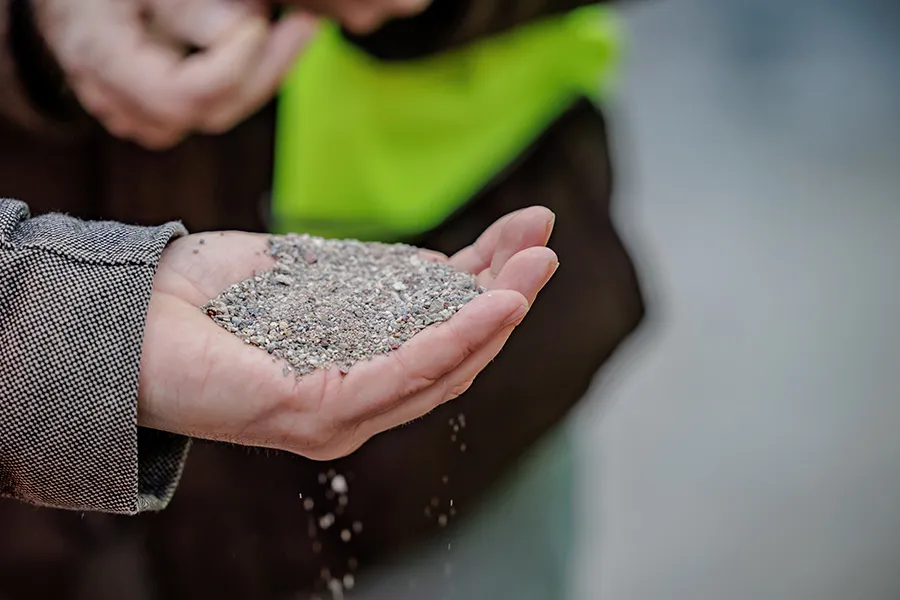
A new joint venture between Dura Vermeer and C2CA will build a plant that is expected to reduce CO2 emissions by 30,000 tonnes a year by upcycling concrete rubble. Alongside recovered gravel and sand, the innovative process produces a supplementary cementitious material (SCM) that can replace cement in the production of new concrete. Dura Vermeer and C2CA also activating this ultra-fine cement fraction themselves is unique in the construction sector. The first new plant, in the Rotterdam region, can process 150,000 tonnes of concrete rubble a year. The company will thereby become a supplier of circular concrete raw materials for new concrete projects in the Netherlands. The plant is expected to enter service in the second quarter of 2025.
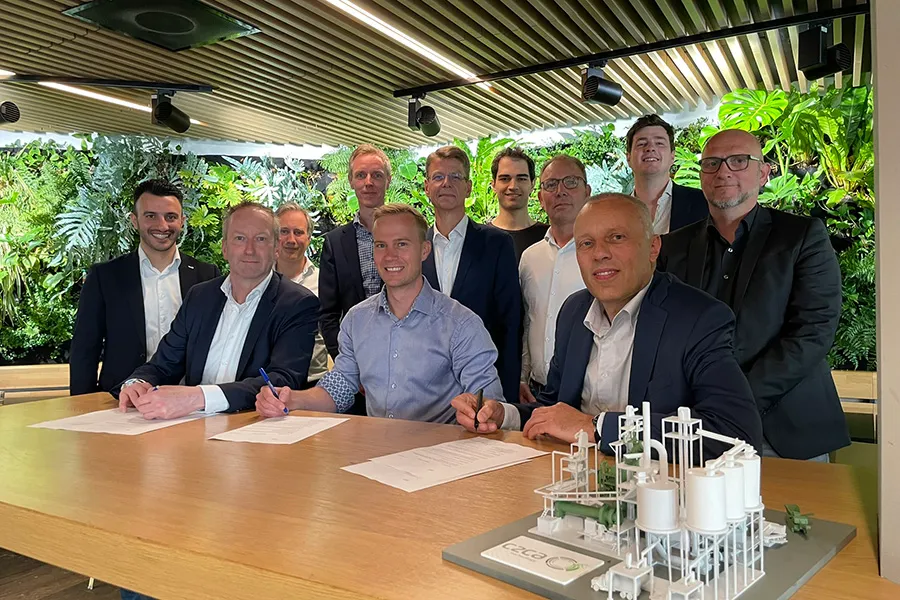
Pieter Niemantsverdriet, director at Dura Vermeer, is extremely proud of the collaboration. “Dura Vermeer has a clear goal: to halve CO2 emissions by 2030 and achieve net-zero CO2 emissions by 2050. Circular construction is an important way to achieve this, enabling us to make a real impact. Our long-term collaboration with C2CA is therefore a major step towards Net Zero, not only for our own projects but for the construction sector as a whole. Innovations of this kind also underline the Netherlands’ role as a country at the forefront of sustainable innovation.”
C2CA CEO Thomas Petithuguenin adds: “To meet our climate targets, we need to take real action now. The greatest CO2 savings in our industry can be achieved by offering alternatives to primary cement. And that is what we are doing. We are very pleased to have found a solid partner in Dura Vermeer to realise our shared ambitions.”
Emissions in perspective
The cement industry is responsible for 7 per cent of global CO2 emissions (source: World Cement Association, 2023), while the construction sector in the Netherlands consumes half of all raw materials. The sector is also responsible for around 40 per cent of energy consumption and a third of total CO2 emissions. Since almost half of all construction materials are concrete, the sector’s contribution to climate targets and emissions reduction is highly significant. At present, only 5 per cent of concrete rubble is recycled to a significant degree (source: Betonhuis, 2022), with most of it downcycled for lower-grade reuse. Conventional concrete recycling methods do not produce a partial cement replacement (SCM), meaning that reuse in new concrete currently delivers little to no CO2 reduction.
Innovative upcycling process
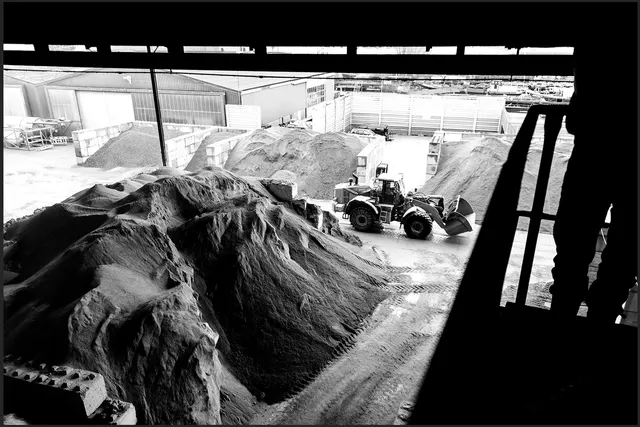
The new Dura Vermeer and C2CA plant makes this possible. The upcycling process starts with the intake of clean concrete rubble. The rubble is carefully processed into its original fractions: gravel, sand and cement stone powder. In the final processing stage, the recycled cement stone powder is activated to produce a reactive binder (SCM). The circular concrete raw materials are then supplied to concrete producers to make circular concrete with a much lower CO2 impact.
About Dura Vermeer and C2CA
Dura Vermeer is a family-owned company that has been in business since 1855. Dura Vermeer is committed to creating safe, healthy and fair living environments, made for and by people. The developer-builder involves the entire supply chain. Through innovative partnerships, the company continually works on sustainable solutions that add up to zero emissions by 2050.
Vraag over dit verhaal? Stel je vraag
Blijf dit volgen
Bij een nieuw verhaal krijg je een e-mail. Geen account nodig.
- ThemaMinder CO2 in beton en staal
- OnderwerpConcrete