Our concrete legacy: unloved but crucial
Tekst Faculteit Bouwkunde, TU DelftFotografie Dr. Wido Quist
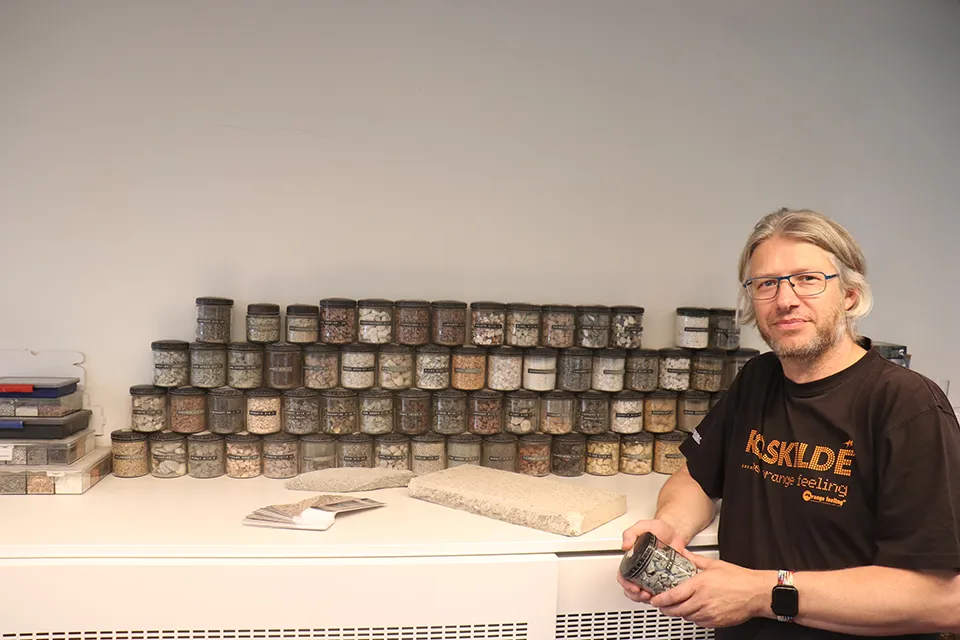
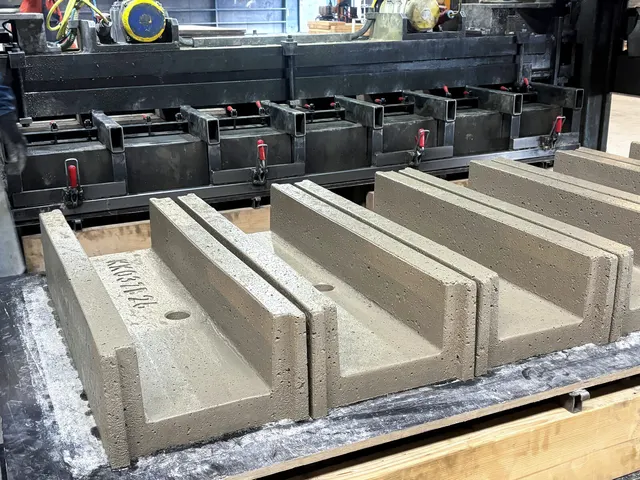
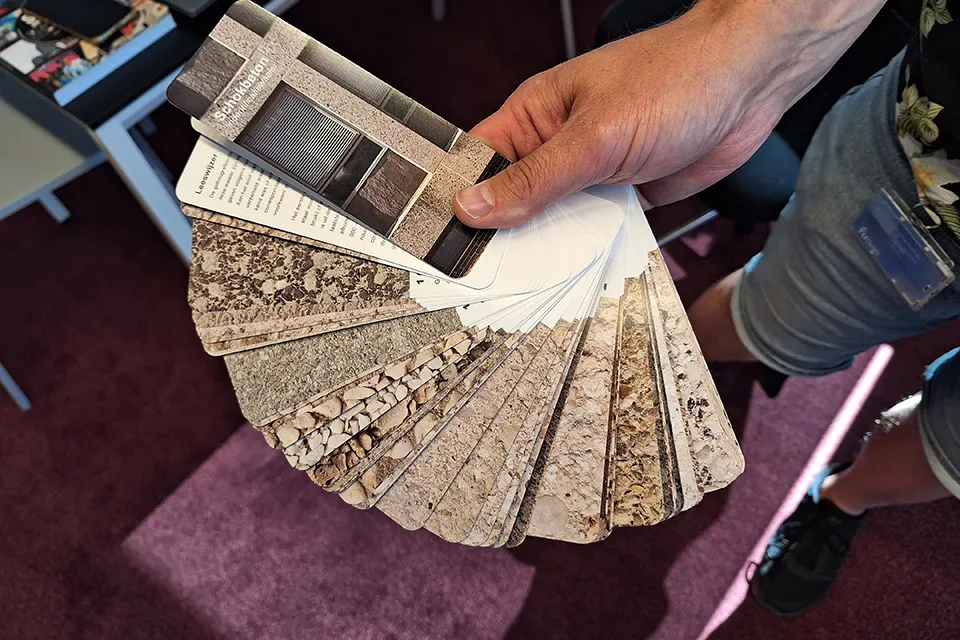
In 2015, Dr Wido Quist, senior lecturer in Heritage and Architecture at the Faculty of Architecture and the Built Environment at TU Delft, was tipped off to pay a quick visit to bankrupt Schokbeton in Zwijndrecht. On arrival, he found hundreds of different concrete tiles, a thousand concrete recipes and huge folders full of images. Wido and his colleagues took as many photos and scans as they could, and even took some of the material with them. Why? “First, we are saving unique knowledge about the history of architecture. And second, this archive holds the key to the sustainable preservation of our built heritage.”
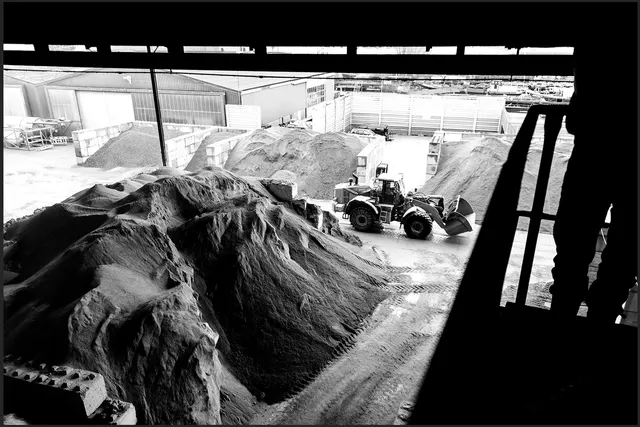
Concrete, a mixture of sand and gravel with cement, is the world’s most widely used material after water. And popularity brings criticism. Concrete is now virtually synonymous with ugliness and a lack of inspiration. Not so for Wido: “Put me in any city and I can tell you all sorts of things about its concrete architecture. The Holbeinhuis in Rotterdam contains red brick rubble, Zutphen station is full of flint fragments, the white concrete of the former Banque Lambert in Brussels is polished to a smooth finish… These were all deliberate choices by designers and builders!” So it was coincidence, but no surprise, that Schokbeton crossed his path.
From Dutch pride to unwanted child
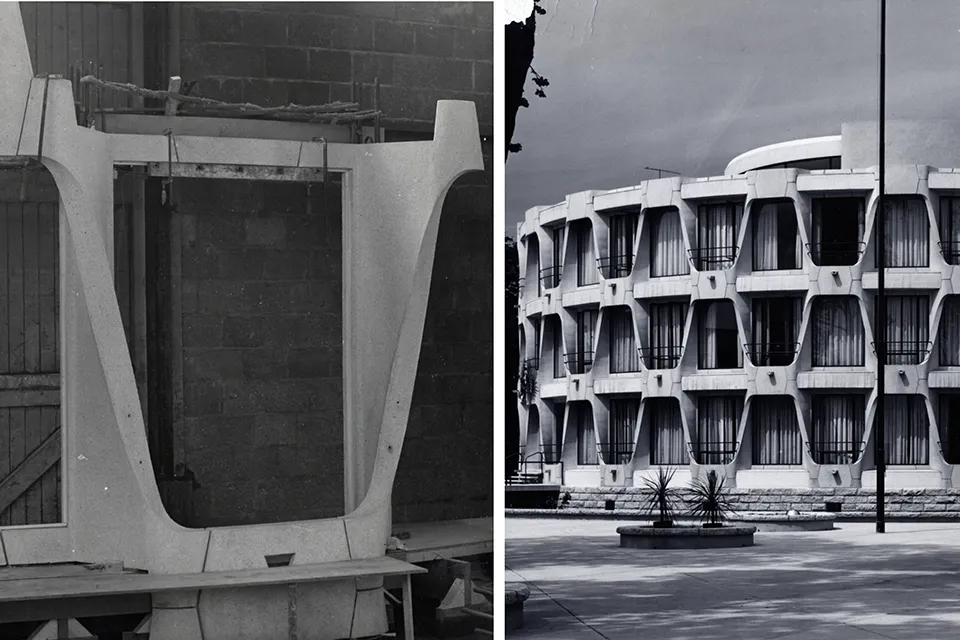
Schokbeton was founded in the 1930s. It specialised in thin, aesthetically pleasing walls and building elements… made of concrete. How was that possible? As the name suggests, it involved striking the formwork containing setting concrete. This ‘shocking’ removed air bubbles and filled the mould perfectly. Wido: “According to the story, the idea came from a worker transporting concrete in a broken wheelbarrow. That sounds exaggerated to me: the effect of kicking formwork had been known for a long time.” But Schokbeton developed machines that could carry out the process on a large scale.
Their timing proved very favourable: after the Second World War, demand was hard to keep up with. Schokbeton became the largest company of its kind in the Netherlands and supplied thousands of different building elements for homes, offices and even farms. The company spread its wings internationally: barracks for the US army in Greenland, Peugeot’s headquarters in Paris, the American embassy in Dublin… Wido: “If you look closely at the styles and colours of their buildings, you can see how much care and attention went into them. Often, a new concrete mix was developed for a single project!”
But the heyday came to an end. In the 1970s, architects switched to heavy, load-bearing façades, making Schokbeton’s thin elements and specialist techniques redundant. The company tried experimenting with Brutalism and tiled walls, and won a few more major contracts: Peeperklip and Willemswerf in Rotterdam, the academic hospital in Utrecht… Wido: “In their archive I found an ambitious project: an entire residential district in Saudi Arabia! Thousands of concrete elements were shipped there, but the project did not bring in enough money.” After a string of new owners, Schokbeton was forgotten.
What we can learn from Schokbeton
And so we return to the beginning: Wido and his colleagues at an abandoned factory site. Why go to all that trouble to save knowledge from a defunct company? The answer has three parts.
1. Restoration is more sustainable than rebuilding
Concrete production uses a great deal of non-renewable raw materials and emits a lot of CO2, so it is hardly climate-friendly. But with existing concrete structures, ‘the damage has already been done’. Wido: “That is why we must preserve or reuse all these supposedly outdated buildings as well as we can.” Schokbeton’s archive teaches us how to repair existing structures. This is a far better option environmentally than demolition, which produces a lot of waste, followed by building something new, which releases more CO2.
2. Concrete heritage is cultural heritage too
Taste is subjective and constantly changing. Concrete colossi may be out of fashion at the moment, but “we cannot do this to future generations and demolish concrete heritage for that reason.” Wido sees two solutions. “First, draw attention to these buildings. After all, familiarity breeds appreciation. Second, adapt buildings to meet today’s needs.” And since much of this heritage exists thanks to Schokbeton, studying its techniques and concrete types can help with both approaches.
3. Old techniques, new applications
Because of its CO2 emissions and aesthetics, concrete is increasingly the ‘black sheep’ of construction. Yet it remains hugely popular. Concrete has important advantages: it is cheap, versatile, strong and long-lasting. If we are going to build with concrete, let’s do it well. Schokbeton’s thin elements were designed with aesthetics in mind, but they also use materials efficiently. Wido: “If we learn to use those techniques again, we can optimise the structures for which concrete is truly needed.”
Stop demolition!
Wido’s core message is actually very simple. Concrete lasts a long time, so let’s focus on reuse. “If we recognise the financial, cultural and historical value of concrete heritage, we will naturally find the best ways to renovate, restore and repurpose it… That is how you make a real difference to the environment.” Through his research, Wido is doing his bit, but he cannot do it alone. “We need a government that is much stricter about demolition permits: demolition must be the last resort.” Designers and architects, including those still studying, must also be challenged to work with what already exists. And Wido has this message for everyone: “Learn about concrete! Its history, its applications, its potential… Look around you, see what you have; you will soon spot the possibilities.”
Vraag over dit verhaal? Stel je vraag
Blijf dit volgen
Bij een nieuw verhaal krijg je een e-mail. Geen account nodig.
- ThemaBouwen in de bestaande stad
- OnderwerpConcrete