An ERP system for the concrete industry

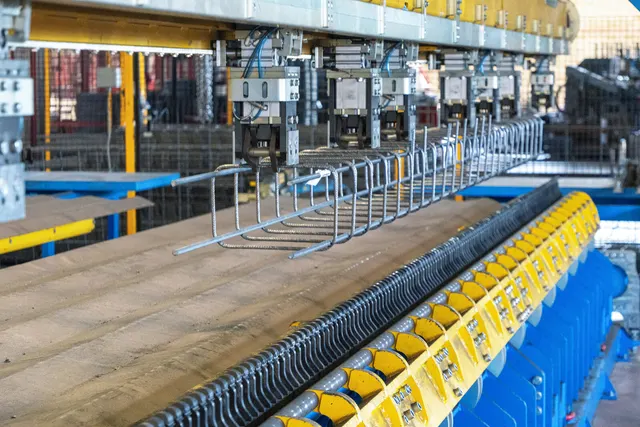
Concrete construction mainly involves the production of concrete components. In addition to production, the scope ranges from preparing and installing components to processing and finishing the concrete. Today, high-tech and computer-aided tools are used predominantly to ensure an integrated process. Here, we focus on the most common functions of an ERP system for the concrete industry and explain why they are particularly relevant to everyone in the concrete sector.
Cost calculations
For the costs of a specific project, quantities are calculated in advance to determine the price. Many ERP systems already contain various sample data, such as geometry data and time curves for common production components. Over time, these can be used to develop a customised calculation platform by adding company-specific data. In general, all costs within a calculation, including transport and assembly, can also be calculated by component. For example, each production component can be priced per m, m² or m³. Costs can also be determined for individual items. Once the order has been placed, the relevant terms are simply added to the system and converted into a final order calculation. Labour costs can also be calculated easily via the ERP system and included in the relevant project costs. This means the calculation already flags potential staffing bottlenecks.
Planning
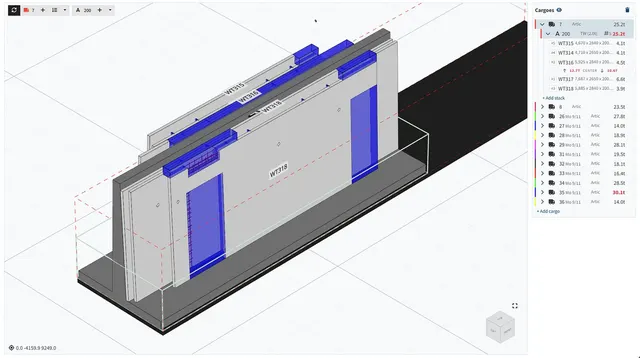
High-level and detailed planning are carried out using a shared planning board. Each element is assigned a fixed position and date. Data from the quotation is used for high-level planning. Working-time calculations are also incorporated at this stage and assigned to the relevant work steps. The planning board keeps all employees informed about the entire production process for each project.
Object and project management
Well-planned project management is essential for any concrete or construction company. Each individual planning step can be assigned to a specific project or object. It can also be linked to the relevant client, contact person or employee responsible. These project steps can then be transferred to their calendars, so that changes to appointments or responsibilities are always transparent and clear to everyone involved. Process progress is visible and can be monitored by all employees at any time.
All relevant documents relating to a project can also be made available to the relevant stakeholders at any time. A document management module makes it possible to track every change, ensuring that documents are always up to date. Other important information, such as insurance and warranties, can also be recorded.
Business intelligence
One of the most important modules is undoubtedly business intelligence (BI). Data from across the company is presented to employees in an intuitive analysis platform. No further programming knowledge is required. All procedures and processes within a company can be analysed systematically. This data is used to evaluate and ultimately optimise those processes. Potential sources of errors, time-wasting activities and irrational processes can therefore be identified and addressed. These BI solutions can be used throughout the company, whether for purchasing, sales or project planning. This improves and optimises communication across the entire organisation.
BIM in concrete construction
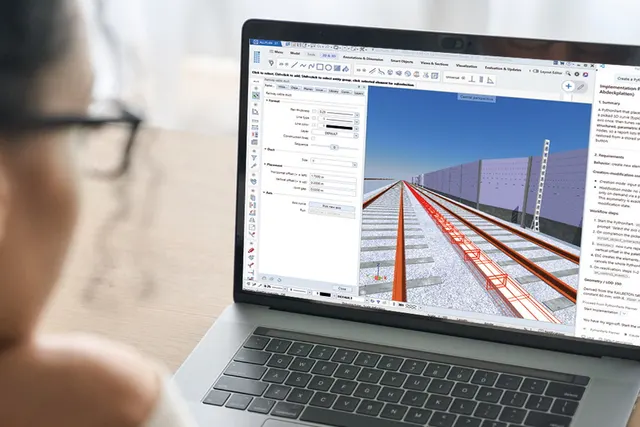
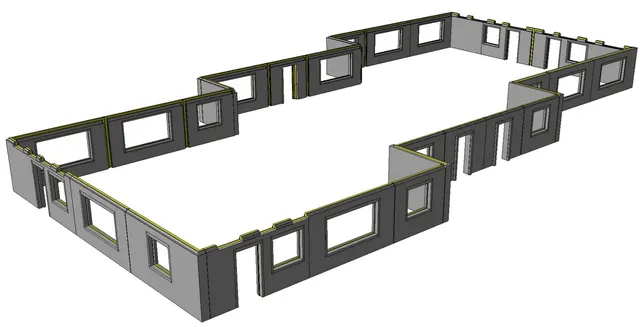
BIM stands for Building Information Modeling and refers to a software-based simulation of an entire building design. It can be a standalone tool or part of an ERP system. The latter has the advantage that all the necessary information is available to everyone, making it possible to create a complete picture. All relevant data is displayed visually and made available to all project participants.
Changes and additions to the construction plan are therefore immediately visible to everyone. Delays in one area that affect other processes are also recalculated and taken into account. In addition to information about the construction project itself, BIM can also incorporate maintenance information and data covering the entire lifecycle of a building. However, one major advantage of BIM is its ability to prevent errors, and in future it will probably be difficult to do without this module.
Here, we have only been able to discuss a limited number of the functions of ERP systems for concrete construction. Numerous other modules and functions make an ERP system a reliable, long-term partner for the concrete construction industry. It is therefore very important to find an ERP supplier that knows the sector and understands what matters. Thanks to their many years of experience, they know where the pitfalls lie during implementation, which modules are essential and which sources of error can be avoided.
Find out more about ERP systems for the concrete industry, a wide range of specialist suppliers and everything else related to ERP systems at www.erpoverzicht.nl
Vraag over dit verhaal? Stel je vraag
Blijf dit volgen
Bij een nieuw verhaal krijg je een e-mail. Geen account nodig.
- ThemaDigitaal van ontwerp tot montage
- OnderwerpSoftware & automation