BIM best practice for the precast industry
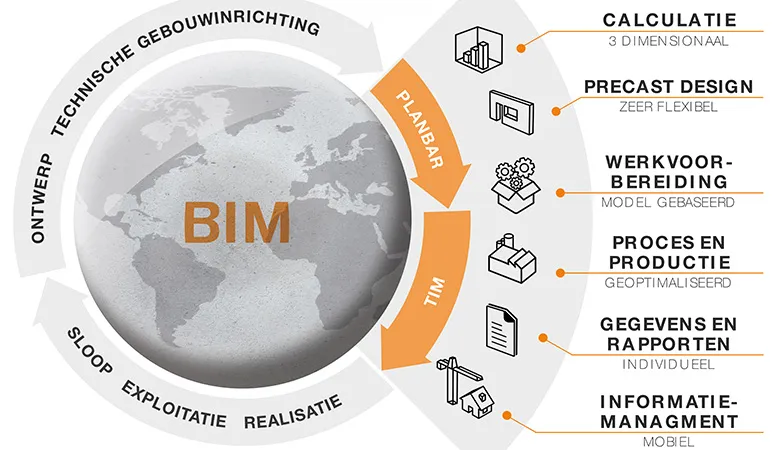
The growing importance of BIM in the construction sector worldwide calls for new processes, technologies and organisational concepts from all the companies involved. The precast sector, which accounts for a significant and growing share of global construction activity, can also benefit considerably from adopting BIM.
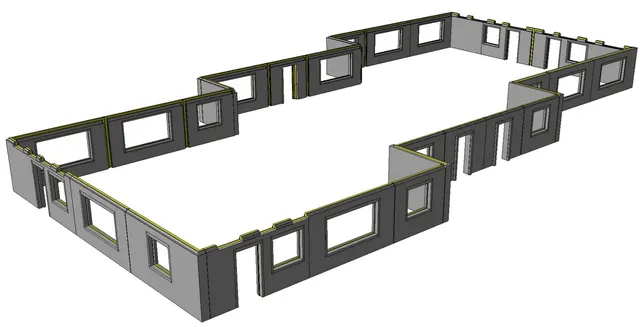
Precast planning starts with the architectural model, ideally already available as an IFC model. In practice, however, only 2D drawings are still often available. Precast Software Engineering’s ‘Sales Manager’ provides a 3D modelling tool that enables staff without CAD expertise to prepare quotations for 3D precast models and calculate quantities and mass. The ‘Sales Manager’ also visualises the scope of the offer. This information can be transferred in a standardised format to ERP systems for pricing and project calculations. The client therefore receives not only an easy-to-understand calculation and description of the scope of work, but also a 3D model from their precast supplier. This 3D model can be transferred to a BIM database via the IFC interface.
Optimisation across the entire value chain
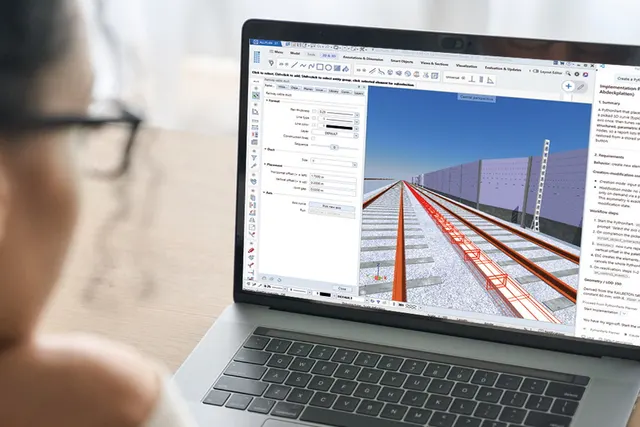
Once the contract has been awarded, a detailed technical plan is created using PLANBAR from Precast Software Engineering. This highly efficient tool for modelling all types of precast elements can be based on IFC architectural models, imported 2D drawings or the model created with the ‘Sales Manager’, and developed in full technical detail. Building services models can also be loaded via the IFC interface, so that the precast model automatically takes into account requirements relating to openings, clashes and so on. The 3D precast model is continuously synchronised with the 2D drawings, particularly the production drawings, ensuring that a consistent overall model is always available in both 3D and 2D. This unique synchronisation between the 3D model and 2D drawings in PLANBAR offers an ideal opportunity to optimise the entire value chain.
The precast model provides the basis for creating production and invoicing data, and can be made available to other BIM models via IFC export. Internal clash detection, tests for manufacturability and information on project scope can be handled directly in PLANBAR. This enables every company to ensure that precast elements not only meet architectural, technical and structural requirements, but can also be manufactured at its production facilities in accordance with the technical specifications and invoiced correctly under the commercial agreements.
Accelerating and improving the construction process
For modelling structural precast elements, BIM-Booster technology is available to significantly simplify work on complex structural elements. BIM-Booster enables complex structural elements to be planned in parallel. Using automatically linked detail drawings, model details such as cast-in components and reinforcement can be transferred simultaneously to all identical or similar precast elements. This significantly accelerates and improves the construction process. “Using PLANBAR, we efficiently produce general arrangement drawings and element designs, and generate error-free production data. IFC export enables us to provide our customers with excellent BIM support,” says Raimond Lotz, Head of Engineering/Projectleider at SPAANSEN BOUWSYSTEMEN B.V., the Netherlands.
Efficient data exchange
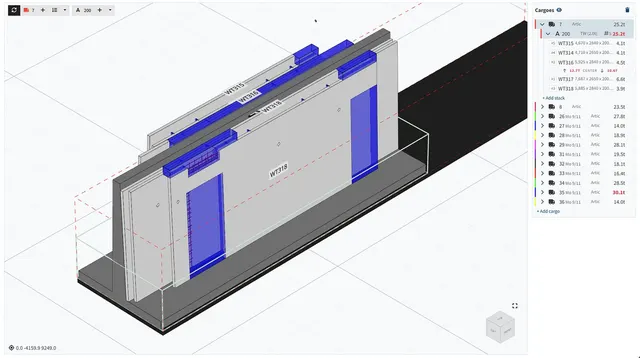
TIM (Technical Information & Integration Manager) plays a crucial role in data exchange between ERP, CAD and production systems. TIM imports the precast element planning from PLANBAR or, via the Unitechnik interface, from other CAD programmes, and displays it in a 3D model. This also allows non-CAD users to access comprehensive information about the BIM precast model. The 3D information also supports staff in project management, work preparation and planning. Integrated status management makes it easy to display and update planning, production, delivery or invoicing status in an accessible way. Colour-coding in the 3D model helps with analysis. Status management can also be controlled by external systems, such as ERP or production systems, enabling the entire process chain for a precast element to be represented, from design through to installation.
Production and delivery sequences can also be simulated to improve quality in production or delivery and optimise processes. TIM supports key BIM processes such as plan approval, automatic updating of quantities and dimensions for materials management in ERP, checks for manufacturability and invoicing in accordance with configurable rules, and optimisation of reinforcement production. TIM therefore makes a crucial contribution to ensuring that internal processes are consistent and clearly visualised, preventing errors and shortening lead times.
TIM also transfers information from ERP to PLANBAR, eliminating the need to enter project master data more than once and ensuring that invoiced quantities are calculated accurately and transparently in accordance with the agreed invoicing rules. “TIM is becoming our integration platform for ERP, CAD and production, ensuring that the manufacturability and invoicing of precast components can be handled without errors,” says Ing. Anton Glasmaier, Head of Precast Components Engineering at Mischek Systembau, Austria.
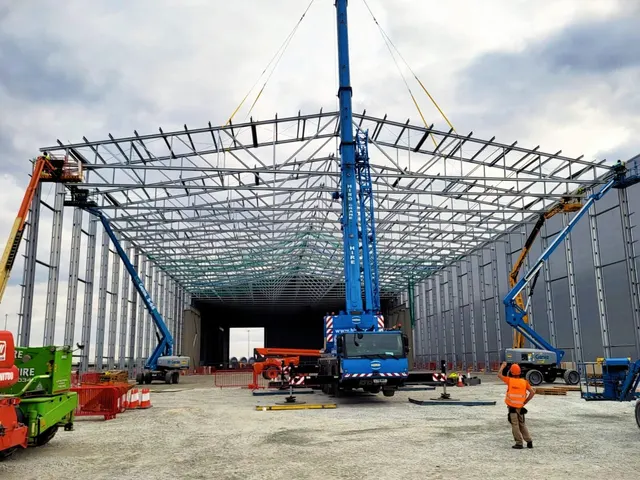
However, the BIM concept does not end at the precast company. An essential part of BIM is also bringing these 3D models to the construction site. With mTIM, the mobile version of TIM, all information is always available on smartphones and tablets, and construction progress can be documented. This prevents construction errors and saves time and money. “mTIM has significantly improved our installation process. We now have exactly the information we need on site to ensure clear and efficient progress with the construction work,” explains Wolfgang Gigelleitner, Head of CAD/CAM at Franz Oberndorfer GmbH& Co KG, Austria.
Text and images | Precast Software Engineering
Vraag over dit verhaal? Stel je vraag
Blijf dit volgen
Bij een nieuw verhaal krijg je een e-mail. Geen account nodig.
- ThemaBouwen als productieproces
- OnderwerpSoftware & automation