Safety in Construction programme unveiled
Tekst Bouwen met StaalFotografie Ed van de Pol / Octatube Space Structures / Bouwen met Staal
Accidents, collapses and unsafe structures must become a thing of the past, say Koninklijke Bouwend Nederland, Opdrachtgeversforum in de bouw, Governance Code Veiligheid in de Bouw, VNconstructeurs and Koninklijke NLingenieurs. The five organisations have therefore launched the joint Safety in Construction programme. The programme was presented at TU Delft Campus on Wednesday 25 January, in the presence of around 140 designers, contractors and other representatives of the construction sector.
Safety in Construction aims to bring about a structural and integrated improvement in safety at every stage of construction projects, from planning and design through construction, handover, management and maintenance, and ultimately demolition and reuse. The focus is not only on the safety of the structure itself, but also on that of its immediate surroundings.
Specific improvement measures have been developed for three themes: Taking the lead on safety, Ensuring structural safety and Strengthening the capacity to learn. To this end, the five initiators sought advice and suggestions from representatives of the various disciplines involved in the Dutch construction sector. This gives the programme the broad support it needs across all relevant parts of the sector. It also encourages individual companies and organisations to take responsibility and action themselves to improve safety in construction.
The ‘new-style’ structural engineer
Effective coordination between the various activities and the integrated implementation of improvements require central oversight. For example, improving structural safety and ensuring it is maintained should be the responsibility of a coordinating structural engineer. This ‘new-style’ engineer ensures that the structure as a whole meets structural safety requirements, both during construction and in the operational phase.
The coordinating structural engineer will be responsible for ensuring consistency between the design and detailing of primary load-bearing structures, building elements such as façade and roof structures, and temporary works used during construction. In their central review role, the coordinating structural engineer is responsible for interim and final structural outcomes and is the first person to be held accountable for structural safety. The coordinating structural engineer is also authorised to select or, if necessary, replace the engineers responsible for individual structures. This calls for considerable expertise and capabilities, including outside the engineer’s core field. Whether, and to what extent, they meet these requirements is assessed against codes of conduct and the requirements for members of the Constructeursregister (Registerontwerper and Registerconstructeur) or the Charted Engineer register (KIVI). Of course, all disciplines involved in a construction project remain responsible for the quality of their own work. The owner of the structure, who is often also the permit holder, remains legally responsible under public law for the safety of the structure.
Warm welcome
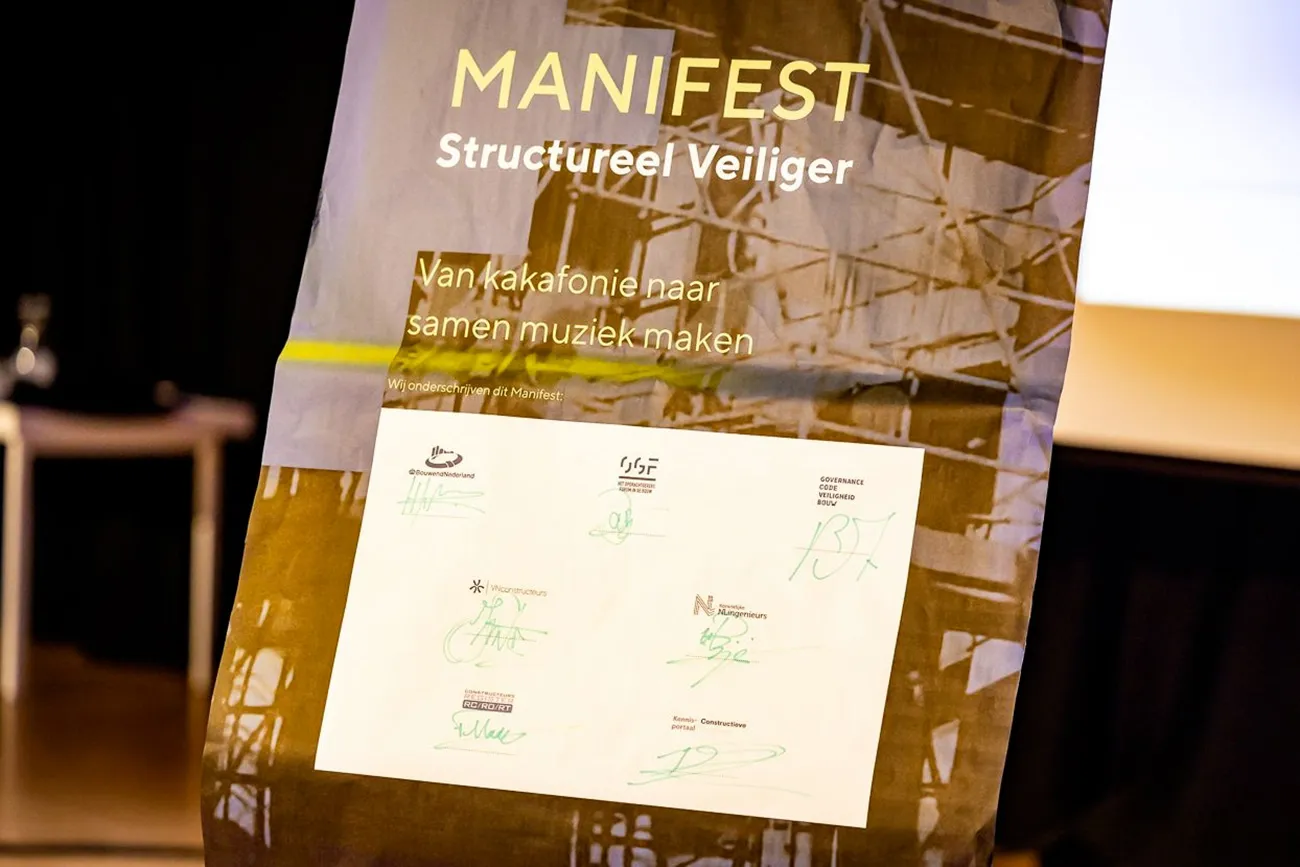
The ambitions and proposed approach of Safety in Construction were warmly welcomed by the more than 140 people attending its public launch at TU Delft Campus. The Kennisportaal Constructieve Veiligheid and the Constructeursregister, among others, showed their support on the spot by signing the Structureel Veiliger Manifesto. Through this declaration, participants set out their shared principles, responsibilities and tasks for safety in the Dutch construction sector.
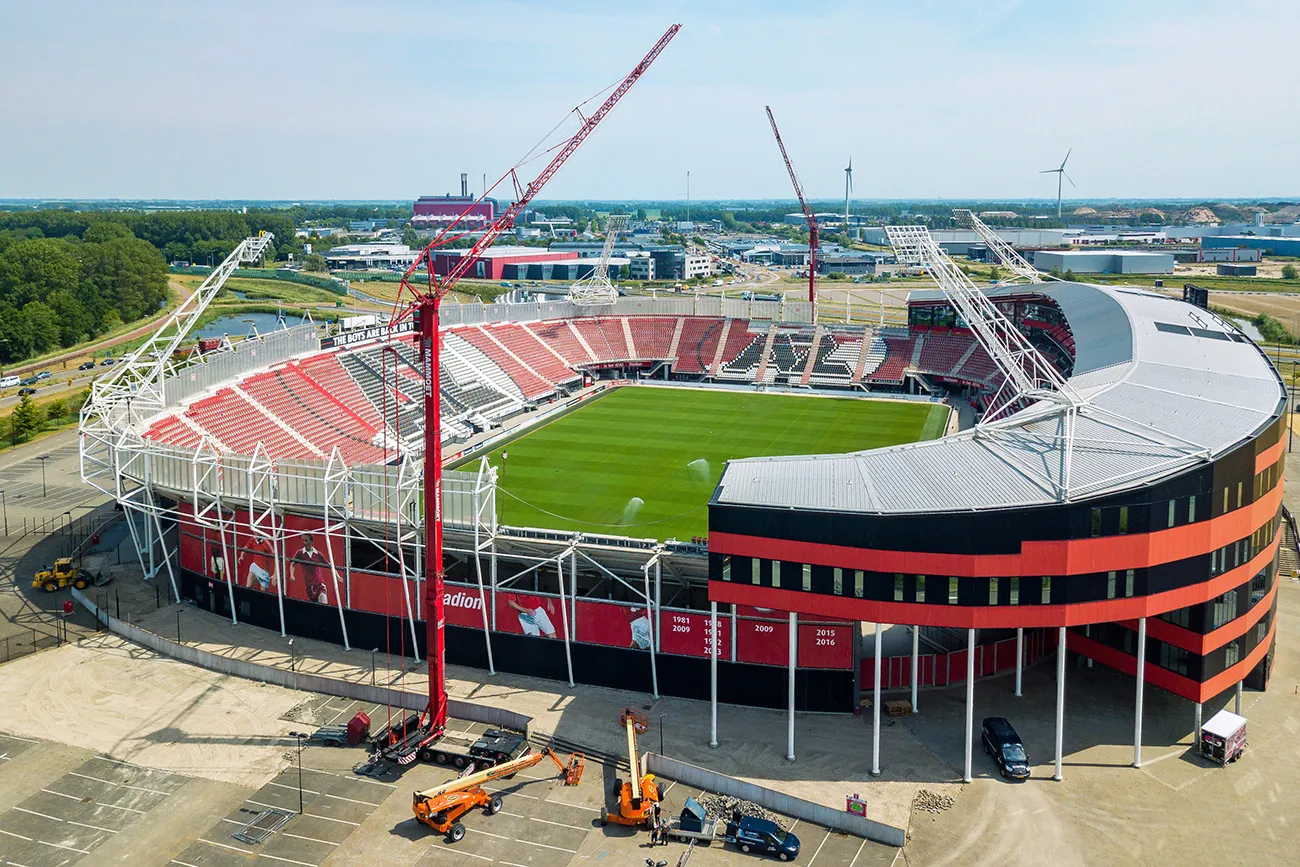
As well as being an exemplary initiative in its own right, the Safety in Construction programme is primarily a response to the critical findings and urgent recommendations of the Dutch Safety Board following its investigation into several construction-related incidents, including the collapse of a car park in Eindhoven (2018) and the failure of a stand roof at AZ stadium in Alkmaar (2021).
For more information about the Safety in Construction programme, see www.veiligheidindebouw.nu/programma.
Vraag over dit verhaal? Stel je vraag
Blijf dit volgen
Bij een nieuw verhaal krijg je een e-mail. Geen account nodig.
- ThemaVeilig werken
- OnderwerpGeneral