More environmentally friendly concrete is ready for the market
Tekst Liliane VerwooldeFotografie Jane van Raaphorst
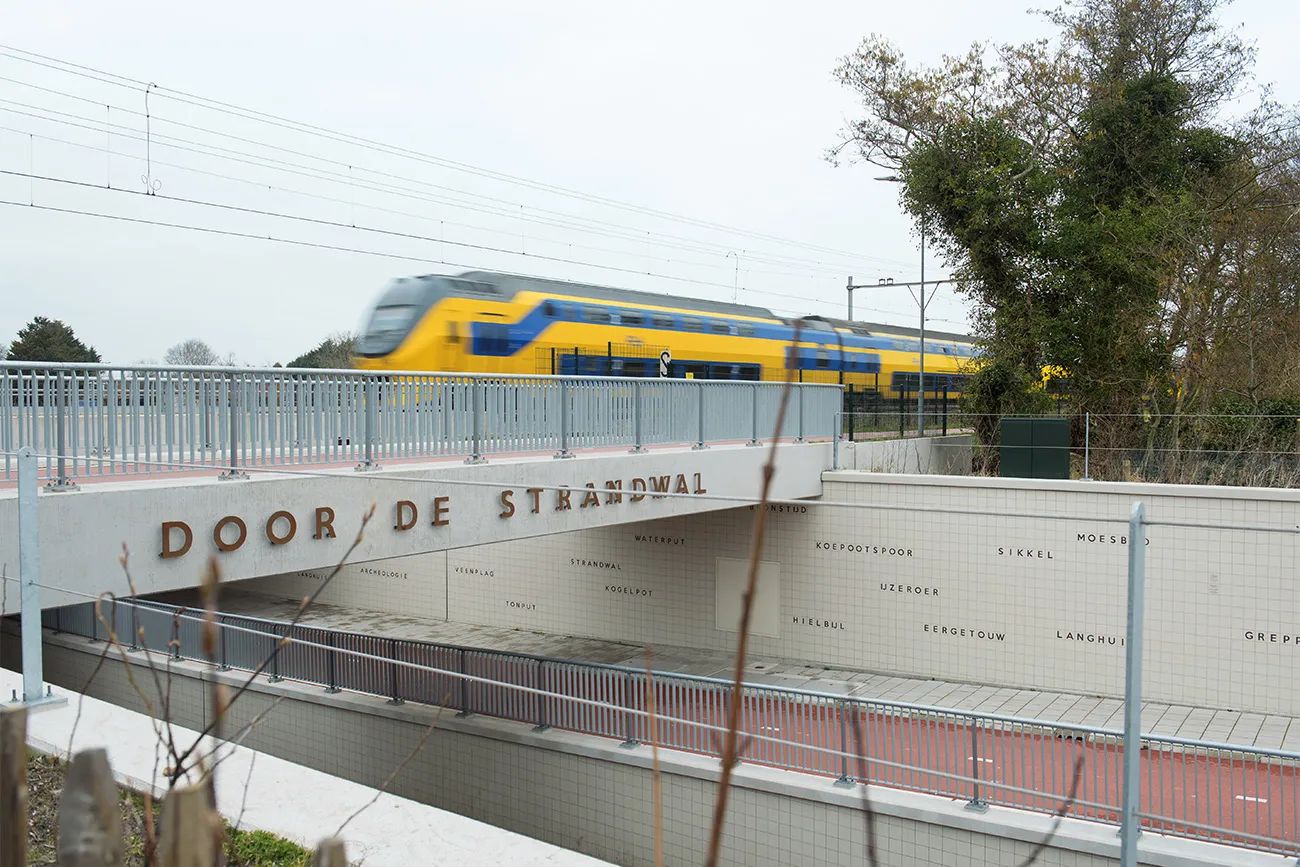
Formulations for geopolymer concrete offering up to 90% lower CO2 emissions are ready. But apparently, that is not enough. Designers and clients still have many questions about its long-term performance.
but is the market ready for it?
One company dedicated to innovation and making the concrete industry greener is Sustainable Concrete Solutions, or SCS for short. Its ambition is to dramatically reduce CO2 emissions from cement and concrete by developing and producing alternative binder systems for concrete, and taking a proactive approach to bringing them to market. This takes considerable perseverance. The Netherlands may have a reputation for innovation, but establishing a strong market position for double-sustainable geopolymer concrete in the construction sector is a challenge.
Hesitation
Part of the reason is a reluctance to take the plunge, says Jos Kronemeijer, materials technologist and SCS Technical Marketing Director. “Geopolymer concrete is a new product for many clients and contractors in the Netherlands. Although it has been known in some other European countries for as long as eight decades, that does not make it any easier to introduce. Even when clients are open to it, they are unclear about differences in regulations and the assurances involved in building responsibly, safely and sustainably.”
Materials expertise remains SCS’s starting point
Kronemeijer set up a consultancy specialising in concrete technology in 2015. From there, he advised raw-material suppliers, concrete producers, architects, structural engineers and contractors on matters such as specifications, regulations, crack-risk calculations and production processes. Increasingly, he also supported the development of sustainable types of concrete. Kronemeijer says: “We have considerable expertise in this area. We can also tell structural engineers in detail how to make their designs durable and sustainable.”
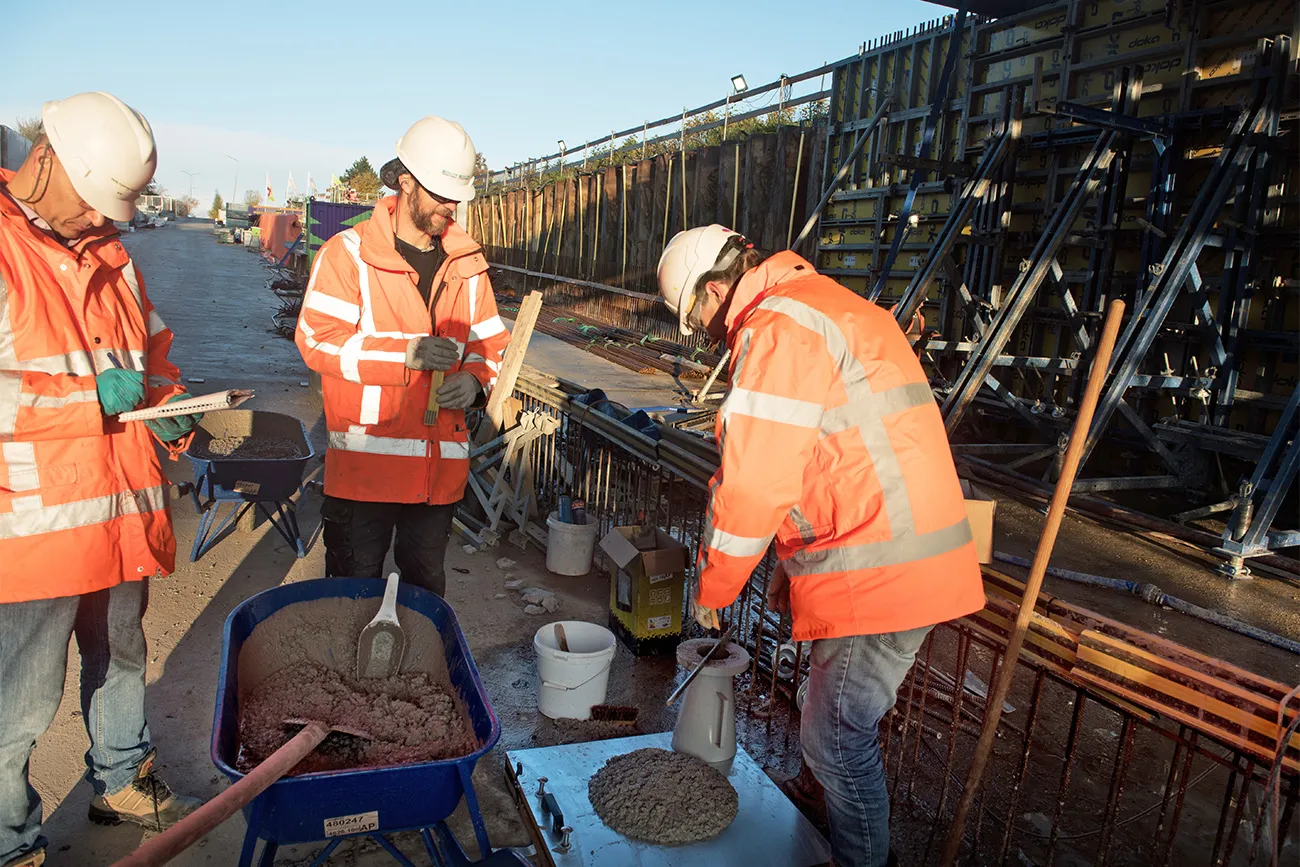
A broad and clear perspective
SCS staff have built up knowledge and experience over three decades in more than fifteen countries. They sit on international committees, maintain close contact with regulators, designers and contractors, and assess whether experience elsewhere can lead to local improvements. These many connections have given SCS a broad and clear perspective, enabling it to grow into a developer and producer of geopolymer cement for ‘double-sustainable concrete’.
Materials geeks
“These new types of concrete open up surprising possibilities for using raw materials that are not known locally,” Kronemeijer explains. “We discover almost every month new variants that we prepare for certification. They might include harbour sediment, or even CO2 itself, as in the Carbon-capture process by Green Minerals, which resulted in a negative footprint! In this context, people sometimes call us ‘materials geeks’. We wear the nickname with pride.”
A fair comparison
“Construction materials such as concrete, timber and steel are too easily compared with one another,” Kronemeijer continues. “It is better to assess each on its own merits using Life Cycle Analyses (LCA). These assess materials’ environmental impact from cradle, raw-material selection and extraction, to grave, demolition, recycling and circularity. It also becomes clear that the term ‘double-sustainable’ can only be used correctly when durability, the technical lifespan in terms of the design life, and sustainability, the environmental profile, are considered together.”
Knowledge sharing
Kronemeijer believes designers and clients should assess this combined picture together, whereas in practice designers still often opt for familiar choices. Change requires knowledge. “That is why knowledge sharing is one of our priorities. Anyone who looks at geopolymer concrete from an LCA perspective can only conclude that geopolymer is the tool for making concrete double-sustainable and more future-proof.”
Een zakelijke vraag aan Concrete valley? Neem contact op
Bedrijven in dit verhaal
Blijf dit volgen
Bij een nieuw verhaal krijg je een e-mail. Geen account nodig.
- ThemaMinder CO2 in beton en staal
- OnderwerpGeneral
- BedrijfConcrete valley