Fibre optic technology: comprehensive, real-time insight into structures
Monitoring systems using fibre optic technology are steadily gaining ground, including in the construction industry. The discipline, better known as optical sensor technology (fibre optic sensing), is one of the activities of Brem Funderingsexpertise in Reeuwijk. The foundation engineering specialist, which provides consultancy, monitoring and supervision, is now extending its focus to monitoring structures in general.
Text | Chris Elbers Images | Brem Funderingsexpertise B.V.
Brem offers a comprehensive range of (geotechnical) measurements for monitoring foundations and structures. The focus is on the quality of foundations or structures, as well as identifying any disruption caused by their construction. “We offer a wide range of monitoring techniques that can be used individually or as part of complete monitoring networks,” says Erik de Bruin, monitoring operations manager at Brem. “One of these is fibre optic monitoring. Brem uses two measurement methods for this technology. One is particularly suitable for monitoring a structure’s behaviour, both static and dynamic. The other is used specifically to track phenomena within a structural system over an extended period, such as deformation and temperature changes.”
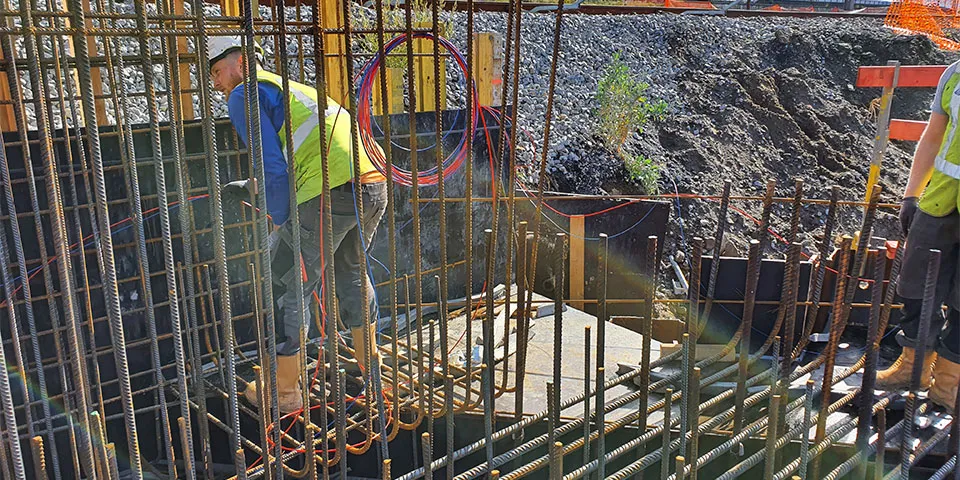
Installation of sensor cable beneath deck.
A clear answer
With this sensor technology, Brem offers a clear response to a current trend in the construction industry. De Bruin explains: “Contractors are not only responsible for delivering projects, they must also be able to carry out maintenance over the longer term. Fibre optic monitoring is well suited to this development, for example in the case of civil engineering structures. Integrating the sensor technology gives you continuous remote insight into how the structure is behaving. Traditionally, a maintenance protocol is drawn up, after which inspections take place once every quarter or six months. When a structure is equipped with this technology, that is no longer necessary. You can simply see from your desk whether, for example, its strength has changed or settlement has occurred. This gives you a better understanding of how the structure is behaving and, just as importantly, whether you will need to spend money on maintenance in the future.”
Advantages
People are wary of what they do not know, and sensor technology is no exception. Although the technology has been used in construction for several years, adoption remains limited. Brem is working to raise awareness of its many advantages and applications (see also www.brem.nl). “This measurement technology will radically change the future of building and rail/infrastructure management,” De Bruin says emphatically. “Quite simply, maintenance will be based on information obtained through monitoring rather than on predetermined intervals. Safety will also improve, because the structure’s current condition will be immediately visible and verifiable.”
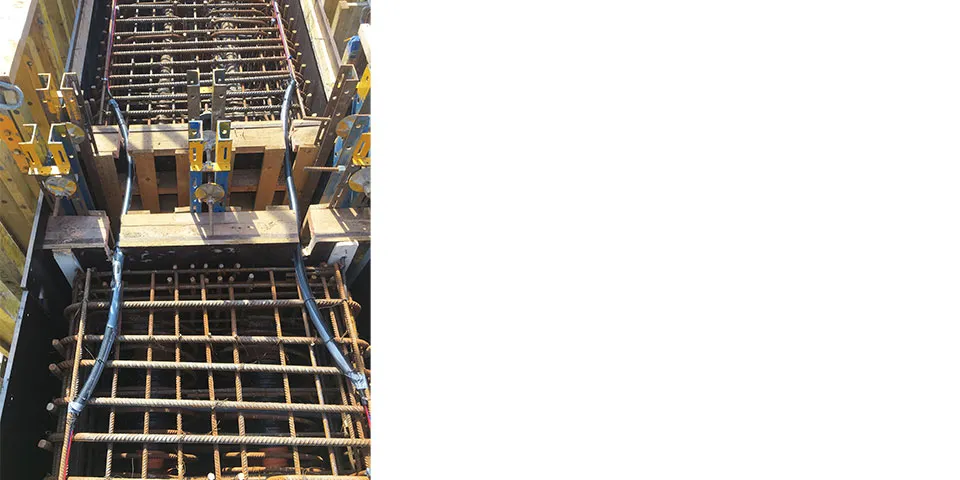
Protective structure for sensors at the expansion joint in the edge beam.
Optical sensor reference project in Antwerp
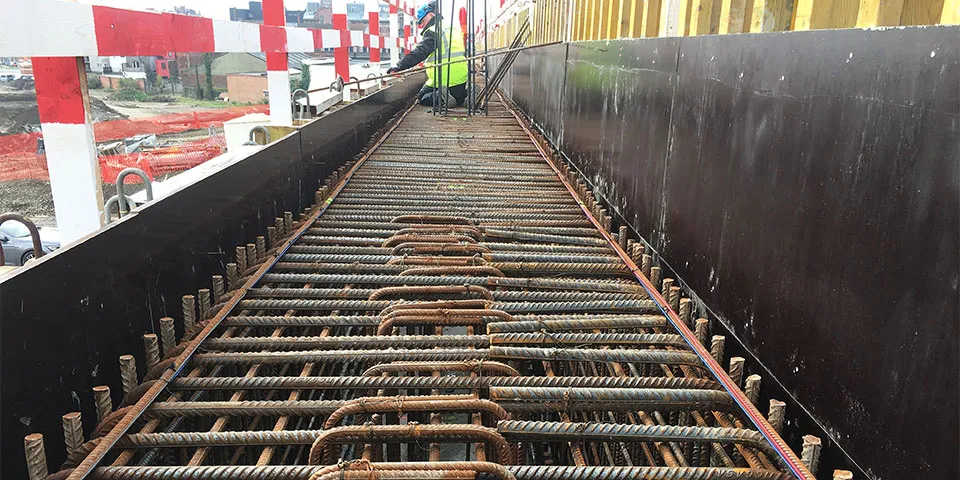
Brem recently completed a monitoring project in Antwerp in which optical sensors were used extensively. By attaching the sensors to the reinforcing steel and casting them into the concrete, they are optimally protected and provide continuous information about the strength and any deformation of the structure. The project involves a concrete civil engineering structure in a busy rail infrastructure. The solution includes an online data dashboard with the necessary alerts and will provide the client with the information needed to ensure the structure can be used safely for a minimum of 10 years.
Vraag over dit verhaal? Stel je vraag
Blijf dit volgen
Bij een nieuw verhaal krijg je een e-mail. Geen account nodig.
- OnderwerpGeneral