‘Geopolymer concrete could be a real game changer’
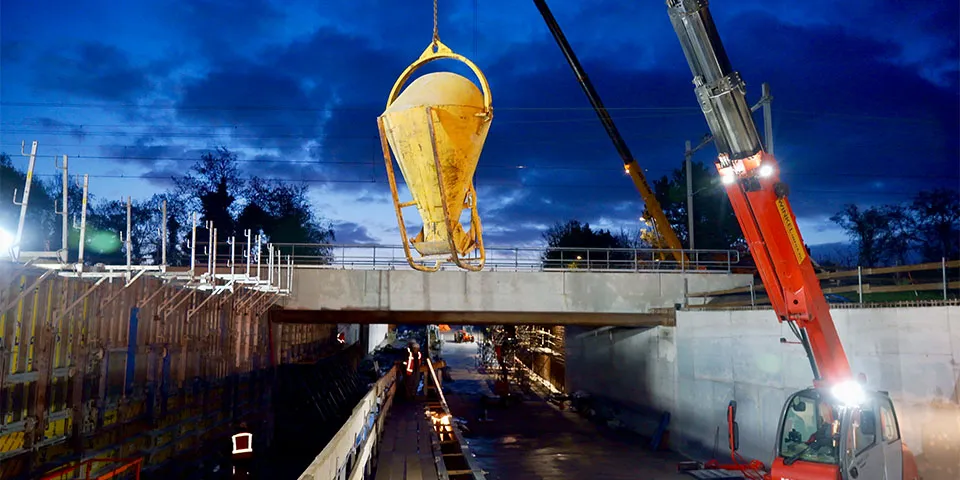
The reinforced geopolymer concrete used for the first time in the Netherlands in a railway underpass in Heiloo is a distant descendant of a ‘forgotten’ binder concept first documented in 1908. Specialists at Delta Concrete Consult have adapted it to modern raw materials, with the aim of delivering modern performance while halving the carbon footprint compared with the traditional blast furnace cement that would otherwise have been used.
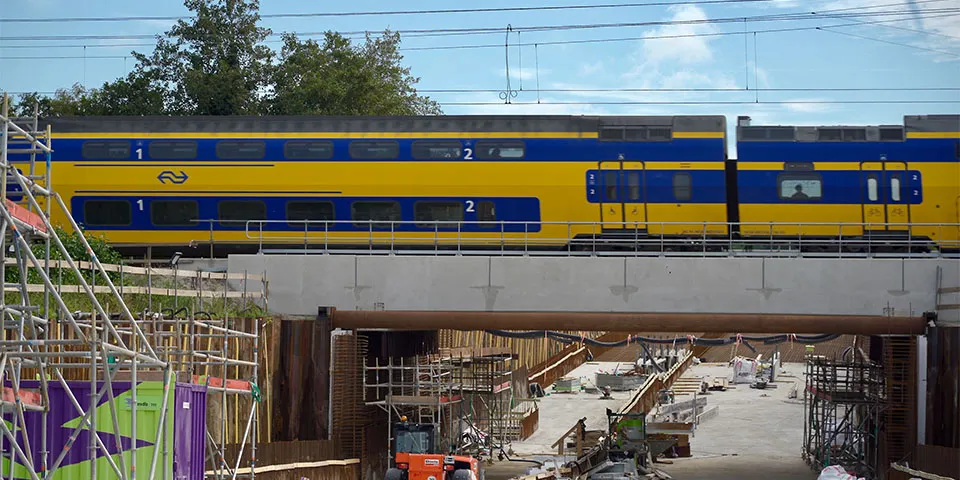
Railway underpass in Heiloo.
Delta Concrete Consult, based in Vianen, is an independent engineering and consultancy firm specialising in concrete and cementitious composites. ‘We bridge the gap between design and construction because those disciplines do not always speak the same language and are not always fully aware of new materials technology. We translate everything into performance specifications that are meaningful to the target audience,’ says director Jos Kronemeijer.
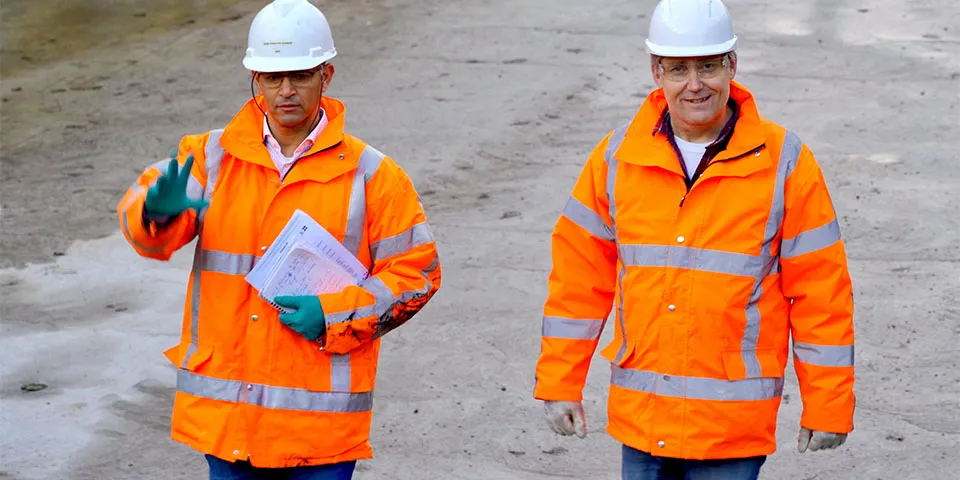
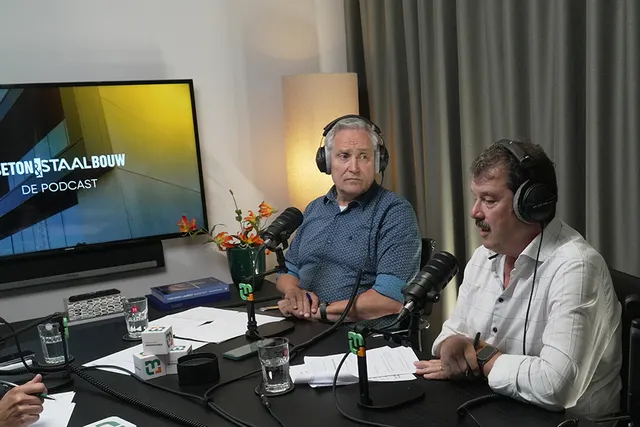
Kamel Arbi (chemist) and Jos Kronemeijer (director).
That was also the challenge in using geopolymer concrete in Heiloo. ‘Among other things, we had to develop a mix design that matched what stakeholders in the production chain are used to with traditional cement concrete. A transport time of 1 hour, adequate workability and retention of that workability for an hour and a half after arrival on site, and conventional placing and compaction techniques: the whole package had to be close to traditional cement concrete. Based on preliminary research and the transparent sharing of insights, ProRail, Rijkswaterstaat and main infrastructure contractor Mobilis gradually gained greater confidence that it could deliver technically equivalent, safe and reliable performance, but with a significantly lower environmental impact.’
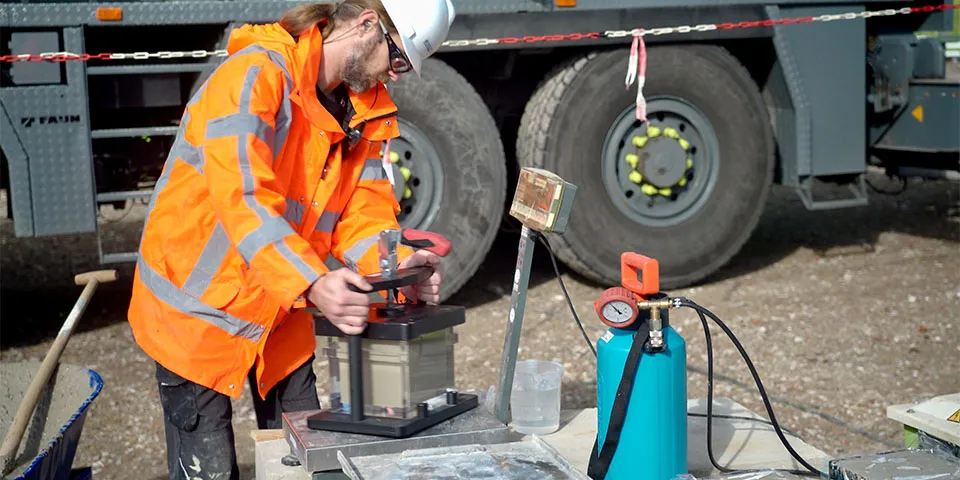
Measuring the air content, by Mathijs de Vaam.
The geopolymer concrete used in Heiloo included the familiar blast furnace slag as a raw material. ‘Its advantages are availability and familiarity to the concrete producer. One strength of the cement-free binder system is that the range of available raw materials is much broader than many people realise. More than 18 different raw materials can be found in the Netherlands alone. This allows us to source materials closer to the project, significantly reducing CO2 emissions from transport.’
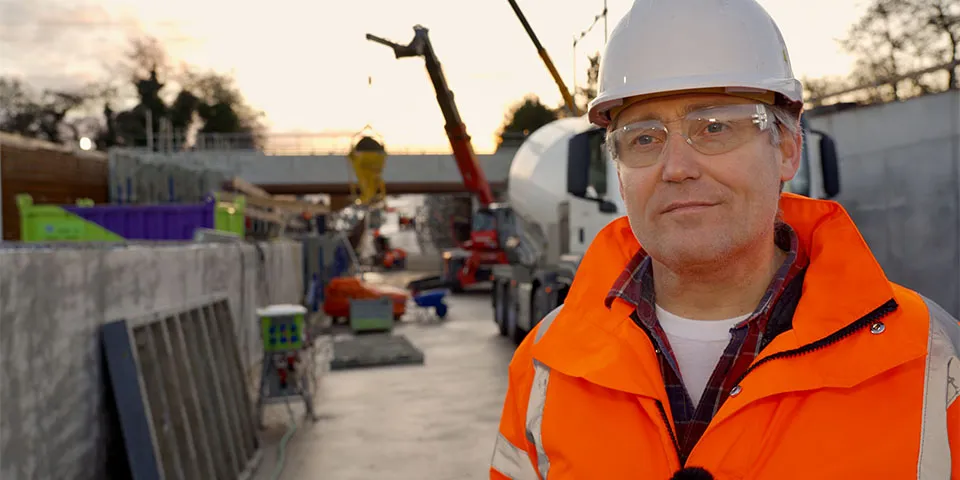
Director Jos Kronemeijer.
However, the new concrete cannot simply be specified everywhere and adopted uncritically in day-to-day practice. Kronemeijer: ‘We need to (re)build trust among all stakeholders in the construction process. New production routines need to be developed in a sector where knowledge of concrete could be improved, meaning that the introduction of a new type presents both an opportunity and a threat. There is also, understandably, some scepticism from the cement lobby, because this concept does not use their primary product and a multi-year track record for this alternative is not yet available. But the same is also true of the types they themselves are now developing at an accelerated pace. It is only natural that every stakeholder in the concrete construction process looks for room to manoeuvre. You can still ‘turn the dials’ during production to adjust properties. The concrete used in Heiloo was deliberately left in the formwork for longer, but despite the cold weather it reached its design strength sooner, meaning the structure could potentially be brought into use earlier overall. Independent laboratory tests have established that its properties are fully comparable with traditional concrete and that, over the longer term, it could even set a new standard for structural concrete in performance aspects such as resistance to chemical attack and thermal stability. Geopolymer concrete could therefore be a real game changer.’
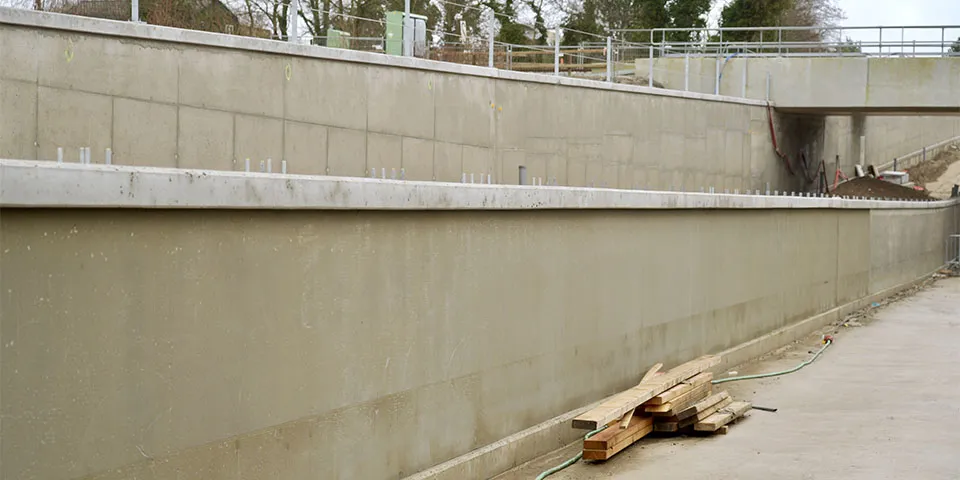
Reinforced geopolymer concrete partition wall.
Vraag over dit verhaal? Stel je vraag
Blijf dit volgen
Bij een nieuw verhaal krijg je een e-mail. Geen account nodig.
- ThemaMinder CO2 in beton en staal
- OnderwerpGeneral