Going for SCL certification: ‘It can be fun too!’
The Safety Culture Ladder (SCL) has already delivered a great deal for many companies. Although it is primarily about a serious issue such as safety and health awareness, companies and auditors also find the certification process enjoyable, inspiring and motivating.
Hanneke de Vries is director of the Nederlands Certificatie Instituut (NCI) and closely involved with companies seeking SCL certification. Two qualified auditors then assess the extent to which safety and health awareness is embedded in the company, based on observations, interviews and site visits. “Not everyone is cut out to be an auditor. You must not think in black and white. After all, you are measuring a culture.”
The five steps
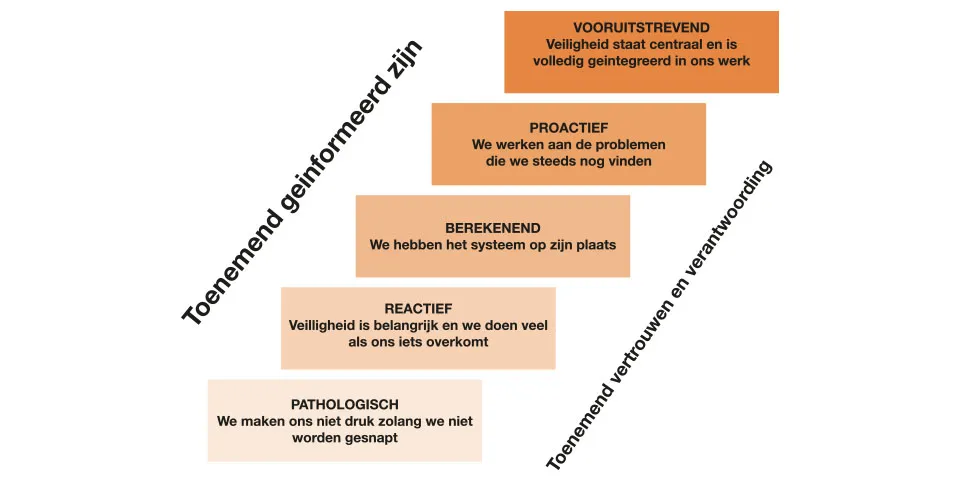
SCL certification is available at five levels, referred to in practice as ‘steps’. The company chooses the step for which it wants to be audited. Step 1 indicates a pathological culture. The company is not concerned about safety within the organisation. For this reason, step 1 is not used. Step 2 on the SCL indicates that the company is mainly reactive. When something goes wrong, it is seen as bad luck rather than something for which the company was responsible.
At step 3, safety rules are in place. Safety is a valued topic. The rules have been introduced by management, although still in its own interests. At step 4, a proactive safety and health culture is evident within the company, driven by intrinsic motivation. Step 5 is characterised by a forward-thinking approach. Safety is ingrained in the thinking of all employees. It is openly discussed, and employees call one another to account. Most companies start at step 2, which is also the step required by the Governance code.

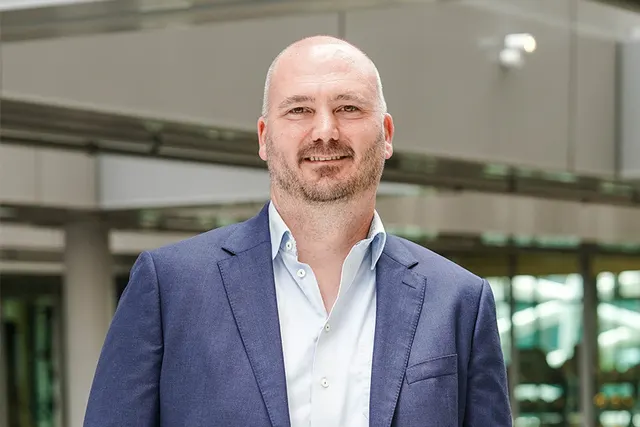
Hanneke de Vries, director of the Nederlands Certificatie Instituut (NCI): ‘Our auditors create a pleasant, approachable atmosphere.’
Pleasant and approachable
De Vries understands that most companies are not keen to go through ‘yet another’ certification process. It takes considerable effort and comes with a hefty price tag. On top of that, it is often mandatory. “Companies have to meet a number of criteria to obtain a certificate,” De Vries admits. “There is no getting around that. Yet experience shows that employees become enthusiastic about the SCL once they start working with it. Our auditors do everything they can to encourage this, too. They create a pleasant, approachable atmosphere and emphasise that every answer is valid.”
Six aspects of the company
However relaxed the atmosphere during the discussions, NCI takes an extremely thorough approach. It assesses the company culture across six aspects: leadership & commitment, policy & strategy, organisation & contractors, workplace & procedures, communication about deviations, and audits & statistics. De Vries says: “Over the past eight years, NCI has become the market leader in this field. Our auditors have the soft skills to read culture and non-verbal behaviour. They put people at ease if they are reluctant to speak. This makes the preparatory process for SCL certification very appealing compared with that for other certificates. There is no need to study for it, there are no wrong answers, and your working environment becomes safer.”
Vraag over dit verhaal? Stel je vraag
Blijf dit volgen
Bij een nieuw verhaal krijg je een e-mail. Geen account nodig.
- ThemaNormen, testen en aansprakelijkheid
- OnderwerpGeneral