KOMO certificate for 3D-printed concrete
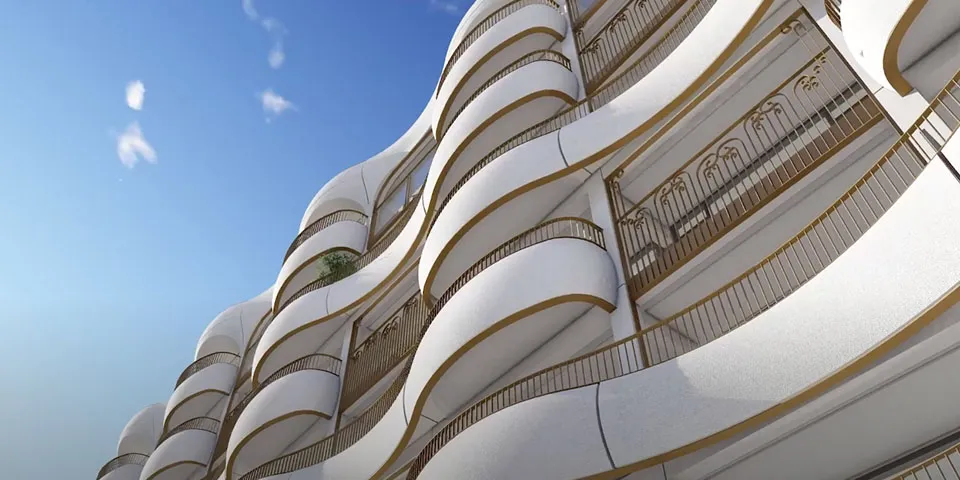
Making architectural concrete affordable again. With this ambition, Bruil has developed a 3D concrete printer for producing unique, free-form façade elements. 3D concrete printing uses materials much more efficiently and allows projects to be planned with shorter lead times. To ensure the highest possible level of quality, Bruil has now received a KOMO certificate for concrete.
Quality of 3D-printed concrete
Because Bruil aims to deliver the best quality, it has spent the past two years continually optimising the 3D concrete printing process. Perfecting our 3D-printing concrete is also part of this work. This has now been rewarded with KOMO certification. Developing a suitable mix for 3D concrete printing is no easy task. The mix sometimes has to meet extreme requirements at different stages of the production process. Throughout its service life, the product must also be durable and withstand all weather conditions. Another frequently asked question is whether the fine mix can be called concrete or should be classified as mortar.
Bruil beton & mix R&D manager Benno van Dijk: ‘Our starting point in developing the mix was always that it should qualify entirely as concrete. This makes the product easier to use reliably within existing regulations. We are pleased and proud that SGS INTRON also classifies our mix as concrete. This has now been confirmed once again by the KOMO certificate.
Bruil’s 3D-printing concrete was extensively tested by SGS INTRON in 2018 and recognised as full-fledged concrete. The 3D-printing concrete has the same certification as ready-mixed concrete under this KOMO certificate, with strength class C50/60.
The 3D concrete printing factory
Bruil Prefab Printing has a fully digital 3D printing factory with sufficient capacity to meet the construction pace of a non-residential or multi-storey housing project. We can 3D-print concrete to a maximum size of 3.5 metres high, 5 metres wide and 2.5 metres deep. Wider elements are available on request, so please contact us if you would like to know more about the possibilities offered by this form of architectural concrete.
Practical application
The 3D-printing concrete is being used on the Baskeweg project in Den Helder. This unique project will see no fewer than 154 flats fully upgraded with 3D-printed concrete elements. Nearly 1,400 unique printed elements, ranging in size from 2 to 12 square metres, will transform two buildings of grey, dull concrete into a unique, modern whole. We are working closely with various partners on this project. Watch the video below to learn more about this collaboration.
Source: Bruil.nl
Vraag over dit verhaal? Stel je vraag
Blijf dit volgen
Bij een nieuw verhaal krijg je een e-mail. Geen account nodig.
- ThemaBouwen als productieproces
- OnderwerpGeneral