Greater control and fewer errors with IFC in the production process for bespoke precast concrete

The production of bespoke precast concrete elements is becoming more complex. The elements themselves are becoming more complex, while deliveries increasingly need to be just in time. As a result, the focus of the construction process is shifting from the site to the factory. IFC can help you respond to this.
Whereas precast concrete elements once consisted only of concrete and reinforcement, we now see more and more components being incorporated into them. These include electrical fittings, recesses and water pipes. Producing more complex elements requires careful preparation. Making good use of design information when preparing for production helps prevent errors. Errors that not only cost money but can also cause delays. IFC will play an increasingly important role in ensuring that the right information is available.
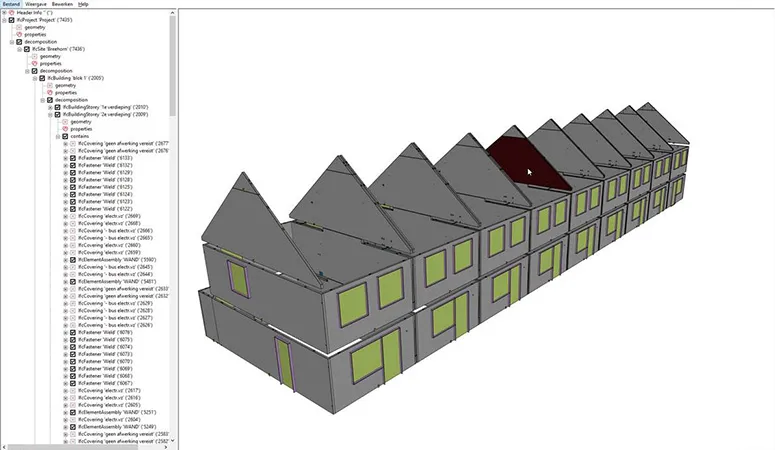
Just-in-time delivery
Construction lead times need to be shorter. On infill sites, the available physical space is becoming increasingly limited. This calls for more accurate planning and fewer errors when delivering precast concrete elements to site. This is possible if production preparation is improved. IFC can help with this too.
What is IFC?
We have borrowed the following text from ww.bimloket.nl: ‘Industry Foundation Classes (IFC) is a neutral, open file format for exchanging and sharing specific BIM information (model objects and their properties) between the different software applications used by parties in the construction process. IFC is independent, so no one is tied to particular software packages. With IFC, the entire construction supply chain, from architect to contractor and property manager, can communicate using the same intelligent data.’
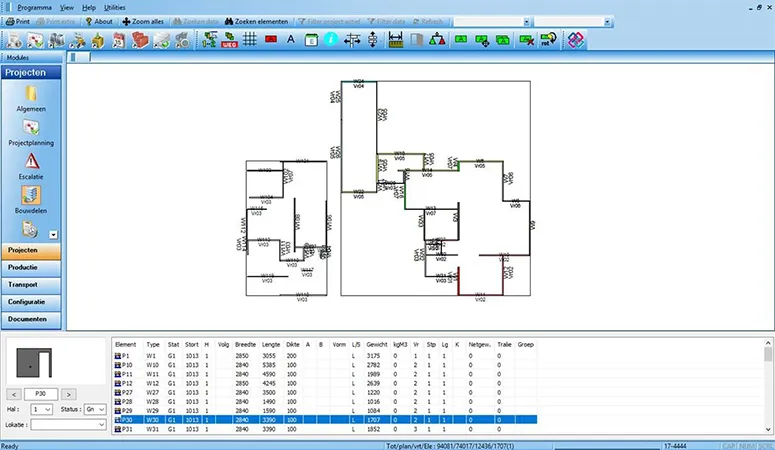
Production planning with Profity Prefab based on IFC
Profity Prefab is standard software for drawing office planning, production planning and transport planning for bespoke precast concrete elements. Planning input almost always comes from a CAD package. Whereas 2D information was previously supplied via tools such as Excel, 3D information is now increasingly exchanged in IFC format.
Many precast concrete producers now use a CAD package that supports 3D information exchange in IFC format. This makes the planning process not only much less prone to errors, but also clearer and simpler. Design errors can also be detected sooner. All relevant information in the drawing can be reused on a 1:1 basis. Some applications include:
Graphically planning the installation sequence and, as a result, the transport and
production sequence;
Transferring material requirements for purchasing or stock management;
Graphically optimising table, bed or carousel layouts based on outlines and other characteristics;
Controlling reinforcement machines and plotters, or even AR glasses;
Graphically planning and loading deliveries, taking shape and weight into account.
Graphically planning the installation sequence
The Profity Prefab viewer displays all elements for each floor. The installation sequence can then be specified easily. This provides the input for transport and production planning. In every situation, the planner remains in control, while being equipped with the (graphical) information needed to do the job as effectively as possible.
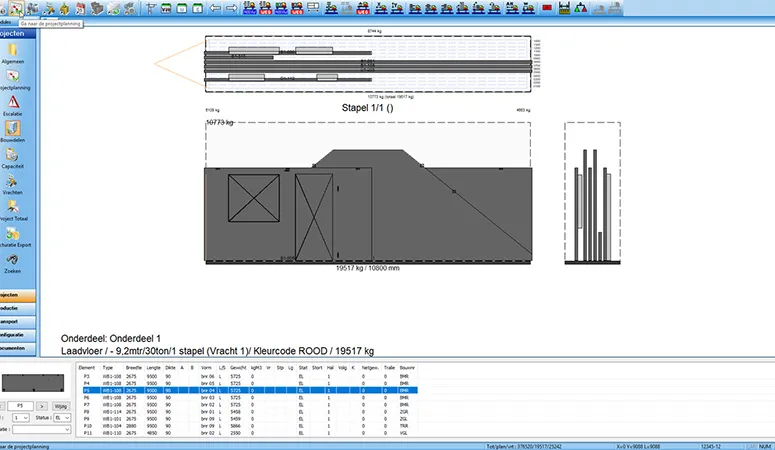
Graphically planning deliveries
Each element is delivered to site, preferably just in time. This calls for deliveries to be optimised. With Profity Prefab, each element is assigned to a specific delivery. Thanks to the IFC information, details such as shape and weight, raised sections or projecting window frames can be taken into account. This ensures that each delivery makes optimal use of its available space and weight capacity, and is loaded in the right order, so that the elements arrive on site in the correct sequence and at the right time.
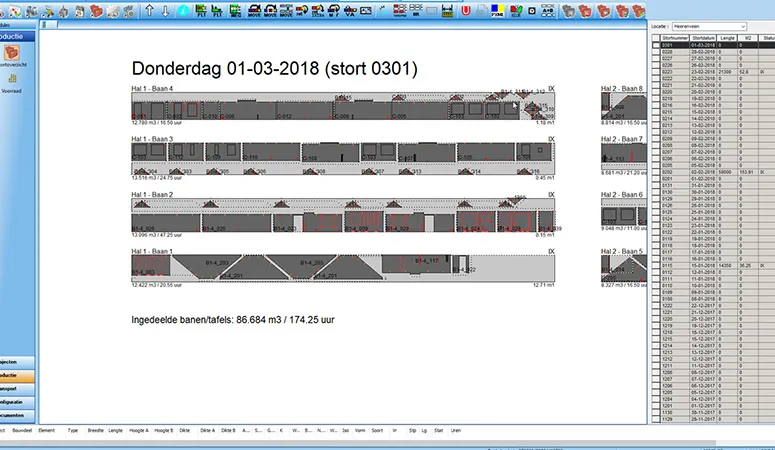
Graphically planning production
The delivery sequence provides the input for production. The production sequence is also determined by various factors, including making optimal use of table or bed space and the best combination and sequence of elements on each table or bed. To support production, Profity Prefab can provide the right production documents, again using IFC information from the linked CAD system.
Quality control
IFC information is also useful for quality control. One recent development is the use of Mixed Reality. A tablet or AR glasses can project the element to be produced onto the table or bed using IFC information, allowing the formwork and cast-in items to be positioned correctly. Just before pouring, the tablet or AR glasses can be used to take photos combining the information: the 3D projection and the formwork and cast-in items actually in place. This documents, for each element, that it has been assembled in accordance with the design before pouring. After production, further photos can be taken of the completed element alongside the projected design.
IFC gives you greater control over projects
The IFC exchange format offers significant benefits. As the text above shows, its potential is far from fully exploited. Profity Prefab makes full use of it, giving users greater control and insight.
Text and images | Profity
Vraag over dit verhaal? Stel je vraag
Blijf dit volgen
Bij een nieuw verhaal krijg je een e-mail. Geen account nodig.
- ThemaBouwen als productieproces
- OnderwerpGeneral