Personal safety
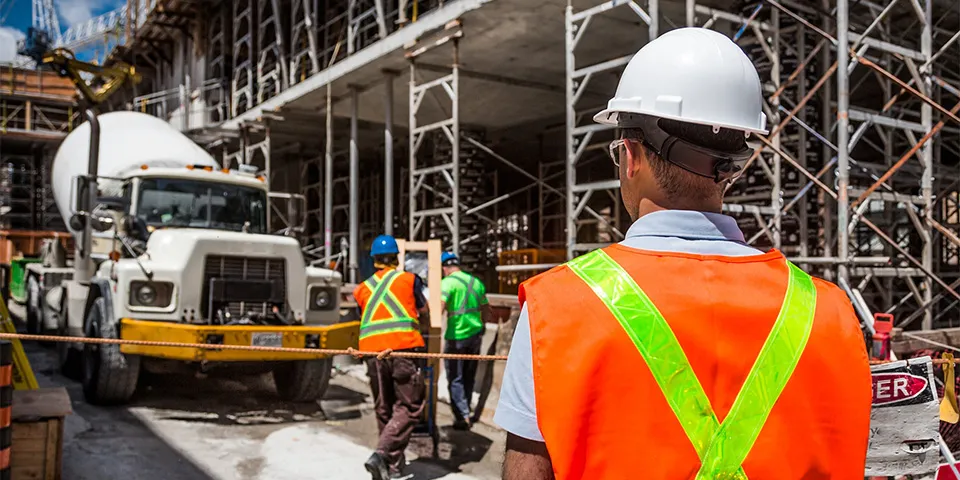
There were twenty fatal accidents in the construction industry in 2018, making it the sector with the highest number of fatal accidents. Since 2009, 182 construction workers have died in accidents.
Health and safety regulations
Despite the Working Conditions Act, employers do not always comply with health and safety regulations. Risk assessments followed by appropriate measures should ensure a safe workplace for staff. Employers must also continuously monitor whether staff are following safety procedures.
Personal protective equipment
PPE is used for work that involves risks, to prevent injury and physical harm. Using personal protective equipment is the most direct way to reduce occupational risks. It often protects only a limited part of the body, such as the eyes, ears, hands or feet. It is designed to guard against specific hazards, such as punctures, excessive noise levels or toxic substances.
Head protection
A safety helmet is worn in areas where there is a risk of falling objects. It also protects the wearer when working in confined spaces where they could easily hit their head. Helmets are fitted with an adjustable PVC headband and sometimes a chin strap or hearing protectors. On construction sites, wearing a safety helmet or bump cap is usually compulsory.
Hearing and eye protection
Ear defenders consist of a headband with two cups that fully cover the ears. They are often used when working with noisy machinery or tools. Hearing protection must be made available when noise levels reach 80 dB. Safety glasses protect the eyes from splashes and/or airborne particles of material. They should fit snugly while leaving enough room around the eyes. They are usually held in place on the head with an elasticated band. Dust goggles are essentially a lighter version of safety glasses. Wearing safety glasses is compulsory in many situations.
Respiratory protection
A dust cap or dust mask protects the respiratory tract from dust. A dust mask does not protect against vapours from organic solvents.
Hand and foot protection
Hand protection safeguards part of the hand, the whole hand, the forearm or sometimes even the entire arm against injury. Safety gloves protect the wearer from work-related risks. There are several protection categories. Safety footwear must be fitted with protective toe caps. Toe caps made of steel, aluminium or plastic protect the foot from pressure and impact. Slip-resistant soles are also a basic feature of safety footwear. There are various safety risks
Employers must provide personal protective equipment free of charge. Advice on choosing the right equipment is available from eyecatchersafety. Employers must also ensure staff receive proper instruction on the use and maintenance of the selected protective equipment. Whether PPE is legally required or not makes no difference in this respect.
Vraag over dit verhaal? Stel je vraag
Blijf dit volgen
Bij een nieuw verhaal krijg je een e-mail. Geen account nodig.
- ThemaVeilig werken
- OnderwerpGeneral