Public-sector clients sign declaration of intent for Sustainable Bridges and Viaducts
Tekst Roel van GilsBeeld Rijkswaterstaat, Jarno Kraayvanger & Tineke Dijkstra
A collective impetus for making concrete structures more sustainable
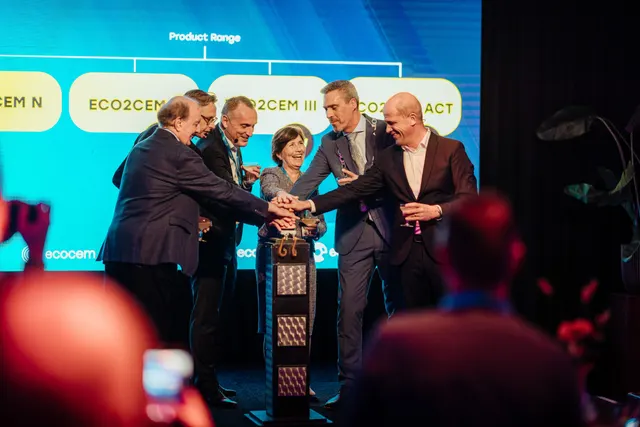
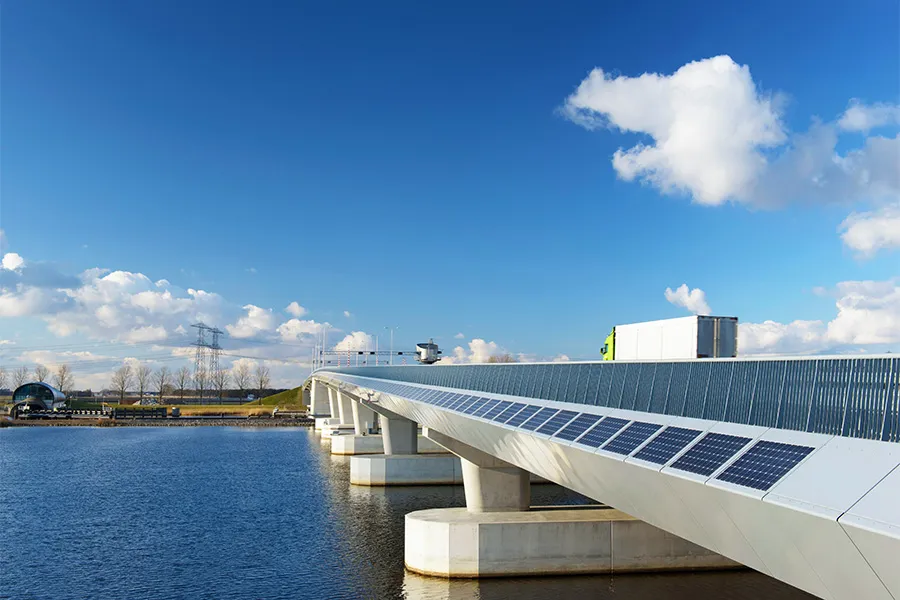
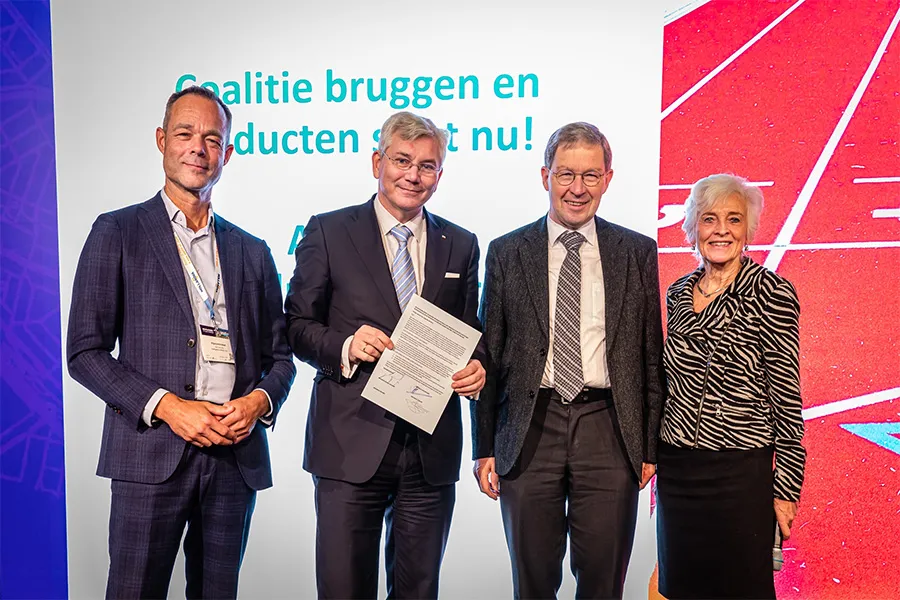
We are on the brink of a huge replacement and renovation programme, with many tens of thousands of bridges and viaducts needing attention over the coming decades. Public-sector clients are tasked with commissioning this work as sustainably as possible. At the initiative of Betonakkoord, the provinces of Gelderland, North Holland, Utrecht and Zeeland have joined Rijkswaterstaat in the Sustainable Bridges and Viaducts coalition. Its aim is to give the market a push, above all by providing the scale and visibility needed to invest in sustainable innovations. The signing of the declaration of intent at InfraTech 2025 on 15 January marked the launch. The coalition has pledged to bring ambitious projects, including pioneering projects, to market over the course of this year.
“The Sustainable Bridges and Viaducts coalition grew out of Betonakkoord, which states that clients must provide a clear impetus for sustainability,” says Ruud Nijland, programme manager for the reuse of beams at Rijkswaterstaat. “It also says that public-sector clients should not each go about this in their own way, but should coordinate their efforts. This means we will work together better and more closely as public-sector clients. So far, four provinces and Rijkswaterstaat are involved, but naturally we hope more major public-sector clients will join. By acting collectively, we have a much greater chance of making progress on sustainability. The idea is to keep raising the bar on sustainability, step by step, through a number of ‘pioneers’. Within a few years, the results they achieve can become standard practice across the whole chain, the ‘peloton’. This pioneer-peloton approach was adopted from Betonakkoord.”
Concrete
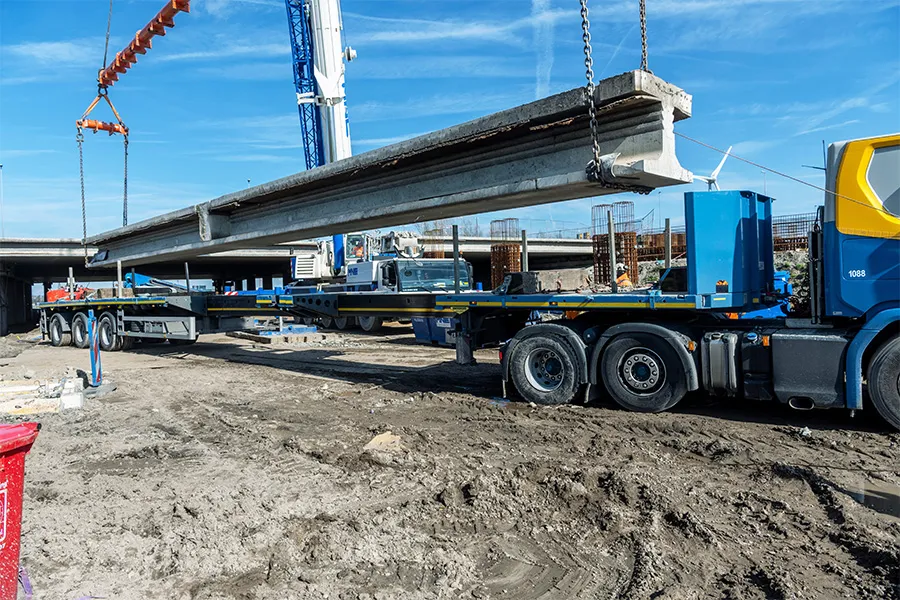
The Sustainable Bridges and Viaducts coalition is initially focusing on sustainably commissioning ‘fixed’ concrete bridges and viaducts. “Betonakkoord agreed that we should aim for similar requirements when commissioning sustainable concrete products from the market. This declaration of intent is, in effect, a way of putting that agreement into practice,” says Steven Mookhoek, programme lead for replacement & renovation at the Province of Zeeland. “The declaration of intent does not yet specify what those requirements or threshold values will be.” According to Nijland, this is a long-term process. Last December, the coalition held an extensive market consultation to find out whether, and to what extent, stricter requirements would be feasible. The market then gave the coalition the green light to develop the initiative further. “Over the next twenty years or so, many tens of thousands of concrete structures will need replacing. Many components, such as beams, are often still good for a second round of use, because concrete continues to harden. This can achieve a huge CO2 reduction, of up to 97%, as pilots have already shown. Although this figure relates to the beams themselves, it still represents a significant saving in emissions from the structure as a whole.”
A complex puzzle
Low-carbon concrete is also cited as a sustainability measure. “The market has said it can meet the requirements currently pencilled in,” says Mookhoek. “Some requirements could even be more ambitious. The market must commit to supplying a good-quality, high-performance product. If it meets the structural requirements but not all the other standards, then we, as a collective, need to discuss that. Structural safety always comes first, but we may be able to relax some other properties to a degree in order to arrive at a more sustainable alternative. It is a puzzle we need to solve collectively. Because it is such a complex puzzle, we are focusing solely on concrete structures. The technology is relatively straightforward, and we only have to deal with material and structural properties. The volume is also substantial: the Netherlands has tens of thousands of concrete structures. Given concrete’s huge carbon footprint, this is a relatively accessible way for all parties to make serious progress.”
From pilots to scaling up
The coalition is fully aware that the sector is not yet fully mature in terms of sustainability and circularity. “By creating demand at scale and accepting risks, public-sector clients give market players the confidence to develop and invest in sustainable innovations. This helps the sector mature and enables market players to offer their innovations to other clients too,” says Nijland. “We are determined to move beyond pilots and quickly scale up sustainable technologies, so that we can address all these structures rather than just a handful of pilot projects.” Mookhoek adds: “Similar challenges naturally arise for municipalities, water authorities and others, with all kinds of concrete assets in their portfolios. This pioneer approach is also intended to pave the way for other clients, so that they too can eventually procure work from the market using the same body of knowledge and requirements, and follow in the wake of this sustainability drive as part of the peloton.”
Concrete plans
Signing the declaration of intent at InfraTech was only the first step. “We will now look together at which projects to work on and what requirements to set,” says Nijland. “These could include stricter requirements for concrete, as well as requirements for disassembly, reuse and so on. We are working on this now, and the idea is for each coalition member to put forward a number of projects, so that we can learn from one another’s projects and eventually share those lessons with other clients. This builds on the Market Vision and Procurement Strategy of the Samenwerkplatform Circulaire Viaducten en Bruggen. We expect to come forward with concrete plans over the course of this year, challenging the market to submit proposals.” Mookhoek adds: “The declaration of intent gives market players the perspective they need to invest in sustainable innovations. The market has responded positively to the fact that public-sector clients, united in this coalition, are showing the courage and ambition to make real progress on sustainability.”
Vraag over dit verhaal? Stel je vraag
Blijf dit volgen
Bij een nieuw verhaal krijg je een e-mail. Geen account nodig.
- ThemaMinder CO2 in beton en staal
- OnderwerpGeneral