Football stadium inspections are the poor relation
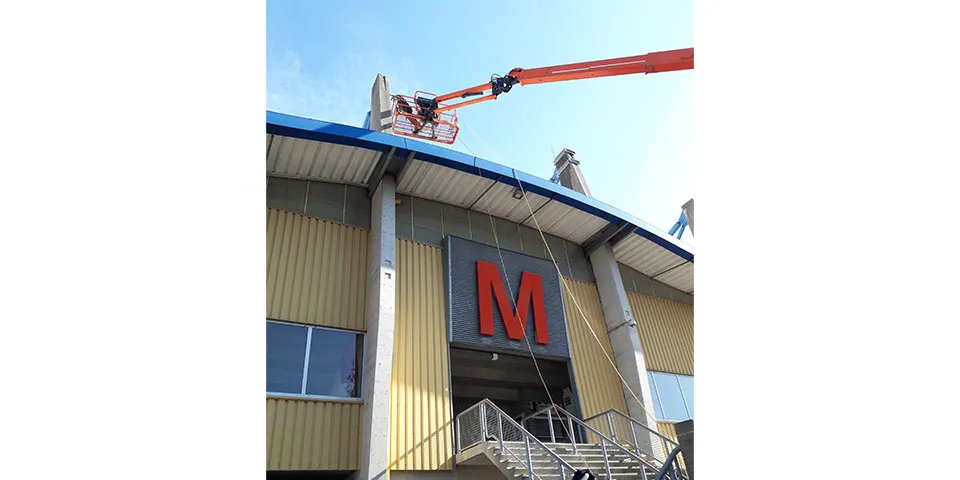
When things go wrong in football stadiums, the consequences can be disastrous. At Hillsborough in England, for example, 96 people lost their lives when supporters were crushed against barriers in the standing terraces. At Luzhniki, a match was cruelly disrupted by slippery terraces, while in Guatemala 83 supporters died because the stadium was overcrowded. We can still prevent such disasters in the Netherlands.
Text | Liliane Verwoolde Photography | SGS Intron
Dutch stadiums are not entirely free of incidents. During a severe storm, the roof of the AZ stadium collapsed, fortunately without causing any injuries. At the FC Twente stadium, the roof structure collapsed and one person died. These events have fuelled debate about how to prevent worse. Are mayors and civil servants really the right people to declare a stadium safe?
Structural Safety Protocol
Maarten Swinkels is following this debate closely. As a senior consultant at SGS Intron, he knows that stadium inspections are costly and time-consuming. This could be a reason to put inspections off, particularly if the stadium in question is privately owned. All the more reason, then, to welcome the ‘Structural Safety Protocol for Professional Football Stadiums’, drawn up by engineering consultancy ABT on behalf of the Ministry of the Interior and Kingdom Relations.
An important first step
“The protocol is not yet mandatory,” Swinkels says. “It is well-founded and written from a structural engineer’s perspective. That automatically makes the structural engineer the party responsible for conducting the investigation under this protocol. I would have preferred such an important investigation to be carried out by a team whose members each bring their own specialist knowledge. I have in mind a structural engineer, designer, experienced inspector, materials expert, corrosion specialist, risk analysis specialist and, last but not least, a user. That would allow the inspection to cover not only design and construction, but also use and maintenance.”
SGS Intron now has extensive experience in inspecting materials and analysing risks. This means it has everything it needs to carry out a comprehensive investigation alongside the structural engineer. “Stadium inspections are the poor relation. Let’s do something about it while we still can.”
Vraag over dit verhaal? Stel je vraag
Blijf dit volgen
Bij een nieuw verhaal krijg je een e-mail. Geen account nodig.
- ThemaNormen, testen en aansprakelijkheid
- OnderwerpGeneral