









Steel frames: an innovative solution for more efficient construction
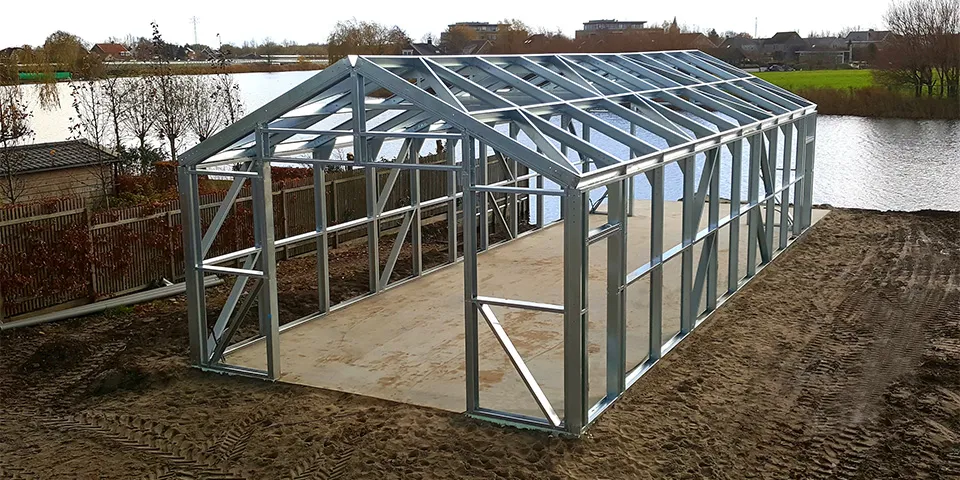
Steel frames enable contractors to work more efficiently on construction sites in an innovative and sustainable way. They can be used for a wide range of applications, from housing and apartment construction to façades and industrial buildings, in both new-build and renovation projects. Finish Frame, part of the Finish Profiles Group, manufactures cold-formed steel frame profiles for use in housing, hall construction and substructures. The company, based in Purmerend, supplies complete load-bearing structures as well as substructures such as external cavity wall leaves, load-bearing partition walls and roof trusses.
Steel and steel frame profiles are manufactured in-house
Finish Frame’s steel framing system consists of cold-formed C-profiles. They are designed using 3D drawing software and then converted into production data. The C-profiles are roll-formed from steel coil (S320) with a galvanised steel or Aluzinc coating of 275 g per m². This protects the profiles against a range of environmental and weather conditions, and in a closed construction they can last for more than 60 years. The profiles are ideal for roof trusses, internal walls and exhibition construction, load-bearing walls, external cavity wall leaves, purlins, floors, portal frames and prefabricated roof modules.
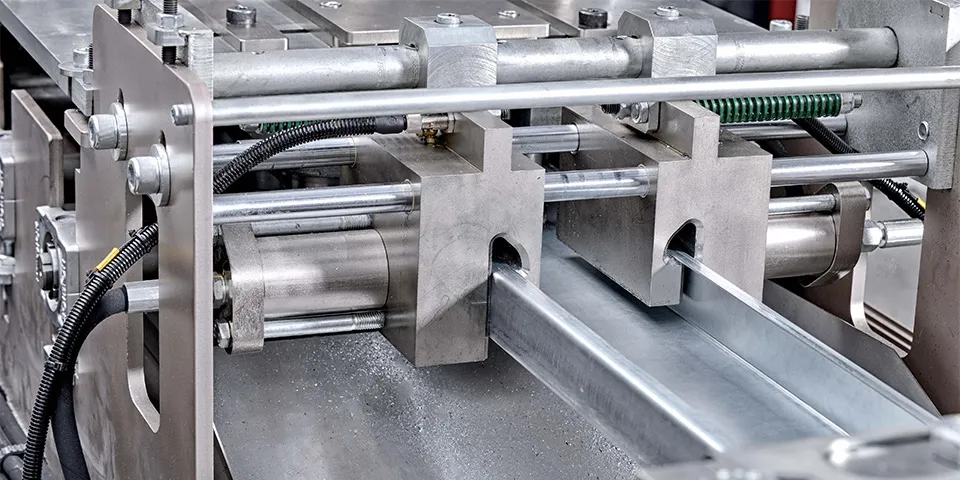
The steel profiles are roll-formed in thicknesses from 1.2 mm to 2.5 mm and are available in 6 widths: C75, C100, C150, C200, C250 and C300. This allows walls or floors to be designed as load-bearing elements, either as part of a building or as a complete structure.
“We carry out the necessary processing on each C-profile to turn it into a usable component. Screw holes, service penetrations and bolted connections can all be incorporated to make the frame ‘custom-made’,” says Dennis Eikenboom. “The steel profiles are roll-formed in thicknesses from 1.2 mm to 2.5 mm and are available in 6 widths: C75, C100, C150, C200, C250 and C300. This allows walls or floors to be designed as load-bearing elements, either as part of a building or as a complete structure.”
Many benefits for construction projects
Processing the C-profiles in various ways creates prefabricated elements. Thanks to the properties of the profiles, these elements enable construction that is much lighter, more creative and less costly. “Using load-bearing elements for the façade, floor and roof significantly reduces construction time. The elements already incorporate the openings for windows and doors, as well as all the connection points. The frame also serves as the primary load-bearing structure, eliminating the need for columns. Thanks to these prefabricated elements, a house can be completed in just one week,” Eikenboom adds. “Steel frame profiles are also highly durable and strong. The galvanised zinc coating keeps the structural steel fully protected, so it lasts indefinitely. The steel can also be fully recycled. The open structure makes it easy to incorporate insulation and also reduces waste during processing. A steel frame can withstand more pressure than, for example, a timber frame wall, and its connections can be made stronger, allowing elements at greater heights to be better secured to the primary load-bearing structure.”
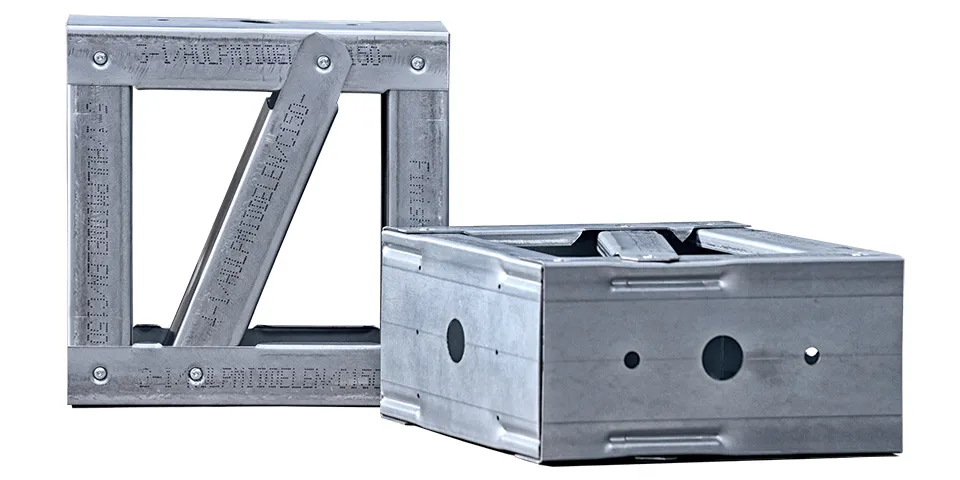
Finish Frame carries out the necessary processing on each C-profile to turn it into a usable component. Screw holes, service penetrations and bolted connections can all be incorporated to make the frame ‘custom-made’.
More efficient construction
Finish Frame’s steel frames are ideally suited to modular construction. The module can be made entirely self-supporting using steel frames, without the addition of hot-rolled sections. “These profiles make it possible to build more efficiently in an innovative and sustainable way,” concludes Dennis Eikenboom. “Our customers can also count on the technical support they need. We take care of the entire engineering and production process. We can manufacture the required element from the customer’s drawing software, and we also have our own design and estimating department, with experience in working with these steel frame profiles. The team can draw up the frames and then communicate with the customer via BIM or another method. Customers can control our machines directly, enabling the profiles to be produced very quickly.”
Vraag over dit verhaal? Stel je vraag
Blijf dit volgen
Bij een nieuw verhaal krijg je een e-mail. Geen account nodig.
- ThemaBouwen als productieproces
- OnderwerpGeneral