The Holocaust Monument: a remarkable piece of steel!
On 19 September, the Holocaust Names Monument was unveiled by King Willem-Alexander and Jacques Grishaver, chair of the Nederlands Auschwitz Comité. Designed by Polish-Jewish architect Daniel Libeskind, the memorial has been built in the heart of Amsterdam’s Jewish Quarter, on a site where many atrocities took place more than 70 years ago.
On 19 September, the Holocaust Names Monument was unveiled by King Willem-Alexander and Jacques Grishaver,
1: Design: brick
The Holocaust Names Monument forms a labyrinth of 72 concrete wall sections clad in red bricks, laid out to form the ground plan of four letters. The names, dates of birth and ages at death of the victims are engraved in alphabetical order on each of these 102,000 bricks. It is the first national memorial in the Netherlands to name all the victims of both the Holocaust and the Porajmos (the Nazi persecution of Roma).
2: Design: stainless steel
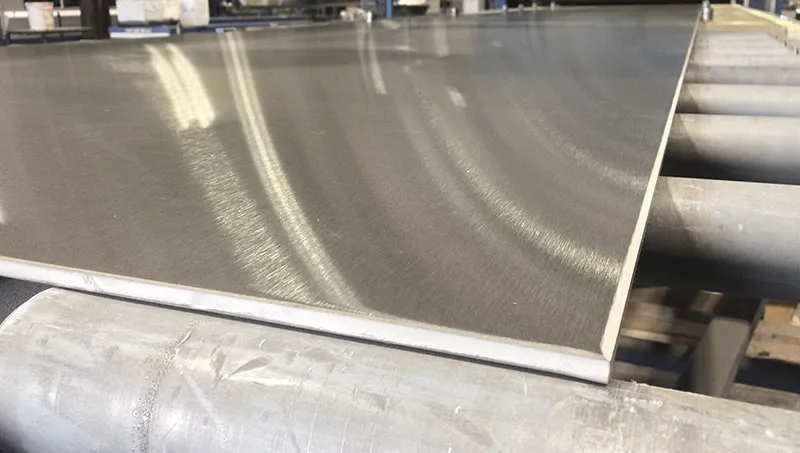
Four seemingly floating objects made of reflective stainless steel have been created in the same pattern on these wall sections. Van Geenen was given the honour of polishing these objects, an exclusive commission that few companies are able to undertake. The job involved polishing a total of 72 stainless steel plates, each measuring 12 by 2 metres. Each stainless steel plate was used to make one of the large stainless steel letters.
3: Symbolism: the form
The wall sections are arranged in the shape of four Hebrew letters. These letters mean “in memoriam”, the Hebrew expression for “in remembrance”. Where the brick walls and metal objects intersect, a narrow gap has been created. This makes the steel letters appear to float. It symbolises the rupture in the history and culture of the Dutch people caused by the atrocities of the Second World War.
4: Symbolism: the material
The use of bricks refers to their prevalence in Dutch cities and, more broadly, in cities across Western Europe. The bricks, combined with the reflective, geometric stainless steel letters, symbolise the connection between Amsterdam’s past and present. The reflective stainless steel captures the rustling of the trees.
Vraag over dit verhaal? Stel je vraag
Wie eraan werkte
Holocaust Namenmonument in Amsterdam
- polijstgedeelteVan Geenen
Blijf dit volgen
Bij een nieuw verhaal krijg je een e-mail. Geen account nodig.
- ProjectHolocaust Namenmonument
- OnderwerpGeneral
- BedrijfVan Geenen