THE PEN | Stainless steel under the microscope
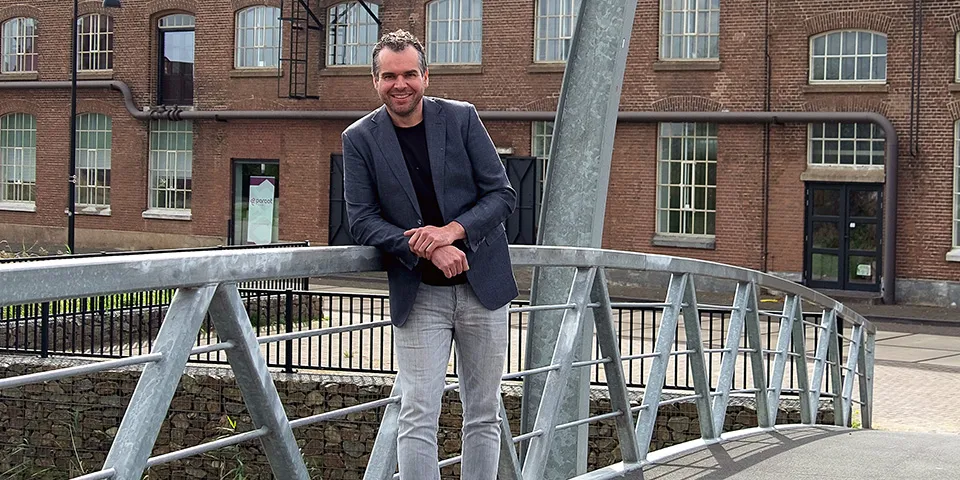
I’d like to take this opportunity in ‘The Pen’ to focus on stainless steel, simply because I think it is an exceptionally remarkable material. Schroeder has also spent the past few years developing unique concrete anchors from this excellent material.
Stainless steel is often referred to colloquially as rust-free steel, but stainless steel is a much better term. Ordinary steel that has not rusted is also rust-free, and stainless steel can indeed corrode, so it is not rust-free.
First, a little history of stainless steel, a material that has been around for more than a century and a half. Shortly before the First World War, the Brown-Firth laboratory in England, led by Harry Brearley, was asked to develop a metal that would cause less internal wear in the barrels of firearms and cannons. Brearley came up with the idea of adding chromium, giving rise to the first form of stainless steel. (Stainless steel contains at least 11-12% chromium and no more than 1.2% carbon.) The newly developed alloy had many other advantages, prompting industries beyond arms manufacturing to start using stainless steel. Development continued rapidly, and more than 200 different grades are now available.
Why do I think stainless steel is such a great material? It is best known for its corrosion resistance and attractive appearance (unfortunately, you can no longer see that appearance once it has been cast in). Depending on the alloy, some grades of stainless steel perform very well in acidic and alkaline environments, for example in the (petro)chemical industry or in livestock buildings. Some alloys retain their strength at high temperatures, while others are highly resistant to extreme temperature fluctuations. I cannot list all the benefits of every type here, but there are many. For example, all grades of stainless steel are easy to work with: the material can be formed, and is easy to cut and mill. Finally, stainless steel scores highly on sustainability; it often performs well in terms of LCC (Life Cycle Costing).
The decision to use a stainless steel product needs to be made early in the construction process. This sustainable choice has a positive effect on the service life of the structure and the maintenance it requires. A poor choice can have serious consequences, including for the safety of the structure. Unfortunately, many inadequate structures have been built in recent years because the wrong anchor material was selected.
Stainless steel anchors are suitable for fixing, among other things, noise barriers, balustrades, balconies and even bollards on quays in (sea) ports. They are also ideal for use in damp areas. What a wonderful material stainless steel is!
Een zakelijke vraag aan Schroeder-Ankers BV? Neem contact op
Bedrijven in dit verhaal

Blijf dit volgen
Bij een nieuw verhaal krijg je een e-mail. Geen account nodig.
- OnderwerpGeneral
- BedrijfSchroeder-Ankers BV