Platform on concrete and steel in construction
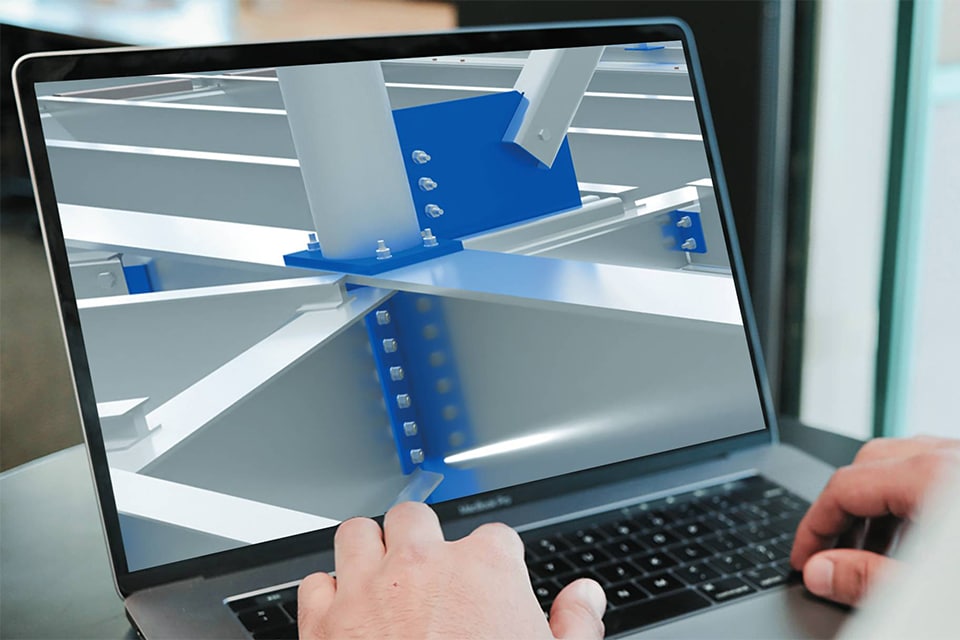
Steel structures are created through a series of closely interrelated decisions—from the overall analysis and sizing of structural elements to the development of connection details and fabrication drawings. Yet in many projects, these phases are still managed in separate environments, often by different teams working with isolated models. Furthermore, converting structural models into fabrication-ready output typically requires a great deal of manual work.
As project complexity and the pressure to deliver on time increase, this fragmentation can create coordination risks and slow down the process from design to construction. A more integrated workflow helps maintain the continuity of the structural intent as projects progress from technical analysis to detailed modeling and fabrication. By aligning analytical assumptions with later detailing and fabrication decisions, engineers and detail designers can work more efficiently while increasing confidence in the project outcomes.
In practice, this integrated approach delivers value in three key areas: maintaining consistency between analysis and detailing, reducing rework through model-based coordination, and accelerating the path to production-ready output. The following explains how.
In a typical steel project, structural engineers develop analytical models to validate the design, optimize the dimensions of the structural members, and assess the overall structural behavior. These models form the technical basis of the design. However, converting analytical results into fabrication-ready steel models has traditionally required significant manual intervention, including rebuilding the geometry and redefining key design parameters.
An integrated workflow between SCIA Engineer and SDS2 reduces the need for this duplication of effort. The information from the analytical model can be carried over to the detailed design phase, allowing teams to build upon validated engineering decisions rather than having to recreate them. This continuity helps preserve the structural logic established during the analysis, ensuring that the detailed design more accurately reflects the original design intent.
Steel design rarely follows a strictly linear sequence. As projects evolve, structural engineers and detailers must adapt to new constraints, revised load conditions, or updated connection requirements. In traditional workflows, these iterations can cause friction, particularly when changes made during analysis must be manually incorporated into the detailed steel model. This not only increases the risk of discrepancies but can also prolong design cycles and introduce uncertainty into subsequent deliverables.
An integrated workflow between SCIA Engineer and SDS2 helps teams manage these iterations more effectively. When updates are made to the analysis model—such as adjustments to element sizing or the structural configuration—the detailed design process can respond to these changes without having to completely rebuild the steel model. This continuity supports a more responsive design environment, in which technical decisions and refinements in the detailed design are developed in parallel rather than in isolation.
The design of connections illustrates this dynamic particularly well. While structural analysis identifies the forces and design requirements that connections must meet, detailing determines how those connections are actually implemented. By enabling a smoother exchange of model information between analysis and detailing, teams can refine connection solutions with greater confidence. This reduces the likelihood of late-stage redesign and supports a more predictable path to fabrication-ready results.
As steel projects move beyond the preliminary design phase, the focus shifts from structural performance to constructability. In this phase, detailing must translate the technical intent into precise fabrication information, including connection geometry, material specifications, and shop drawings. Any discrepancy between the analytical design and the detailed modeling can pose risks, particularly when fabrication decisions are based on models that deviate from the original structural assumptions.
An integrated workflow between SCIA and SDS2 supports a more reliable transition from design to fabrication. By building detailed steel models based on validated analytical data, teams can maintain alignment between structural design requirements and constructible solutions. This continuity is particularly valuable when refining connection details, where even minor changes can affect fabrication complexity, the assembly sequence, or material usage.
The ability to develop fabrication-ready output within an integrated workflow also provides greater clarity throughout the entire steel supply chain. Manufacturing companies receive information that reflects coordinated engineering and detailing decisions, thereby reducing the likelihood of misinterpretations or late-stage modifications. This helps project teams move forward with greater confidence, knowing that the design intent has been consistently carried through to the fabrication stage.
As the delivery of steel projects becomes increasingly data-driven, the ability to maintain continuity—from analysis through detailing to fabrication—is becoming increasingly important. An integrated workflow helps reduce friction between disciplines, allowing design intent, constructability considerations, and fabrication requirements to be established in a more coordinated manner.
The integration between SCIA and SDS2 demonstrates how this approach can support more efficient delivery of steel projects. By enabling teams to manage iterations, maintain model consistency, and work toward fabrication-ready output with greater confidence, integrated workflows help address many of the challenges associated with traditional design-to-detail processes.
View Our upcoming webinar To see these workflows in action and discover how they can improve coordination, reduce rework, and speed up delivery—from analysis to manufacturing.
Neem dan rechtstreeks contact op met ALLPLAN GmbH.
 Contact opnemen
Maximize your productivity in precast planning ALLPLAN offers powerful tools for the special requirements of the precast industry. ALLPLAN enables you to easily design walls, floors and structural precast elements such as stairs or columns very efficiently and accurately. You can switch between 2D and 3D working methods at will, because the plans and the [...]
Bekijk Bedrijfsprofiel