Sustainability, automation and digitalisation in the concrete industry
Tekst en beeld Progress Group
Like many other industries, the precast industry faces numerous challenges. From labour shortages to the environmental crisis, the industry is striving to stay ahead of the curve and lead the way towards a sustainable future.
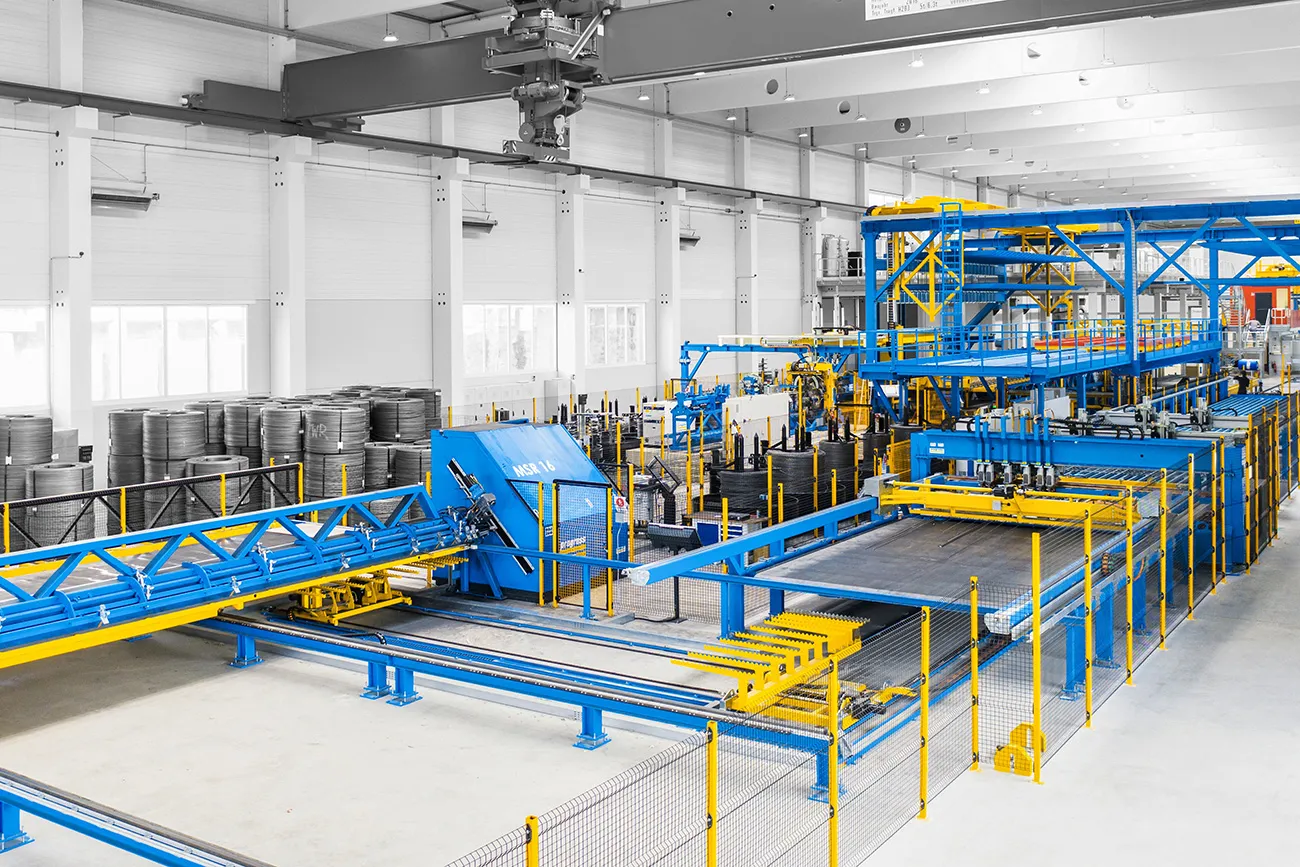
Sustainability means many things. Put simply, a sustainable industry makes careful use of available resources to achieve its goals and preserves them for the future. As climate change continues to accelerate, this issue is becoming increasingly important, and there is also a need for more energy-efficient building systems and materials. Progress Group has always viewed sustainability as building durable buildings efficiently, taking into account:
A comfortable indoor climate;
• Energy-efficient homes and construction;
• Giving buildings a second life;
• Affordable building materials;
• Innovations to improve the ecological footprint;
• Precast concrete elements that can be 00% recycled.
Sustainability is supported not only by construction materials, construction methods and ongoing innovation, but also by the many different aspects of execution. Precast concrete elements improve planning quality, and the controlled working environment makes working conditions safer.
Automation is about more than robots!
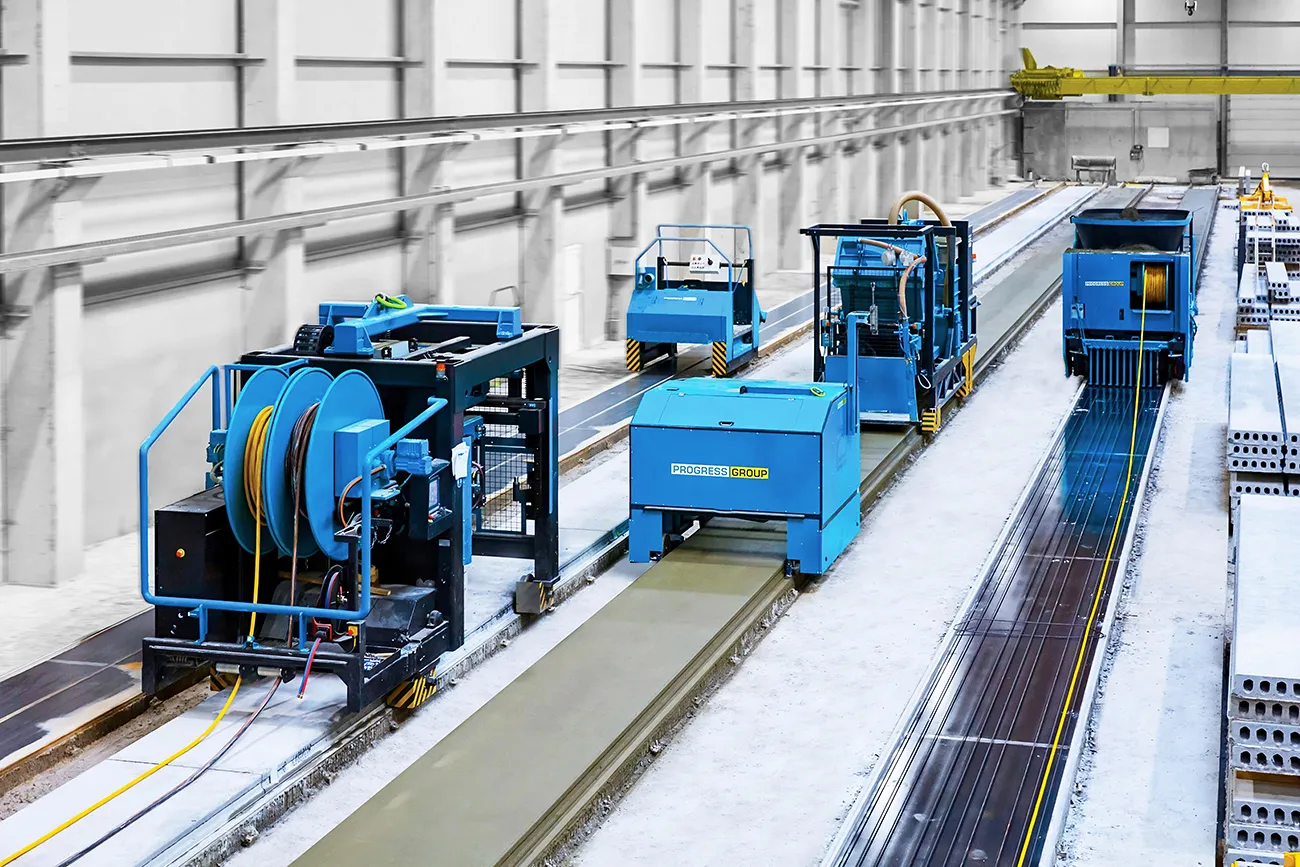
Automation is about far more than robots replacing people. Its main purpose is to reduce strenuous and sometimes even dangerous manual work, making production more efficient and safer, without eliminating the need for people altogether. Specialist machines and computers make it possible to produce without requiring strenuous manual labour. The aim is an intelligent production facility that uses data to automate production, leaving people to manage the machines rather than work on the product itself.
Automation in production facilities
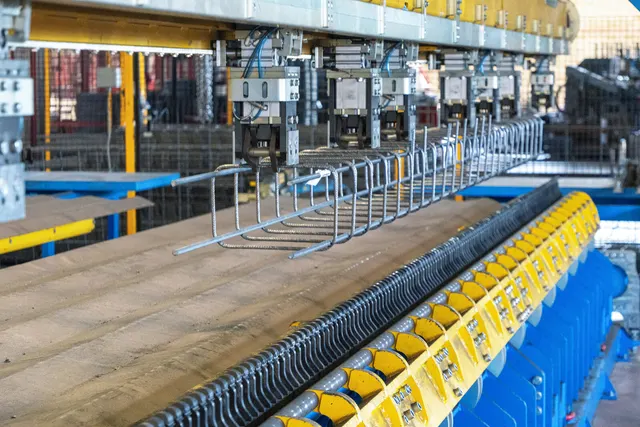
Automation of reinforcement production, the manufacture of prestressed concrete elements and the use of complete carousel systems for precast concrete elements lead to less waste, fewer errors, greater safety and higher quality in less time. Machine automation in the production of prestressed concrete elements can, for example, be improved using a flying-bucket concrete distributor with automatic concrete ordering, as well as automatic discharge of concrete into the production machine. While the production machines run automatically, the machine operator can work on other tasks during production. A good example is marking out with a plotter, which uses cutting lines to indicate where openings need to be made in a panel. And it does so with the utmost precision!
The plotter enables work to be carried out to an accuracy of less than a millimetre, something that cannot be achieved by hand. The machine can be used, for example, to drill drainage holes for water runoff. Progress Group offers an automated solution for this, while openings can also be made by hand or with an Aspirator. The Aspirator is normally operated by an operator, but can also be fitted with an automatic module. Hardened panels can then be sawn fully automatically, making the production flow safer, faster and more accurate. Automation results in a cleaner factory, with fewer people on the factory floor, who can work more safely and efficiently.
Digitalisation: unlocking the full potential
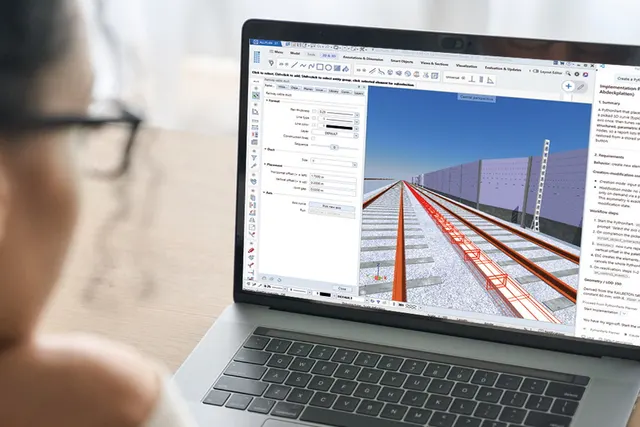
Another major benefit is digitalisation in construction. In today’s fast-moving world, digitalisation has become a game-changer for the precast industry. Over the years, the integration of advanced technologies such as Building Information Modeling (BIM), cloud-based collaboration platforms and automation tools has revolutionised approaches to project management, communication and productivity. Using advanced tools such as BIM, precast companies can visualise projects in a virtual environment, enabling better planning, coordination and error detection. This not only streamlines workflows, but also minimises costly rework and delays. Cloud-based collaboration platforms enable project information to be shared in real time, fostering seamless collaboration between teams, stakeholders and partners. This immediate exchange of data and feedback promotes transparency, facilitates rapid decision-making and ultimately accelerates project timelines. By embracing these modern technologies, construction companies are unlocking new levels of efficiency, quality and sustainable construction.
The digital transformation of precast concrete production
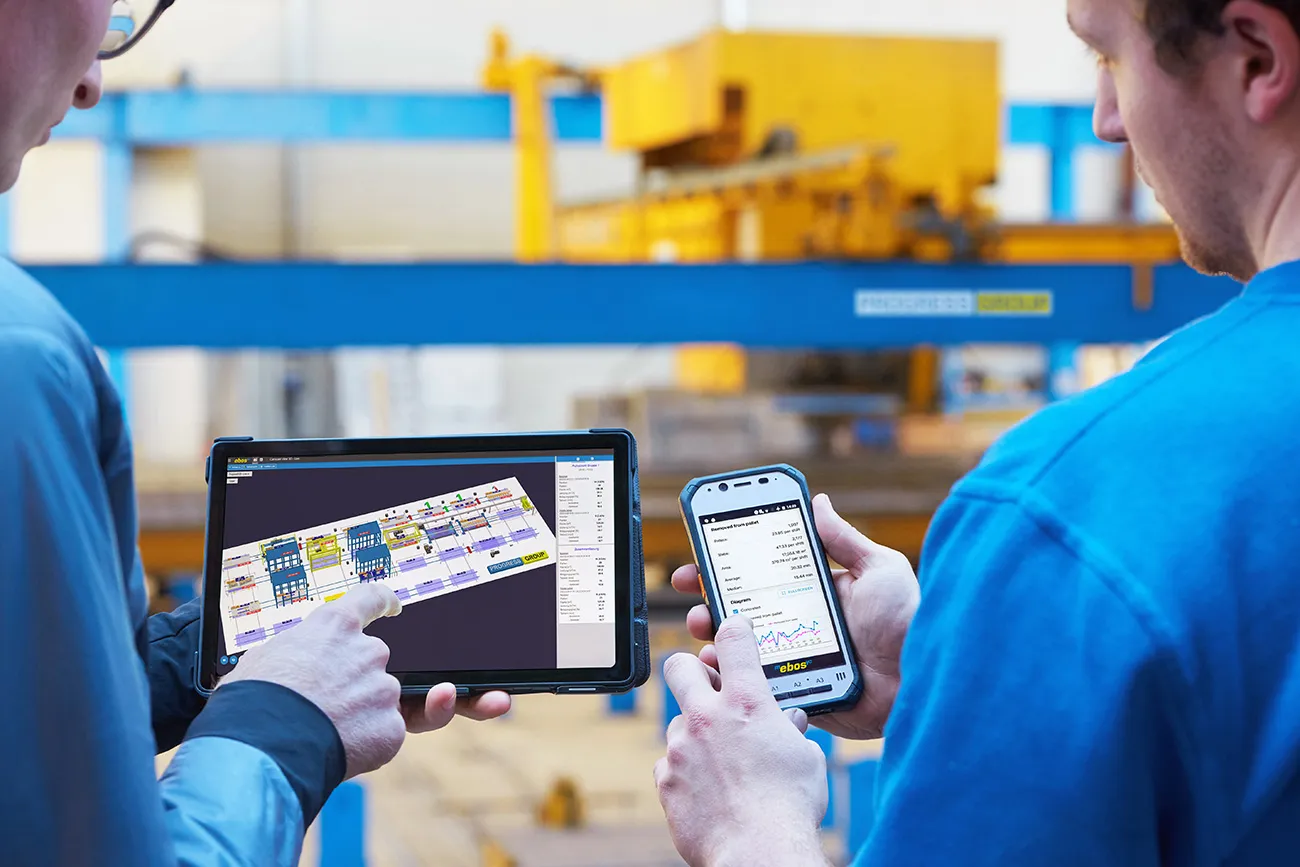
Prefaco, a well-known precast plant based in Belgium, has recently undergone a groundbreaking transformation of its operations, thanks to Progress Group’s specialist Manufacturing Execution System (MES). Prefaco Oeterbeton, which specialises in producing double walls, zero walls and floor elements, sought a comprehensive solution to improve its production processes. In August 2023, the ebosyc MES system was rolled out at Prefaco Oeterbeton. This went beyond a software implementation. Prefaco Oeterbeton also upgraded its M-system mesh welding machine and integrated a Form Master formwork robot and a Versa lattice girder machine from Progress Group. In addition, the MES system works seamlessly with a third-party carousel system and the ERP system, creating a fully integrated production environment. Previous manual processes for sending CAD data to machines and estimating schedules were less efficient and flexible. The newly gained flexibility now enables Prefaco Oeterbeton to improve productivity through functions such as pallet allocation and semi-automatic pallet routing, while also enabling critical functions such as quality checks and smart production. Luc Lenaerts, project manager at Prefaco Oeterbeton, says: “The real strength of the system lies in its flexibility and ability to adapt automatically. It is remarkable how seamlessly the individual machines communicate with one another.”
In summary, the collaboration between Prefaco Oeterbeton and Progress Group, and the adoption of the ebosyc MES system, have revolutionised precast concrete production. Lenaerts also highlighted the good cooperation between the Prefaco and Progress teams, which made it possible to complete the migration on time. With improved efficiency, adaptability and integration, Prefaco Oeterbeton is well positioned to remain a sector leader and set new standards for quality and innovation in the years to come.
Een zakelijke vraag aan Progress Software Development GmbH? Neem contact op
Bedrijven in dit verhaal
Blijf dit volgen
Bij een nieuw verhaal krijg je een e-mail. Geen account nodig.
- ThemaMinder CO2 in beton en staal
- OnderwerpSoftware & automation
- BedrijfProgress Software Development GmbH
- BedrijfPROGRESS GROUP