Automated bricklaying of walls
Tekst Tjerk van DuinenBeeld Danilith
Optimal flow in precast production
Innovation is central to Danilith’s history. Since its founding in 1921, the family business has strived for efficiency and quality. The company has been producing precast homes since the 1960s. Initially these were simple bungalows, but today they are fully fledged homes with many complex shapes. Managing director Lucas Delmulle, grandson of building system inventor Daniël Delmulle, explains the role smart automation plays in this.
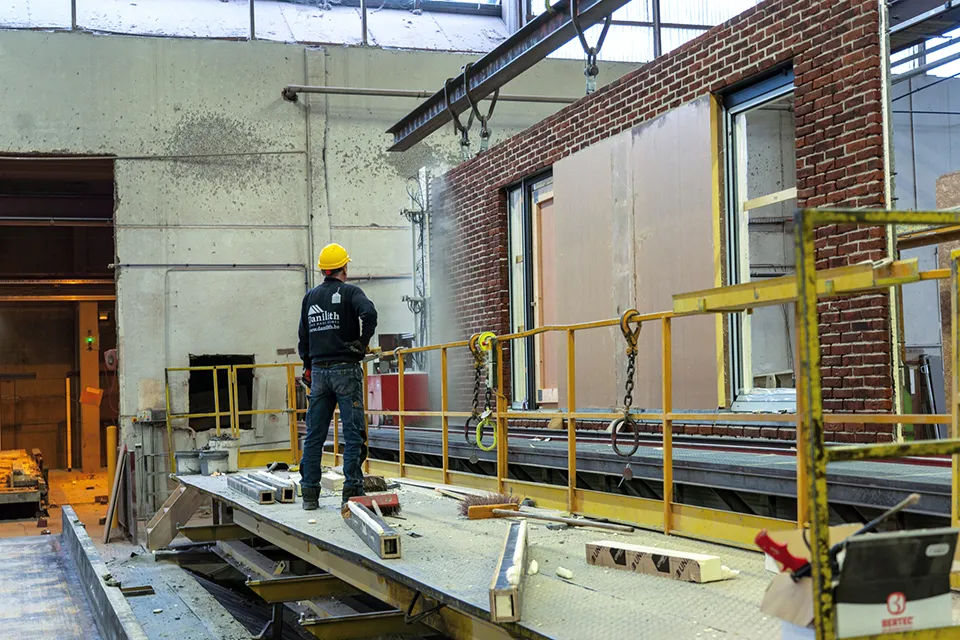
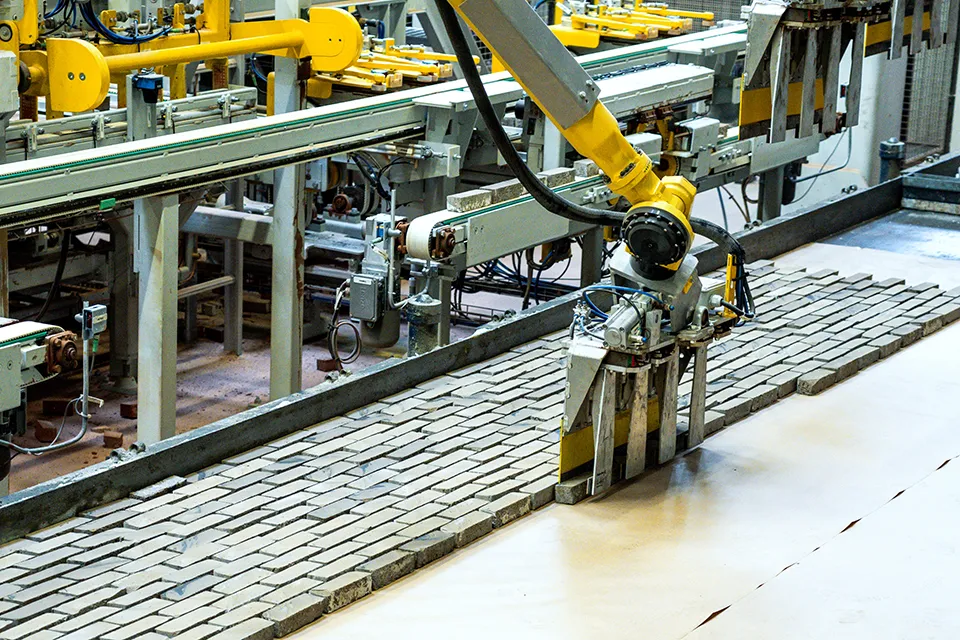
Thanks to automation and its expertise in precast construction, Danilith now produces precast external walls fully automatically. Robotic arms place bricks in the designed pattern from a conveyor belt. A layer of concrete is then applied, followed by insulation and, finally, another layer of concrete. Once the wall has cured, it is ready for transport. BIM4Production® is crucial to ensuring effective communication between the designers and this machine.

Automated conversion from 3D drawing to IFC model
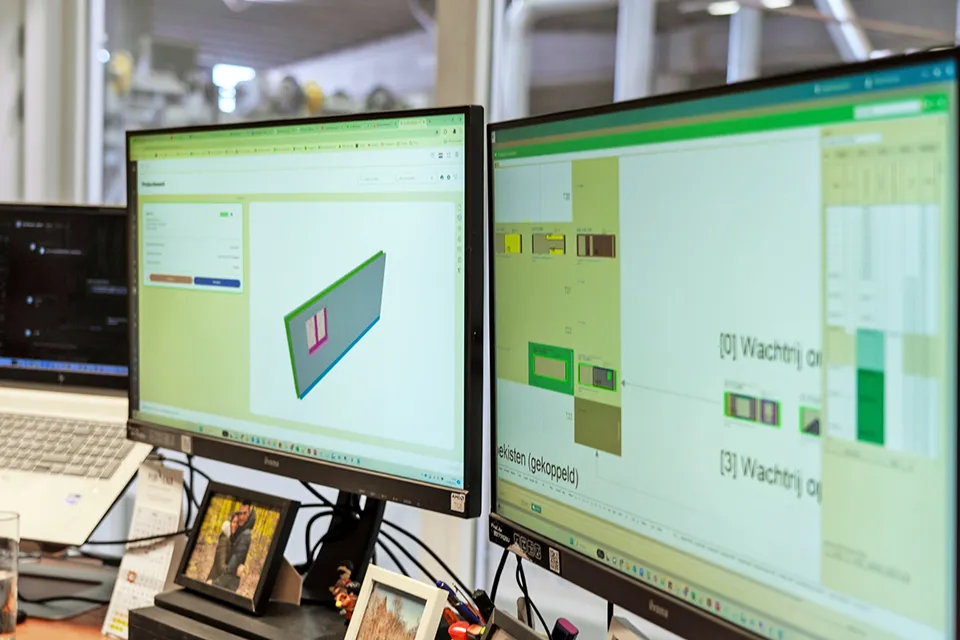
In 2020, Danitith switched from AutoCAD to Tekla. Delmulle says: “The reason was the complex detailing of the walls. Our computers were struggling with the complexity of the individual bricks. Tekla handled this well, but it was difficult to extract individual elements from the BIM model. BIM4Production® proved to have the perfect solution for us. We can now fully break down the 3D drawing from Tekla and share an IFC model for each element with our production machine.”
Easily zoom in on every detail
Before Danilith started using BIM4Production®, the factory still relied on printed drawings. “For simple walls, this is generally not a problem,” says Delmulle. “But over time, the elements became more complex and the need for detailed drawings on the shop floor grew. Danilith has now begun digitising its shop floor. BIM4Production® is already being used at several workstations. Every production worker can easily scan each element using a tablet. They can view the element in 3D on the tablet and easily zoom in on every detail.”
Continuous optimisation
Using BIM4Production® has become essential to production at Danilith. Delmulle sees several other benefits, however, and has big ambitions for the future of his factory. “I’m delighted with all the possibilities offered by the software. We now automatically check the quality of every element we make. This is crucial for external quality assurance, for example under the Quality Assurance Act. We also benefit internally. At key points during the production process, we take photos of every element. If anything goes wrong during production, we can see exactly what happened and where, and adjust our processes. This has already significantly reduced our costs of failure, but optimisation is, of course, an ongoing process.”
Working conditions and the environment
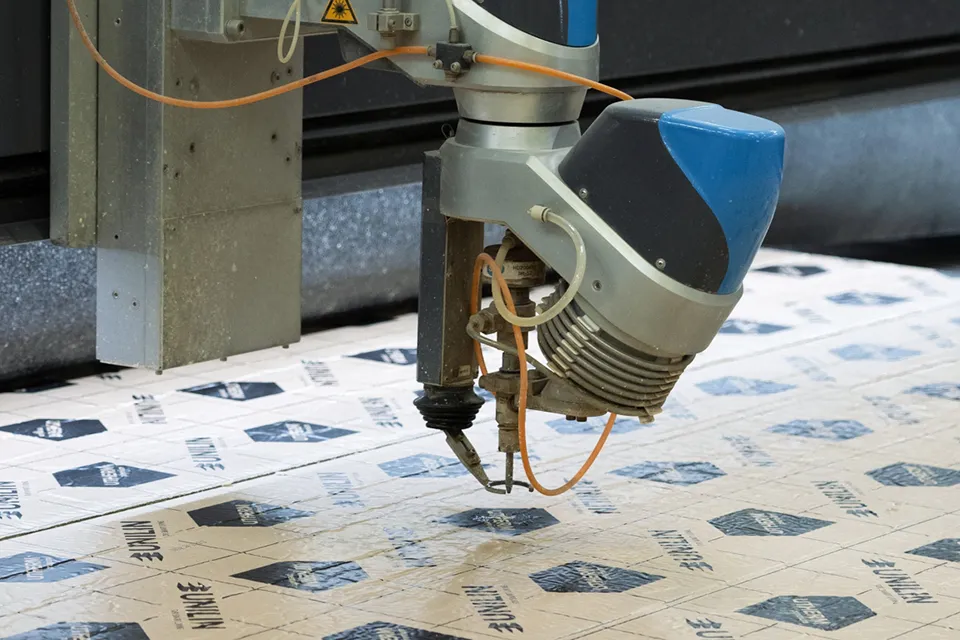
Danilith’s pride in its work and commitment to quality are reflected, among other things, in the show home it has built on its own site. Visitors can experience for themselves how the home feels and how high the level of finish is. As well as investing in this show home, the company is investing heavily in further optimising its factory. Delmulle says: “A recent example is the waterjet cutter, which cuts insulation panels so that they overlap slightly and fit together even more tightly. This significantly improves working conditions and environmental performance. An added benefit is a more efficient production process and a higher insulation value. Through continued investment, Danilith aims to improve working conditions, protect the environment and make its production increasingly sustainable.”
Smart control
BIM4Production® ensures an optimal flow from planning to logistics. Based on 3D BIM models (IFC), the software generates the most efficient workflow for all connected supply chain partners. BIM4Production® starts with transport planning and works backwards from there. Precast elements need to arrive on site at the right time. BIM4Production® intelligently controls their production based on the required delivery time. This efficient coordination between transport and production ensures an optimal workflow at every site.
Een zakelijke vraag aan BIM4Production®? Neem contact op
Bedrijven in dit verhaal
Blijf dit volgen
Bij een nieuw verhaal krijg je een e-mail. Geen account nodig.
- OnderwerpConcrete
- BedrijfBIM4Production®