A pioneer in CO2 reduction through data, concrete and certification
Tekst en beeld AALBORG PORTLAND BELGIUM SA
Urbastyle, a Belgian family business specialising in architectural concrete, is increasingly positioning itself as a pioneer in CO2 reduction in concrete construction. Through a strategic programme based on the CO2 Performance Ladder, the company shows that reduction is not just about idealism, but above all about informed decisions, measurable data and continuous innovation. Beton & Staalbouw looks at the practical steps Urbastyle is taking and the lessons to be learned from them.
From necessity to strategy
Ever stricter sustainability requirements are being imposed in sectors such as construction. Urbastyle therefore made a deliberate choice to use the CO2 Performance Ladder as an objective benchmark. Managing Partner Jan Laroy stresses that it is not enough to ‘say that you are working on sustainability’: “If you cannot demonstrate your CO2 impact, you risk losing customers and public contracts.”
With certification, Urbastyle aims not only to meet external requirements, but above all to provide robust evidence, backed by hard figures, of the sustainability improvements being made to its processes. “We wanted to lay a data-driven foundation for further sustainability improvements and, above all, achieve certification that exists not just on paper, but is genuinely embraced throughout the organisation.”
Data, measurement and improvement
Urbastyle embarked on a systematic programme with Mantis Consulting. The first step was to identify the data required, including energy consumption, transport and raw materials. Interim deadlines were also set for collecting the data. An audit followed, first online and then on site. The result is not just an official certificate, but also an organisation that knows from the figures where its main CO2 impacts lie and where improvements can be made. Laroy says: “We can now use figures to show where we need to improve, while also setting realistic expectations for customers and public authorities.” Internally, enthusiasm is measurable, from small steps such as switching to LED lighting to bigger changes in procurement policy.
Concrete in practice: Mechelen Station
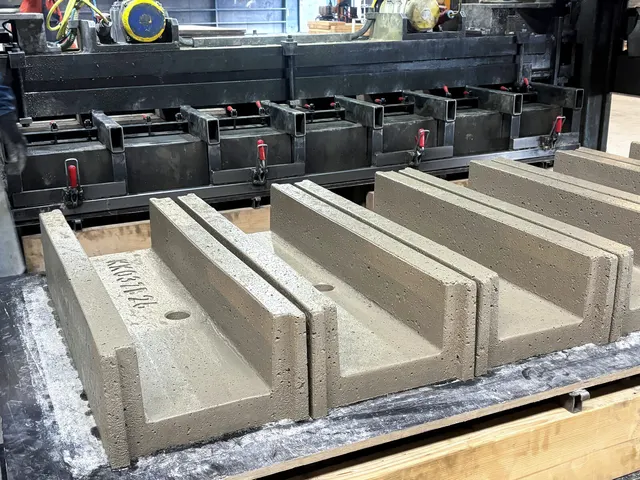
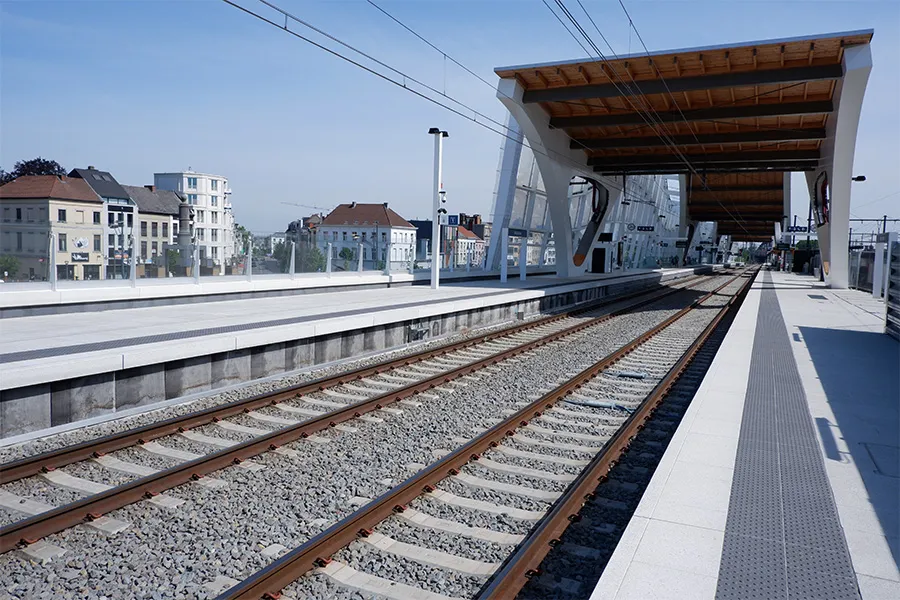
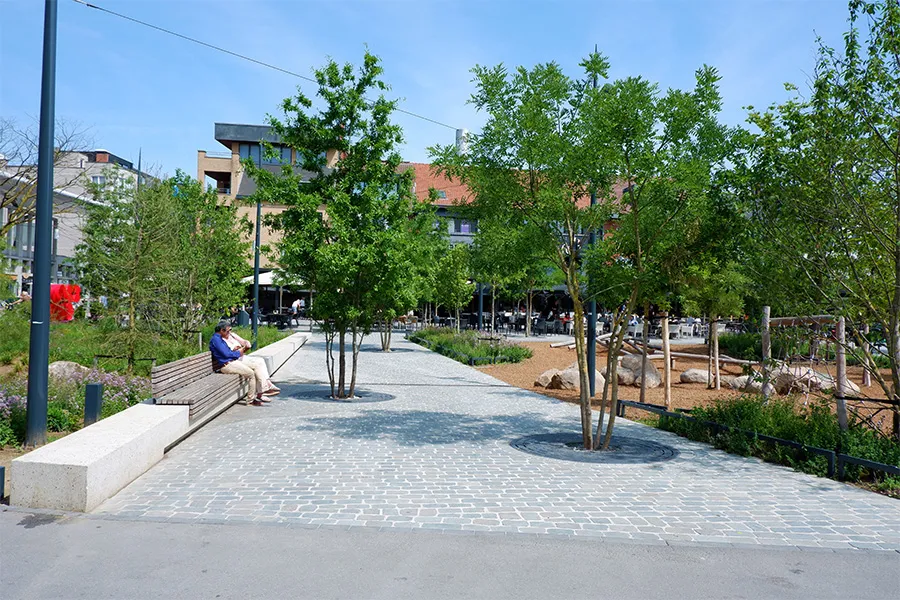
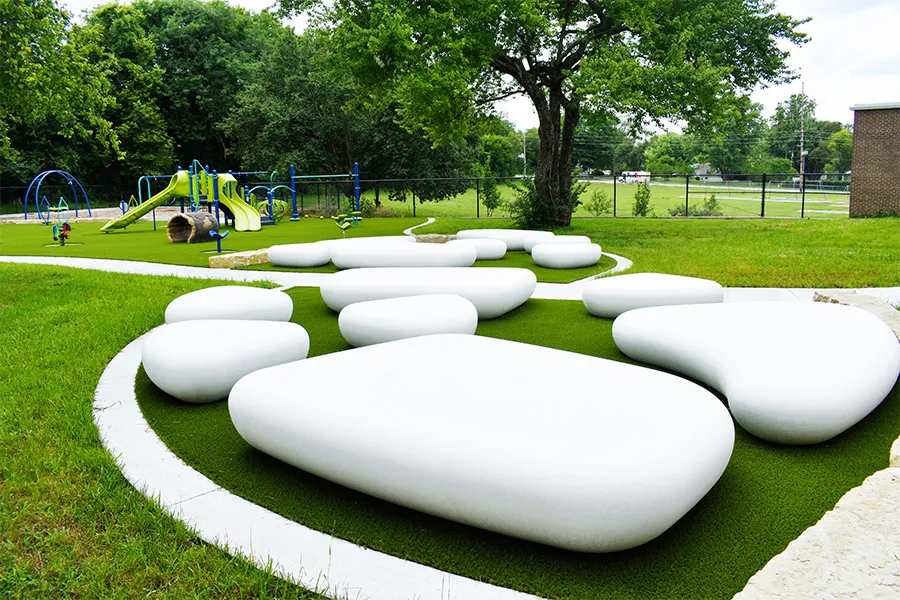
Urbastyle brings sustainability and aesthetics together, for example in the Mechelen Station project. The company supplied precast architectural concrete elements, including straight and curved wall panels, seating edges and platform edges. “Wall panels were used on the exterior, while the platform edges have a polished finish with a lightly textured top surface for better grip.” All visible faces were carefully finished and polished. Urbastyle deliberately chose Aalborg White D-Carb cement, an innovative, lower-CO2 alternative to Aalborg White. D-Carb reduces CO2 emissions by 15% compared with Urbastyle’s traditional CEM I binder, and by more than 30% compared with other white CEM I cements.
With this choice, Urbastyle combines aesthetics with significant climate benefits. The light, consistent colour also creates a uniform appearance and extends service life thanks to greater resistance to staining and ageing. This means less maintenance and a smaller environmental footprint over the project’s entire life cycle.
Lessons learned and looking ahead
Certification pays off: the CO2 Performance Ladder not only opens the door to contracts, but also provides a framework for systematic improvement. Laroy says: “For us, sustainability is both a necessity and an opportunity.”
Data is fundamental: without insight into the main sources of CO2 emissions, raw materials, transport and energy, measures remain arbitrary.
Small actions matter, provided there is wider engagement: changes to internal operations and raising employee awareness are at least as important as technical measures.
Supply-chain responsibility is unavoidable: Urbastyle recognises that cement production and transport account for the greatest CO2 impact, so the supply chain must play an active role in the transition.
Conclusion
Urbastyle demonstrates that CO2 reduction in concrete construction is not an optional ambition, but a strategic imperative that is only achievable through robust data, effective collaboration, transparency and continuous improvement. Projects such as the one in Mechelen show how material choices, including the use of Aalborg White cement, contribute to longer service life and lower maintenance requirements, and therefore indirectly to a lower CO2 footprint. Urbastyle thus sets an example for the sector as a whole, not only through its certifications, but above all through the way it actively works with its processes, products and partners towards a more sustainable future.
Een zakelijke vraag aan Aalborg Portland Belgium? Neem contact op
Bedrijven in dit verhaal
Blijf dit volgen
Bij een nieuw verhaal krijg je een e-mail. Geen account nodig.
- ThemaMinder CO2 in beton en staal
- OnderwerpConcrete
- BedrijfAalborg Portland Belgium