Queen Máxima visits circular projects: A9 widening and Asphalt Recycling Train (ART)
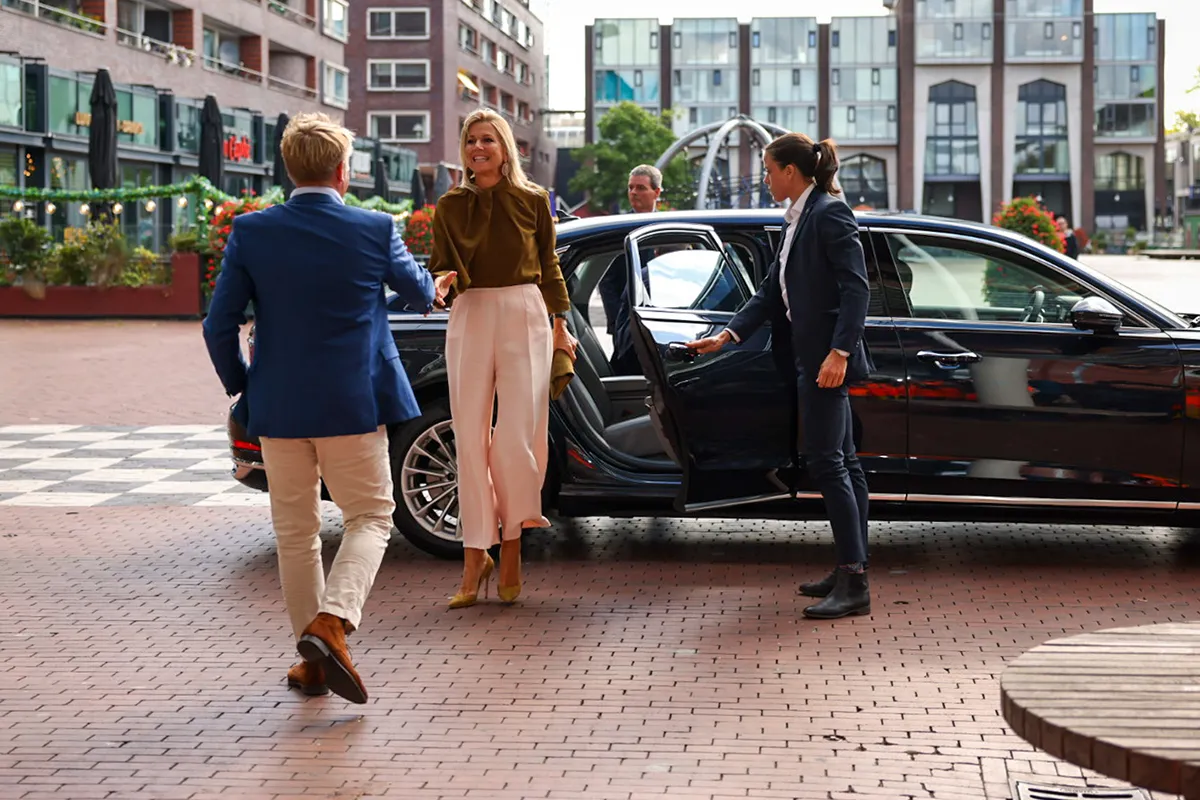
On the morning of Tuesday 2 September, Queen Máxima made a working visit to the infrastructure sector. During the visit, representatives of Rijkswaterstaat, the Ministry of Infrastructure and Water Management, and construction and infrastructure companies spoke to the Queen about circularity and sustainability. She was also given an explanation of the use of circular concrete in the widening of the A9 Badhoevedorp, Holendrecht and attended a demonstration of circular asphalt paving with the Asphalt Recycling Train (ART).
On behalf of Rijkswaterstaat, Queen Máxima was welcomed at the InZicht information centre in Amstelveen by Roger Mol, Chief Engineer-Director for Sustainability and the Living Environment and Chief Procurement Officer. “Today, we are showing that good collaboration between public-sector clients and market players is essential to accelerating the circular transition in the sector and bringing about sustainable innovations. Our aim is to raise the bar across the sector step by step, enabling market players throughout the sector to grow alongside sustainable innovations.” The sector aims to operate in a climate-neutral and circular way by 2030. This means reusing as many raw materials as possible and reducing CO2 emissions when constructing, replacing, maintaining and renovating infrastructure.
Giving old concrete a new lease of life
Circularity and sustainability play a major role in the widening of the A9 Badhoevedorp-Holendrecht motorway. The reuse of concrete was central to the visit to the bridge over the Bullewijk. Around 300 of the girders recovered along the route will be reused in other road construction projects, reducing CO₂ emissions and saving raw materials. Recycled concrete is also being used in the project. Alexander Goes, technical adviser and civil engineering/concrete discipline lead at Witteveen+Bos, on the use of circular concrete in the project: “The remaining concrete from the demolition of several bridges was crushed, cleaned and separated into different raw materials. In several sections of the bridge’s crossbeams over the Bullewijk, approximately 50% of the gravel and sand consists of recycled material. This approach is part of the concrete recycling pilot, in which Rijkswaterstaat and its partners are investigating how recycled raw materials can be used optimally in new concrete.”
Rafael Huerga Fernández, project director for the VeenIX contractor consortium, adds that the A9BAHO widening project was originally only required to be delivered energy-neutral. However, through joint efforts, the ambition was raised, and the reuse of the girders and use of circular concrete were added to the scope.
Innovation in road maintenance
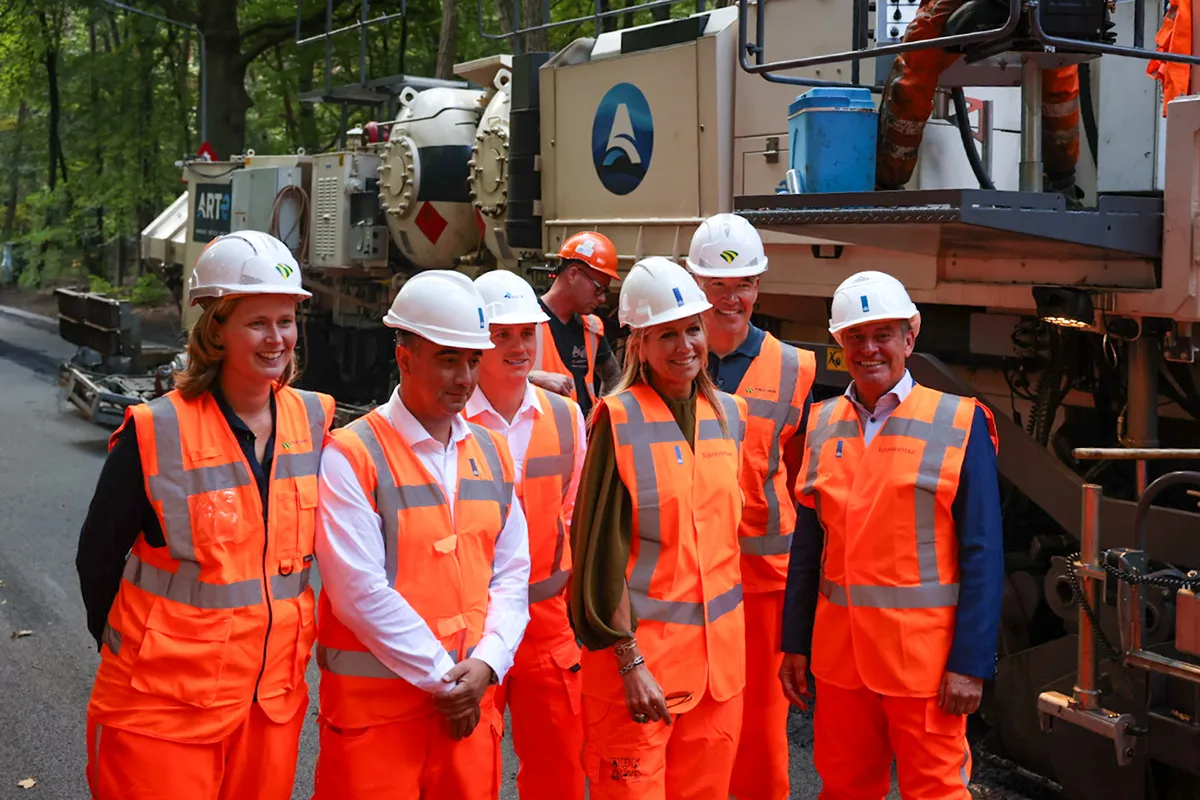
In Hilversum, Queen Máxima was given a demonstration of and explanation about the Asphalt Recycling Train (ART), a ‘train’ of machines that processes old asphalt on site into a new road surface. This circular method avoids transporting asphalt to and from the site and makes it possible to reuse all the materials. The ART is an innovative example of collaboration between public-sector clients and market players. This is crucial to the further development and scaling up of this circular alternative to conventional asphalt paving.
Wendeline Besier, Sustainability Programme Director at Dura Vermeer Divisie Infra BV and involved in the collaboration around the ART: “Future-proof infrastructure is only possible if sector partners work together and keep innovating. This takes courage and perseverance. The ART is a great example of this. Several trials have taken place across the country, and today we are here together with Rijkswaterstaat and fellow contractor D. van der Steen, which deployed the ART on behalf of the Municipality of Hilversum. We share the knowledge gained with the entire industry so that we can learn from the results together. This is incredibly important for the transition to circular construction and the progress we want to make as a sector, step by step.”
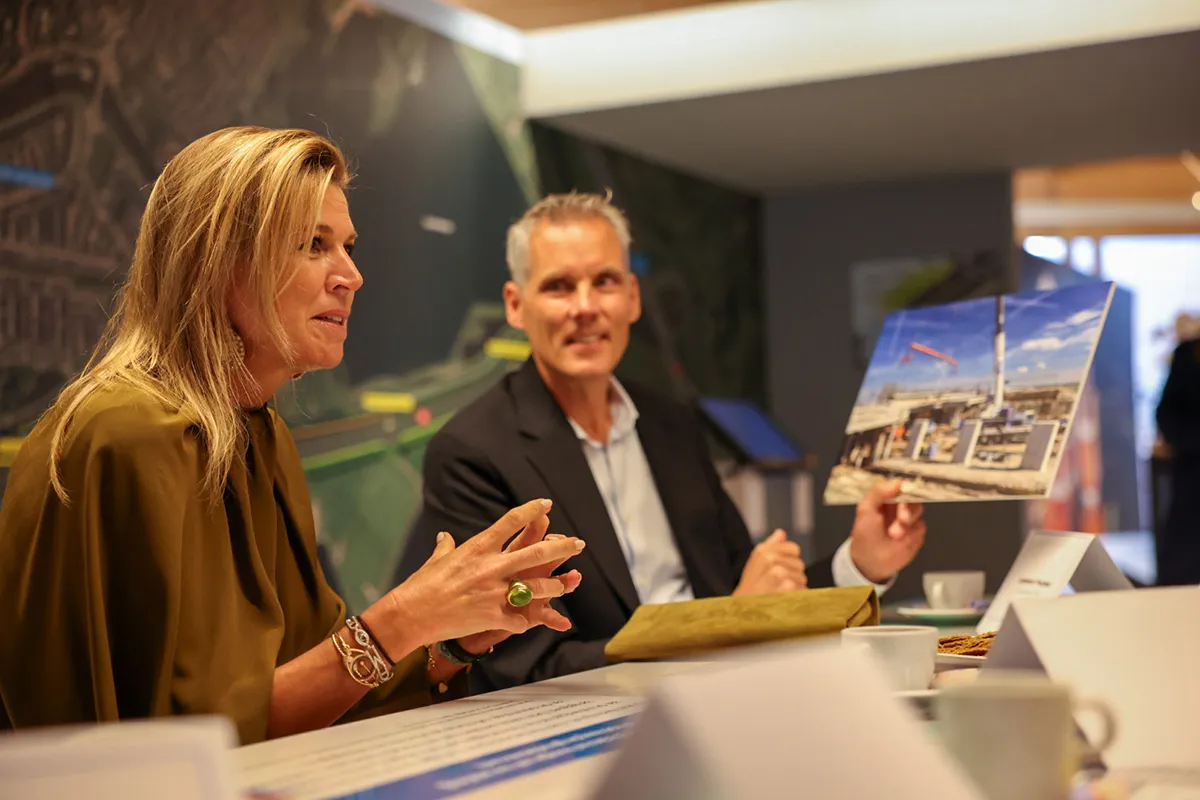
The working visit concluded with a discussion about the projects visited, sustainable infrastructure and the ambition to work in a fully circular way.
Vraag over dit verhaal? Stel je vraag
Wie aan Verbreding A9 tussen Badhoevedorp en Holendrecht werkte
- bouwconsortiumVeenIXGenoemd in Mobility demand in the Randstad continues to grow, doing nothing was not an option
- bouwconsortium VeenIXFCCGenoemd in Mobility demand in the Randstad continues to grow, doing nothing was not an option
- scan- en boorspecialisten
 Interboor MidslandGenoemd in Widening the Schipholbrug: precision drilling and bonding between parabolic prestressing tendons
- technisch adviseurWitteveen+BosIn dit verhaal
Blijf dit volgen
Bij een nieuw verhaal krijg je een e-mail. Geen account nodig.
- ProjectVerbreding A9 tussen Badhoevedorp en Holendrecht
- ThemaMinder CO2 in beton en staal
- OnderwerpGeneral
- BedrijfWitteveen+Bos