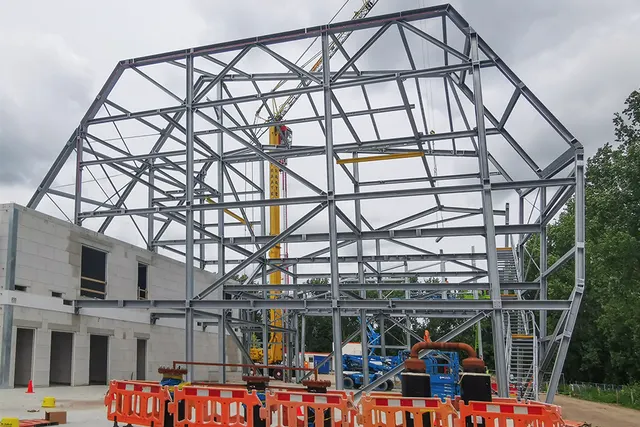
Nature-inclusive Amstelstroombrug opens!
Tekst MobilisFotografie Paul Poels en Luuk Kramer
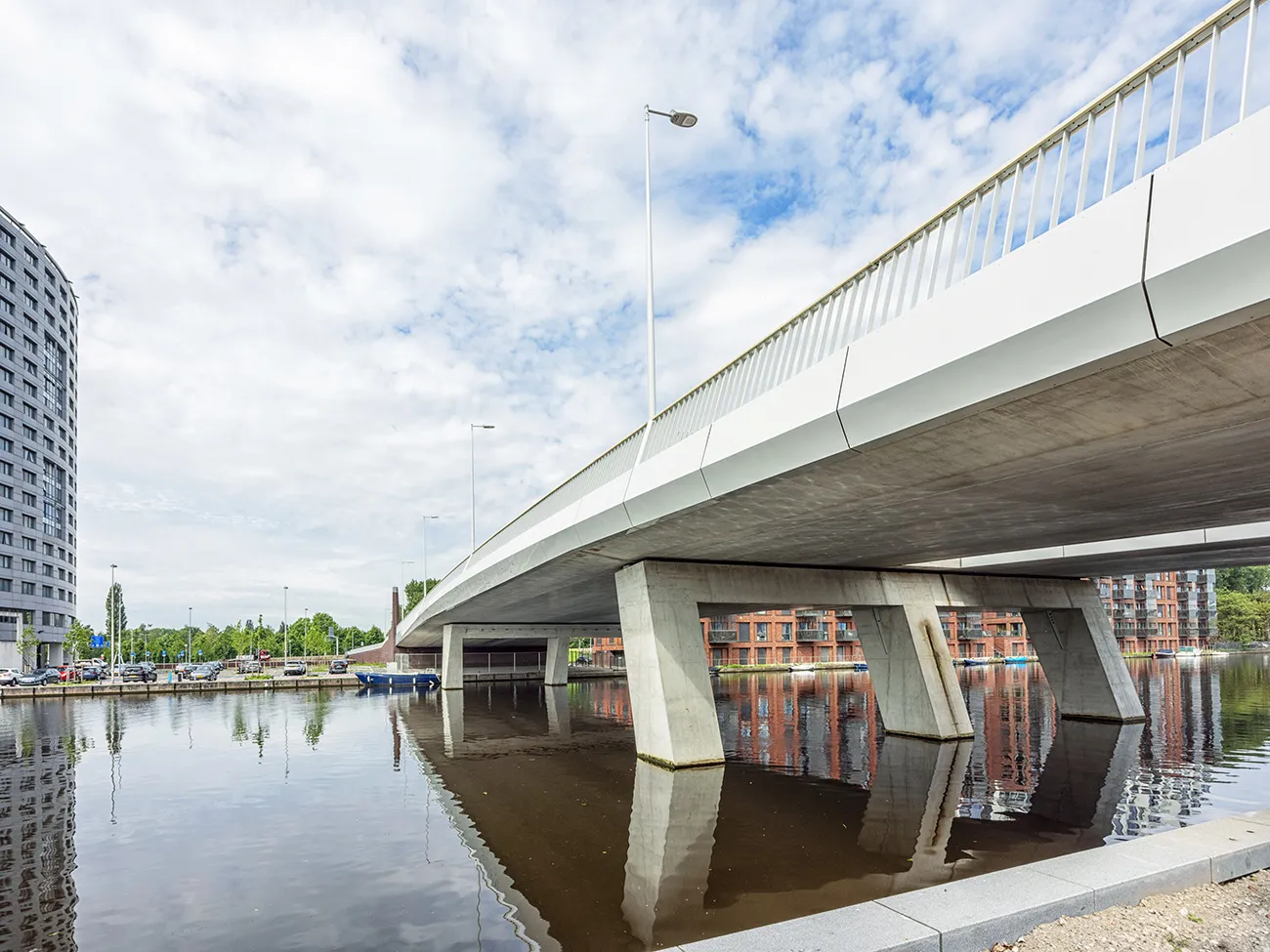
Amsterdam has a new bridge, and it is nature-inclusive. On 31 May, the Amstelstroombrug over the Duivendrechtsevaart was officially opened by Marieke van Doorninck, alderwoman for spatial planning and sustainability, and Remco Hoeboer, representing the Mobilis, Van Gelder joint venture. Designed by VenhoevenCS architecture+urbanism in collaboration with SMARTLAND landscape architects, the bridge forms the entrance from the A2/A10 to the Amstelkwartier and is also an important link in Amsterdam’s ecological network. An elegant bridge that provides an important connection for the new neighbourhoods in Overamstel, a safe place for pedestrians and cyclists, and a green home for bats, birds, fish and insects: the nature-inclusive Amstelstroombrug brings nature, city and people together.
Ecological integration
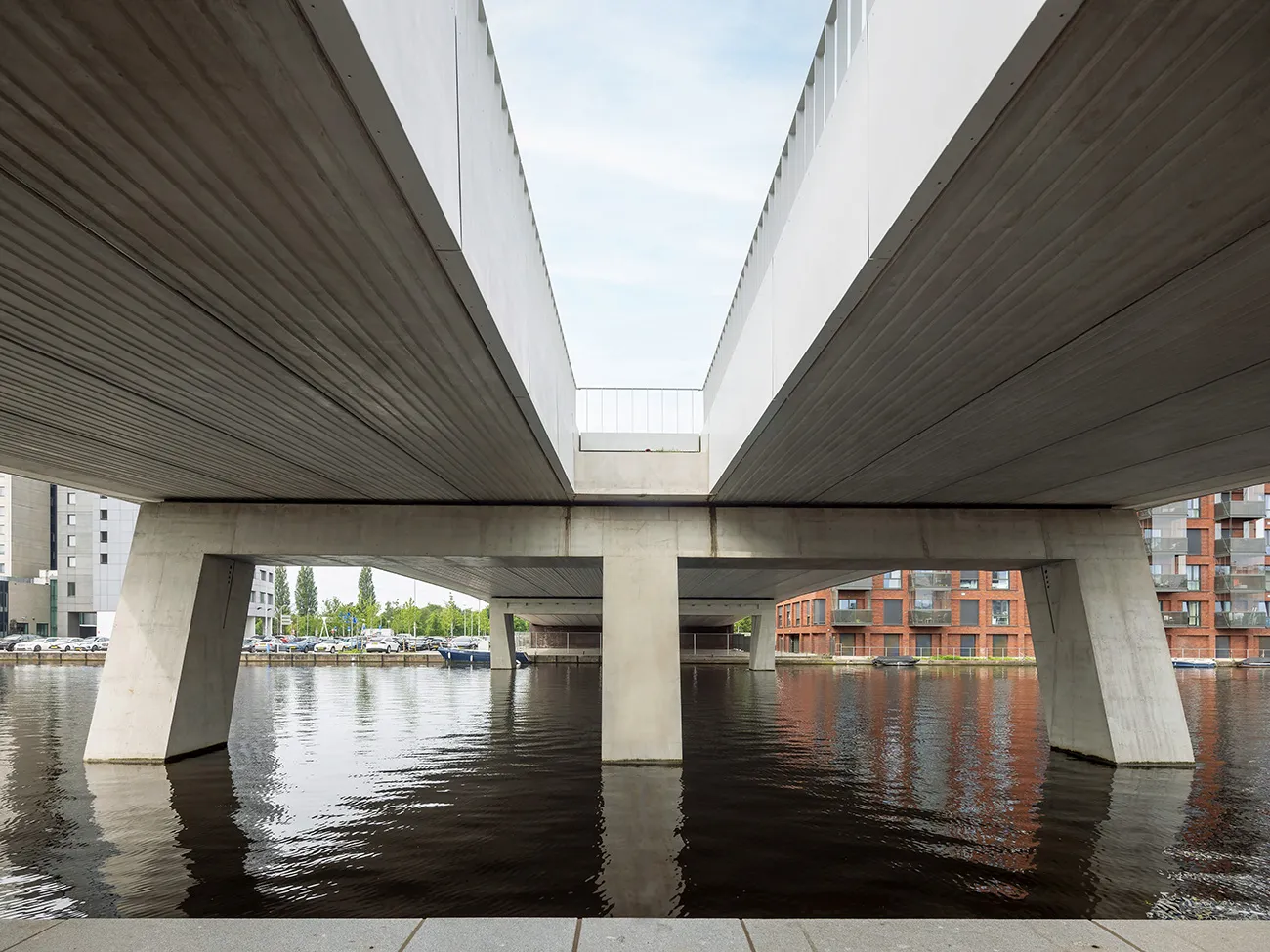
The bridge is in the Amstelkwartier, part of Overamstel, an area undergoing extensive development. Located at the tip of the green Amstelscheg, it is expected to grow to 10,000 residents in the coming years. The challenge was to design a functional bridge for motor traffic and active travel that would also form part of the urban natural environment and connect it to the Amstelscheg, all with the aim of promoting biodiversity in the city. Ecological considerations were integrated into the design from the outset. The green central reservation between the traffic lanes, planted with native flowering herbs, attracts bees and butterflies and gives the bridge a welcoming appearance. Nesting places for bees have been incorporated into the brick walls and pylons. Above all, however, the bridge provides many places for larger animals to shelter, nest and roost. The concrete central piers contain maternity roosts for bats, while nesting boxes for 10 bird species have been incorporated into the piers and edges, including kingfishers, various types of swallow, tits, sparrows, wagtails, starlings and jackdaws. Underwater, cages containing dead “river wood” and riprap between the piers provide a habitat for fish and mussels. “The municipality asked for provisions for animals, and we took the design a step further: the bridge now provides a home for at least 20 local species.”
Strong, slender and finely detailed
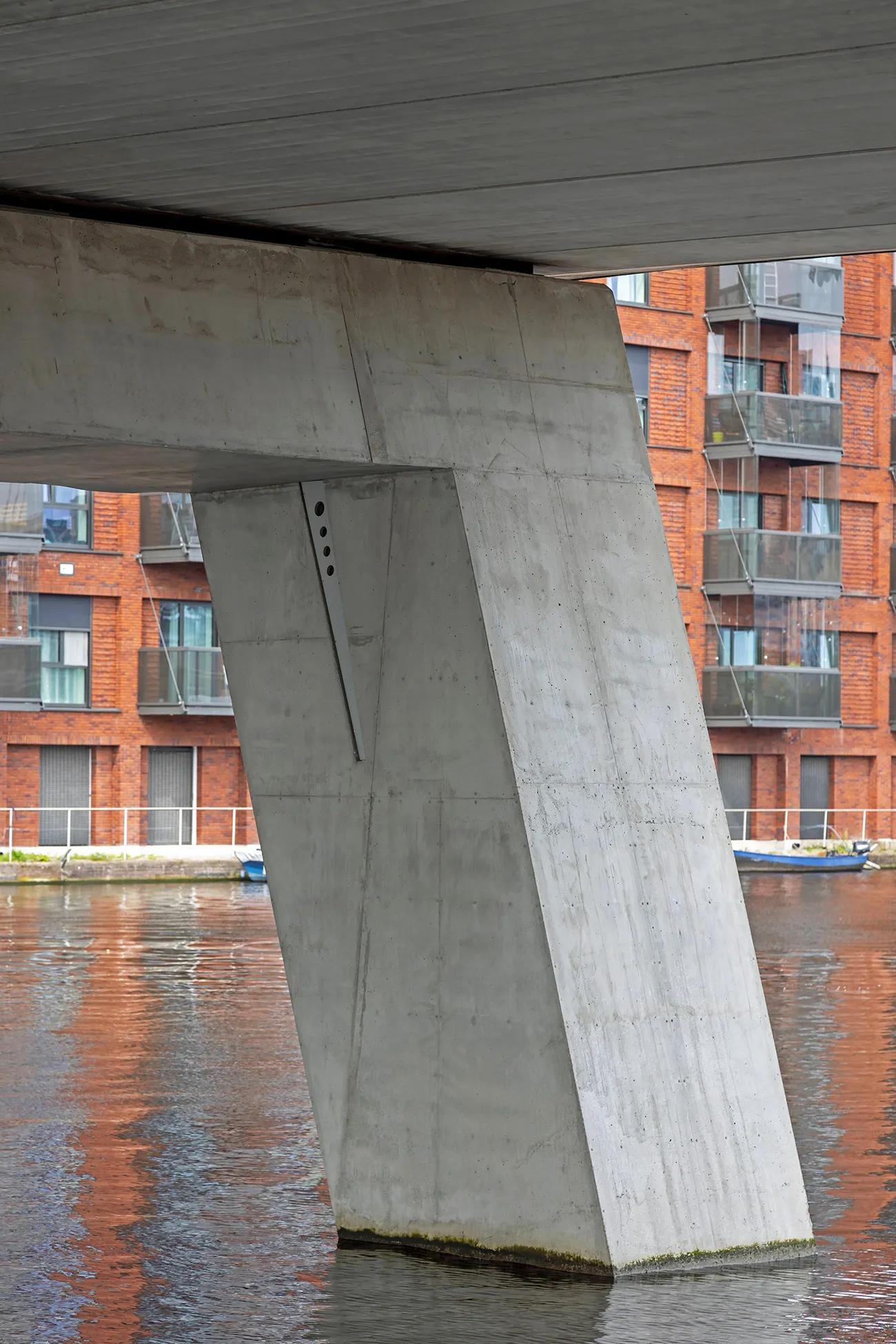
The robust abutments, combined with a slender silhouette, the use of red brick in the underpass and on the pylons, and the original detailing all refer to Amsterdam’s rich bridge-building tradition, and in particular to the architecture of the Amsterdam School. A wave pattern in the brickwork guides people through the passage beneath the bridge. The bridge also features unusual openings in the central reservation, allowing sunlight to reach beneath the deck. This creates an attractive, socially safe place for pedestrians to spend time, while giving homes on the banks unobstructed views of the water. The vertical connection between the bridge deck and the water also makes it easier for birds and insects to move around.
Sustainable and future-proof
All the materials used for the Amstelstroombrug are high-quality, durable, recyclable and easy to maintain, and will only grow more beautiful over time. The bridge can also be adapted if infrastructure developments make this necessary. A nature-inclusive bridge for people and animals today, designed for the future: with the Amstelstroombrug, the team has delivered an ecological tour de force in the heart of a growing Amsterdam neighbourhood.
Vraag over dit verhaal? Stel je vraag
Wie eraan werkte
Amstelstroombrug in Amsterdam
- OpdrachtgeverGemeente Amsterdam
- ontwerpVenhoevenCS architecture+urbanism
- Landschap en ecologieSMARTLAND landscape architects
- ConstructieMobilis
Blijf dit volgen
Bij een nieuw verhaal krijg je een e-mail. Geen account nodig.
- ProjectAmstelstroombrug
- ThemaBruggen en kunstwerken langer mee
- OnderwerpProjects
- BedrijfMobilis