Belgian-Dutch consortium builds new aircraft overpass at Schiphol
Tekst Philip DoutreligneFotografie Construx bv
Construx b.v. is one of Europe’s leading manufacturers of formwork systems and precast moulds for concrete elements, for use both on site and in production or precast facilities. Its systems are used every day in the construction of infrastructure projects, civil engineering structures and industrial complexes. Together with its Dutch branch, and in partnership with Heijmans Infra b.v., it secured the contract for the new Schiphol VDRQ aircraft overpass.
Founded in 2003, the family business has already become a fast-growing company. The Construx group now comprises five companies in Belgium, including its head office in Hulste, one in Veenendaal in the Netherlands and one in Bucharest, which serves the Eastern European market. Innovation, co-creation, flexibility and a customer-focused approach are the pillars of its success. The company put all of these to full use on the Schiphol project.
Limited space and minimal disruption
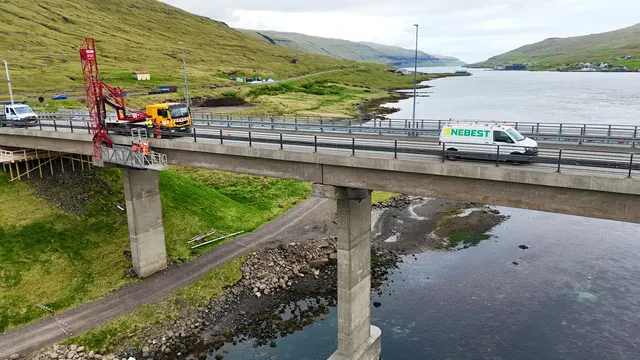
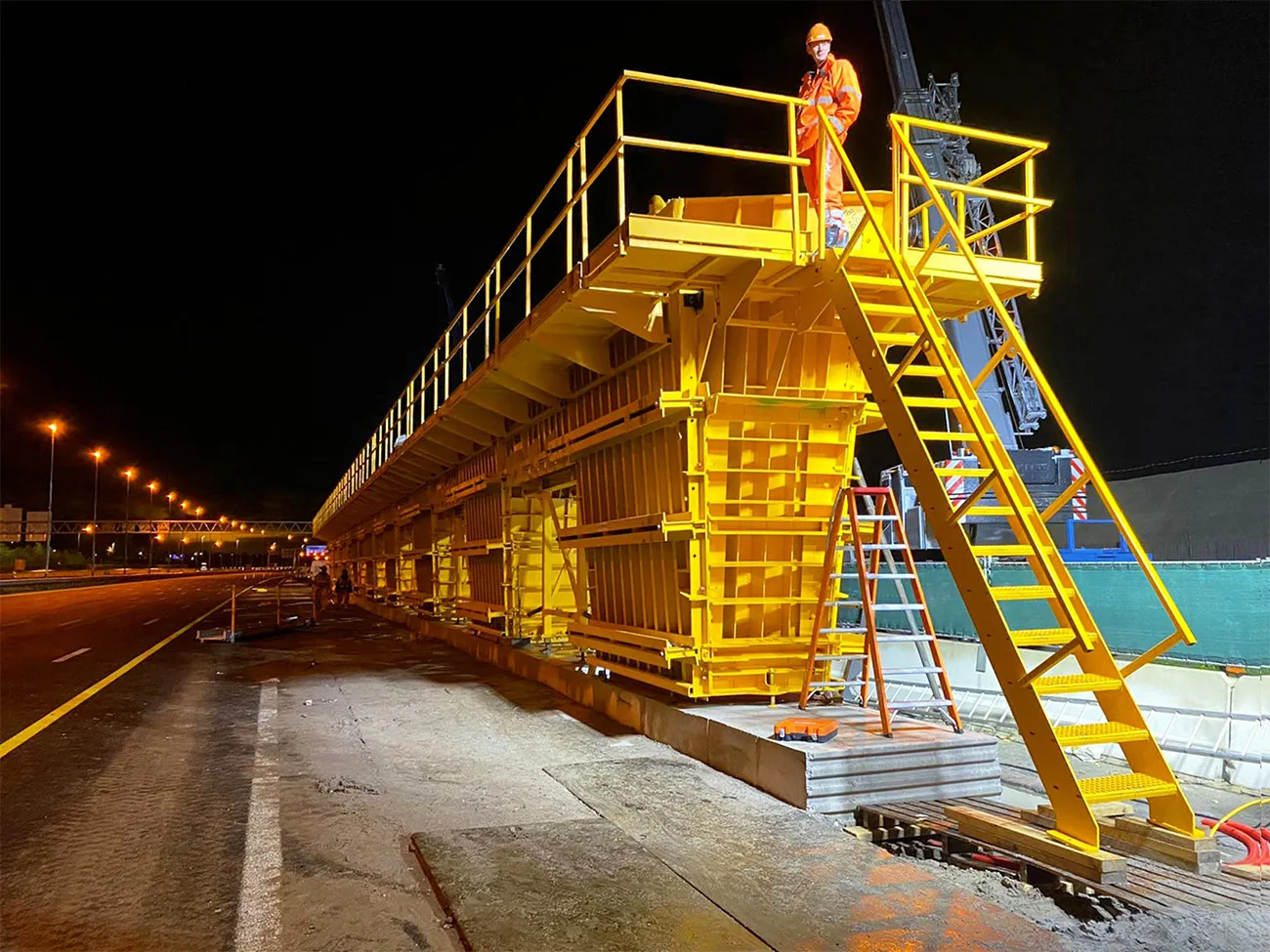
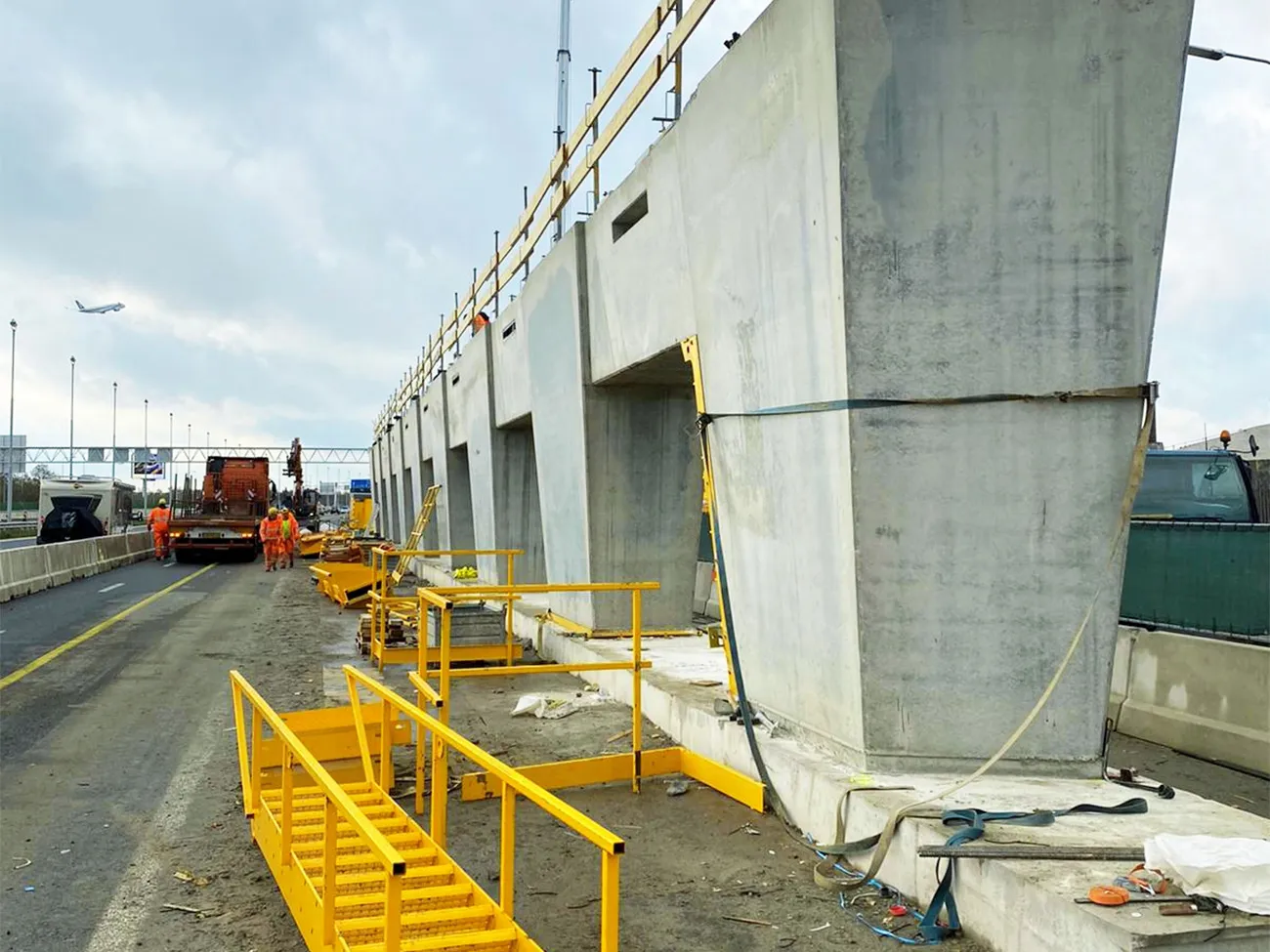
The new aircraft overpass across the A4 runs alongside the existing overpass and is supported by 65-metre-long pier beams. Each of these beams is supported by nine piers, three of which are located in the central reservations of the A4. To minimise disruption to through traffic, formwork supplier Construx b.v. worked with Heijmans Infra b.v. to develop a unique, pre-assembled and largely interchangeable pier formwork system. The assembly team needed just one overnight road closure to install the complete formwork for the pier wall, including the intermediate beam formwork.
Herry Van Houten, director of Construx-Dijkhor b.v.’s Dutch branch: “Space in the central reservations of the A4 is extremely limited. That is why as much of the pier formwork as possible was assembled at the prefabrication site next to the overpass. The nine pier formwork units, including the beam formwork and reinforcement, were then installed on site in a single operation. This saved the contractor a considerable amount of time, enabling the shell construction to be completed in October 2021.”
Short lead time and fast assembly
Van Houten: “To keep the lead time as short as possible, the formwork was designed without tie rods. This means the contractor no longer has to finish the pier wall after striking the formwork. We also designed the pier formwork so that its various sections were interchangeable and could be used together without any problems. The same applies to the 34 platforms along the formwork. This reduces the risk of anything going wrong during assembly.” Van Houten looks back on the project with satisfaction. It is an excellent example of co-creation and out-of-the-box thinking. Combined with a flat organisational structure, which Heijmans Infra b.v. also has, and the quick decisions this enables, these factors resulted in an exceptionally short construction programme.
Facts and figures
A few figures give an idea of the scale of the project: the new overpass is 250 metres long and 60 metres wide. Each pier wall is 65 metres long and 5.20 metres high. More than 265 m3 of concrete has been used in each pier wall, amounting to over 20,000 m3 of concrete across the entire project. The structure has a load-bearing capacity of 32 million kg and is supported by 900 foundation piles. And one figure that makes a significant contribution to sustainability: using a concrete batching plant on site saved no less than 52,000 kilometres of transport movements.
Een zakelijke vraag aan CONSTRUX? Neem contact op
Wie eraan werkte
Schiphol VDRQ vliegtuigviaduct in Haarlemmermeer
- bekistingsleverancier
 Construx
Blijf dit volgen
Bij een nieuw verhaal krijg je een e-mail. Geen account nodig.
- ProjectSchiphol VDRQ vliegtuigviaduct
- OnderwerpProjects
- BedrijfCONSTRUX