










KTN Hornhaven, Amsterdam | Sophisticated warehouse complex in Amsterdam’s port
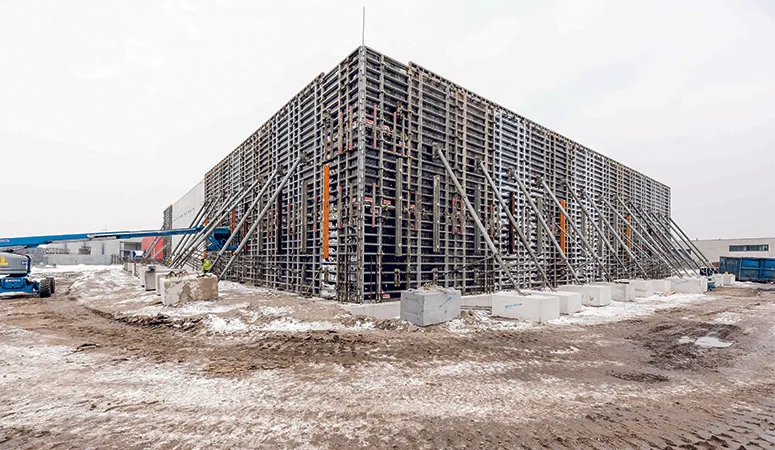
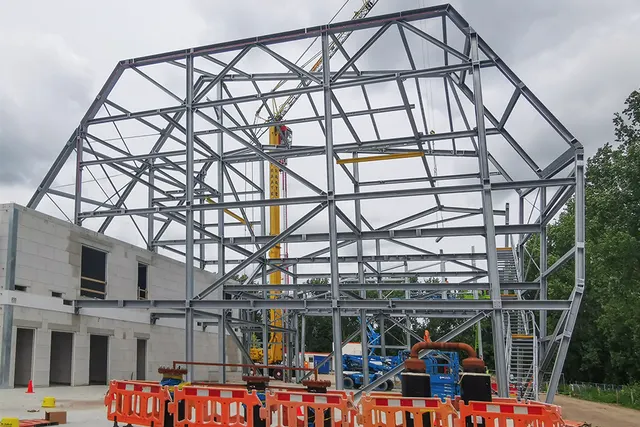
The Amsterdam Hornhaven is even busier than usual these days. Nine storage warehouses for Katoen Natie are rising at speed, designed for bulk cocoa storage. The 8.5-metre-high, 45-centimetre-thick cast-in-situ concrete walls pose a particular challenge, while construction of the warehouses must be completed in just six months.
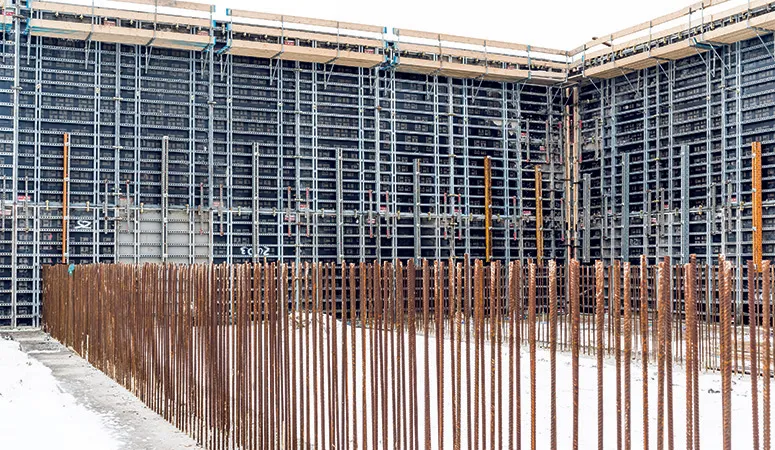
Ivan Vinck: “When installing the foundations, we also incorporate the starter bars straight away.”
The Port of Amsterdam is the world’s largest cocoa storage and transshipment hub. Katoen Natie wanted to keep pace and invested in a brand-new storage site in the so-called Hornhaven. The complex covers around 45,000 square metres and comprises nine warehouses. ASK Romein was appointed to build them. “We have been carrying out projects for Katoen Natie continuously for almost twenty years, both at home and abroad. In total, we have built more than 1.2 million square metres of storage warehouses. Over the years, a strong mutual trust has developed. It is therefore no surprise that Katoen Natie asked us to build the new storage warehouses in Amsterdam’s Hornhaven as well,” says managing director Ivan Vinck.
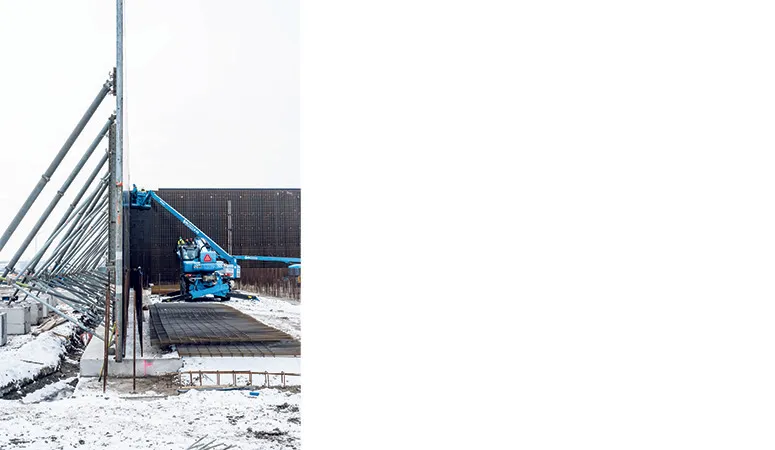
ASK Romein builds the concrete walls in 51-metre sections.
Concrete walls that demand careful planning
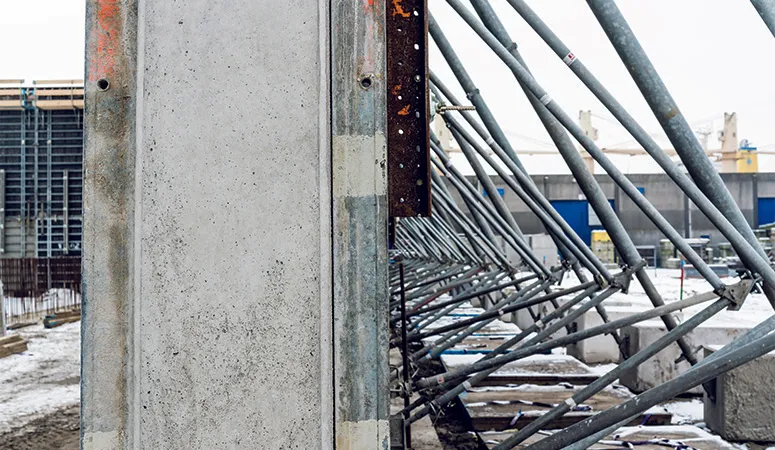
The warehouses generally follow a fairly conventional construction sequence: foundation piles, foundations, concrete walls, concrete floor, steel structure, steel deck, roof waterproofing and façade cladding. What is far less conventional is the scale of the cast concrete walls. “They are no less than 8.5 metres high, and their thickness is also impressive: they are 45 centimetres wide at the foundation blocks and 30 centimetres at the top,” explains Ivan Vinck. “Building these tapered walls is, of course, a project in its own right. When installing the foundations, we also incorporate the starter bars straight away. We then build the walls step by step, working in 51-metre sections each time. After pouring, the concrete remains in the formwork for two days, and is then braced for a further two days. In other words, each concrete pour takes four days. Given the high stacking and the pressure loads from the cocoa, our engineers carried out a thorough study during the tender phase to arrive at the most cost-effective and efficient design, fully integrating the foundations, concrete retaining walls and roof structure.”
The tapered concrete walls are no less than 45 centimetres wide at the base.
Challenges in abundance
Even for an experienced company like ASK Romein, which specialises in building distribution centres, Katoen Natie Hornhaven is a unique project. “The first concrete wall was poured in the week of 7 to 13 January, and all the concrete walls should be complete by the end of April, so that the project can be finished in full by 5 July,” says Ivan Vinck. “This is an ambitious schedule. What is more, the concrete work is not evenly distributed. In the smallest of the nine warehouses, which is heavily compartmentalised, for example, 50% of all the concrete walls are located. Another unusual feature is the presence of underground tie rods at the existing quay wall, between which we have to install three thousand floor piles. In short, there are challenges aplenty, but so far we are right on schedule!”
Words | Tim Janssens Images | ASK Romein/LucidLucid
Featured image: One of Katoen Natie’s new warehouses under construction in Amsterdam’s Hornhaven. The entire complex is due to be completed by 5 July.
Project details
Client
Katoen Natie (Antwerp)
Architect
ASK Romein (Malle)
Architect Joris van der Vorst (Roosendaal)
Main contractor
ASK Romein (Malle)
Vraag over dit verhaal? Stel je vraag
Wie eraan werkte
KTN Hornhaven in Amsterdam
- BouwheerKatoen Natie
- ArchitectASK Romein
Blijf dit volgen
Bij een nieuw verhaal krijg je een e-mail. Geen account nodig.
- ProjectKTN Hornhaven
- OnderwerpProjects
- BedrijfKatoen Natie
- BedrijfASK Romein